
Bushcraft (forest craft) - is the art of living harmoniously in the wild. What does it mean? Read the article and you will understand.
The history of the trend is very long, but the first to identify bushcraft as a separate activity and start developing it were Australian Les Giddins and Canadian survival instructor Morse Kohansky. In the late 90s, this topic gained wide popularity in the United States, Britain, and Canada thanks to the television programs of Ray Mears, who was later joined by Les Stroud and other interesting personalities.
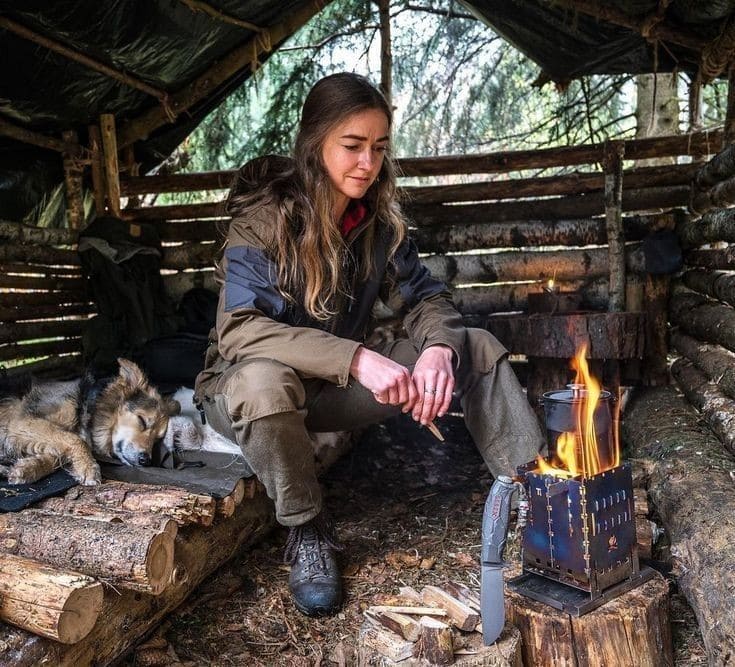
In today's understanding, bushcraft is a separate outdoor trend, with its own philosophy, set of knowledge and skills for living in the wilderness using a minimum number of modern technical means.
"Forestry craft" also includes the study of the great historical experience accumulated by the peoples of the world and individuals who were true masters of survival (fur-bearing hunters, expedition leaders, explorers and travelers).
The philosophy of bushcraft emphasizes communication with nature, learning its secrets and unwritten laws. Respect and care for the environment, as well as the reasonable use of resources, are mandatory. A true bushcrafter develops such traits as ingenuity, minimalism, self-sufficiency, and harmonious coexistence with nature.

These terms have many similarities, but there are also fundamental differences. For example, the purpose of a hiking trip is to complete a certain route, enjoy the scenery, psychologically reboot, and, for some, physically test yourself. In bushcraft, however, an important place is given to the acquisition of knowledge and skills, the study of nature in order to harmonize with it. And all this with a minimal set of modern benefits of civilization: a fire instead of a gas burner, an awning instead of a tent, and unexplored wild places instead of crowded marked trails.
The concept of "survival in the forest" is quite similar to bushcraft, but here the main task is to overcome adverse factors and test yourself, and the spiritual side fades into the background. The main thing is to survive and leave the forest or mountains, not to stay to coexist and learn about this environment. That is why "survival courses" have such sections as survival in the wild, during man-made disasters, or in a war zone.
In recent years, you can increasingly find offers of so-called light bushcraft. But! It is more like a vacation with comfort, enjoyment with minimal exertion and beautiful photos with beautiful things. There is no real study of nature or acquisition of knowledge and skills.

In bushcraft, the ability to effectively use a fairly limited number of tools is of particular importance. The primary set of survival and improvement tools includes a knife, matches, and a roll of strong cord. This list will allow you to make a shelter, make auxiliary tools with your own hands, start a fire, and much more. In the extended version, you can add a saw, an ax, and a roll of tape. The key to working with the tool is practice, ingenuity, and creativity.
For a more comfortable and safe bushcraft trip, you will also need other equipment:
And remember: it's not enough to just have equipment, you need to know how to use it.

The ability to navigate the terrain is one of the first skills you will need in the wild. It is needed by bushcrafters, hikers, mushroom pickers, hunters... To do this, they use a map and compass, the position of the sun and the north star, and other natural landmarks on the ground. Theoretical training must be completed at home, and then this skill must be practiced in one-day outings.
The art of "reading the terrain" is important. After all, in bushcraft, movement often takes place without paths and roads, when you need to maintain the right direction and at the same time move the easiest way. If you often see animal tracks while moving, you are choosing the right direction.
To be safe and secure, you should have a phone with an offline GPS navigator and downloaded maps. Of course, it's fair to use them only as a last resort. By the way, such applications as Mapy.cz and Osmand have proven themselves well.

An important element of life support in the wild is shelter from unfavorable factors: wind, rain, cold, animals. In most cases, bushcrafters use a tourist tent or an improvised version of it made of waterproof materials. More experienced people can also arrange temporary housing from improvised means found in the forest. It is important to locate the shelter correctly: choose a dry and wind-protected place, preferably not too close to water bodies, and pay attention to the threat of a dry tree falling or flooding in case of heavy rain.
And in good weather, you can sleep right under a spreading tree with a dense crown. It will protect you from light rain and give you a special feeling of openness and freedom.

Being tied to water is one of the main factors of existence in the wild. Therefore, when planning a hike, analyze the availability of springs along the route, and arrange overnight campsites near them. Every morning, when you leave your overnight campsite, calculate the amount of drinking water you need to move on to the next source. Do not drink too much or too little - both are harmful.
Learn how to purify water. The easiest way to do this without special tools is to filter it with a piece of cloth, and then boil it for 10-15 minutes and let it stand. In most cases, this is enough.
Eating on a bushcraft trip is not so much about pleasure as it is about energy and safety. Lack of nutrition causes weakness, bad mood, and increased fatigue, even with little work. Only people who practice fasting from time to time can tolerate it. If this is not your case, you should not give up a good diet because you are lazy or want to save weight, for example.
Carefully plan your food schedule, choosing high-calorie foods that can be stored for a long time. Explore the edible plants that are found in the area - this is a great source of nutrients. If there are ponds, and you know how to fish, a simple set of equipment and a little luck can supplement your diet with fresh fish. You can often find recommendations on hunting, but don't rely on it! It's a much more complicated process than it might seem at first glance, and it requires a lot of time and skills.
Bushcrafters cook their food exclusively over a fire, using various methods: boiling, frying, smoking, etc. But the fire is needed not only for this purpose, it also warms, makes it possible to dry wet clothes or shoes, and creates a feeling of psychological comfort, which is also very important.
Bushcraft classes are often held in hard-to-reach places, at a considerable distance from qualified medical care, so you should always have a first aid kit with you. Even for one-day trips.
Let's look at the basic principles of assembling such a first aid kit:
If you want to engage in "wild" hiking, you just need to have a certain level of knowledge of first aid training. For this purpose, there is a sufficient amount of video materials on the Internet, and in many cities, relevant courses are held.

As for the "green" pharmacy, we do not recommend experimenting based on Internet advice, especially in a difficult situation. Yes, turning to the forces of nature is an integral part of bushcraft, but to use plants for treatment, you need to have sufficient theoretical and practical knowledge. It takes much more time to acquire this knowledge than to master the tricks of arranging a shelter or making a fire in wet weather, for example.
Regular tourist clothes and shoes are well suited for bushcraft. First and foremost, attention is paid to durability and reliability, quick-drying ability, comfort, lightness, and versatility.
Unlike modern tourism, where lightweight synthetic sportswear is predominantly used, bushcrafters have their own view of the outfit. The peculiarities of the choice include the preference for natural materials (wool, leather, thick cotton) with a bias towards a more "traditional" side. In particular, pants of a more classic cut, preferably with side pockets, a simple and durable anorak instead of a technological jacket, reliable leather boots, not brightly colored sneakers. Although in reality, it's more a matter of your taste and habits.
As in hiking, bushcraft uses the principle of combining different layers of clothing. The first, the outer layer, removes moisture, the second should keep you warm, and the third should protect you from wind and moisture. Before purchasing everything you need, it is advisable to consult with your traveling friends, read reviews and reviews. Choose clothing and footwear based on the region and weather conditions in which you intend to use it.

Before you "go into the woods," you need to be well-prepared. Study the theoretical material, buy clothes and equipment, try it out at home, and improve your physical fitness level (running, soccer, walking around the city, etc.).
Start by going out for one day without spending the night. Plan a weekend hike by choosing a location near your home, think over the route and plan what skills you will practice. Preferably, it should be a forest with an area of more than 10 square kilometers, and it's good if it has ravines and streams. Practice navigating with a map and compass, determining the direction by the sun, choosing a place for a conditional overnight stay, practicing the arrangement of a shelter (install the tent in 2-3 ways), lighting a fire using only matches or a lighter, and making tea or coffee. For this time, give up your phone and enjoy the environment.


If the first hike went well, and you feel confident in your abilities, plan your next overnight trip. To do this, take an extra mat and sleeping bag. The next step can be a real bushcraft hike for 3-4 days in the forests of Polissya or the Ukrainian Carpathians. In particular, we recommend such locations as the Ukernia, Chorna Polonyna, Moloda, and Grofa Ring ranges. These are relatively wild places where you will meet few tourists. Although they are close to popular routes, you can find interesting places. You also need to understand the difficulties of such hikes, soberly assess your experience, knowledge and skills. Safety should always come first for you!
Have you ever hiked along mountain ranges or spent the night in the open air in the mountains? Then we suggest that you take your first steps in an organized group to get to know the Carpathians, and only then go on independent hikes.
The following documentaries and feature films can be recommended to better familiarize yourself with the topic of bushcraft and survival in the wild:
Author of the article: Ivan Kucheryavyi, team leader in the Carpathians

