The Cordillera Mountains are a mountain chain that stretches along the Pacific coast across North, Central and South America from Alaska to Tierra del Fuego. The mountains of South America are also called the Andes Mountains, the Andean Cordillera, or in Spanish Cordillera de los Andes. Here is the highest point of both Americas, Mount Aconcagua, the highest volcano in the world, Ojos del Salado, and many other peaks attractive for their height and complexity, which are the subject of our top of the most amazing peaks. The article is quite long, so make some tea, get comfortable, and get inspired.
The Andes Mountains are located on the territory of the following countries: Argentina, Chile, Peru, Bolivia, Colombia, Venezuela and Ecuador. Due to the large length of the mountain ranges from north to south, which is more than 8000 km, the climate here is extremely diverse. Some of the peaks are located in the hot equatorial latitudes and tropics, the central part is located within the arid Atacama Desert, and the southern Andes are approaching the subarctic and arctic zones. The diversity of the landscape is also due to differences in the geological structure and processes of mountain formation in different parts of the chain. For example, in the central Andes, a significant part of the peaks are active or ancient volcanoes. The most seismically active part is part of the Pacific Ring of Fire, a belt of active volcanic activity and earthquakes, which contains more than 80% of the world's active and extinct volcanoes.
Almost everyone can choose trekking or climbing in this region to their ability and taste. That's why below we list the top mountains of South America, which, in our opinion, deserve to be on the list of every traveler. Also, you can find a list of all trekking and climbing trips in South America that KULUAR offers for the nearest future.
The mountain range attracts tourists and mountain climbers from all over the world. People come to the Andes both for cognitive trekking along picturesque trails and for serious expeditions and climbing the highest and most difficult peaks of the continent. An interesting fact about the Andes: in this part of the world, even mountain climbing is not called mountaineering, but rather "andismo" after the name of the local mountains.

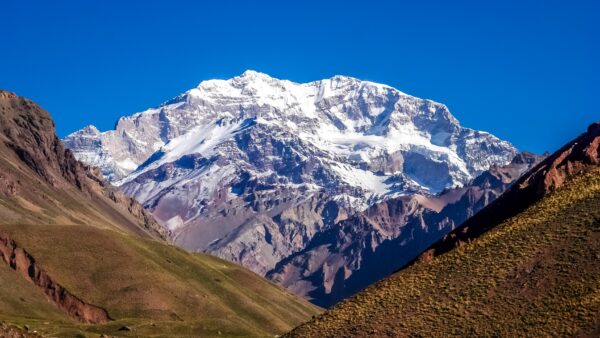
The highest point of the South American Andes and the entire Cordillera is Aconcagua, with an altitude of 6962 meters above sea level. As the highest mountain in South America, Aconcagua is part of the 7 Summits program, which involves climbing the highest peaks of all continents. You can read more about it in our article Seven peaks: a list of mountains with descriptions.

As for Aconcagua, it is the second-highest peak of this program after Everest, but the difficulty of climbing the classic route is relatively low, so it can be safely chosen for the first ascent to an altitude approaching 7 thousand meters. Technically, the ascent is not difficult and does not require special climbing skills, except perhaps crampons, which will depend on the state of the snow cover at a particular moment of ascent. The climbing season on Aconcagua is relatively short, and the best weather conditions should be expected in January-February, when summer continues in the southern hemisphere. At other times, there is a high probability of encountering strong winds, which sometimes reach speeds of up to 200 km/h at these altitudes.
Our entire Aconcagua climbing program, starting from the arrival in the Argentine city of Mendoza, lasts 19 days, including two reserve days in case of bad weather. Such a long period is necessary for proper acclimatization and preparation of the body for life in thin air at high altitude.
Climbing the mountain by the simplest classic route is carried out through the following intermediate points:
For details about the climbing, go here - Diary of climbing Aconcagua.
We invite you to watch our video report from the 2024 Aconcagua climb.
In addition to the classic "7 summits" climbing program, there is a similar program of climbing the 7 highest volcanoes. The first place in height among them is the volcano Ojos del Salado (6893 m), which is also the second-highest peak of the Andes and the highest point of the country of Chile. It is located on the arid highland plateau of Puna de Atacama, near the border between Chile and Argentina. There are almost no settlements within a radius of many kilometers around here, but right next to the base camp on Laguna Verde, at an altitude of 4300 meters, there is a highway connecting the Chilean city of Copiapo through the San Francisco Pass with Argentina, so the transport accessibility of the climbing area is quite convenient for tourists.

Climbing Mount Ojos del Salado, as well as Aconcagua, is not very difficult, as the region is characterized by extremely dry conditions that prevent the formation of significant glaciers and permanent snow cover on the mountain. At the same time, it is possible to provide a fairly high comfort of stay, with full meals and spacious tents for sleeping, since up to an altitude of 5200 m (Atacama camp), access and transportation of all goods takes place by jeeps, and the assault camp is located in the Tejos shelter at an altitude of 5800 m.
The summit of Ojos del Salado is actually the highest point of the volcanic crater, so you will first have to climb to the crater itself, cross it, and only then make a break for the top, climbing a relatively steep rock wall, on which local guides usually leave a fixed rope railing.

Interesting fact: Ojos del Salado volcano has multiple side craters, inside one of which the highest lake in the world is located at an altitude of about 6500 meters. The volcano erupted thousands of years ago and is now considered dormant, but sometimes fumarole activity can be observed here, and numerous thermal springs break out at the foot, one of which is located right at the Laguna Verde base camp and is equipped as a swimming pool.
Climbing Ochos is often combined with climbing Aconcagua to save time and not have to acclimatize to the altitude twice. However, this option can sometimes be too exhausting and you need to weigh your strength and the pros and cons of such a decision. If you climb Ojos from scratch, the entire program with acclimatization will take about two weeks, and you can find it in the program programs: Climbing Ojos del Salado.
The third-highest mountain in South America, Monte Pissis (6793 m) is located on the border between the Argentine provinces of Catamarca and La Rioja, about 80 km south of the Ojos del Salado volcano. The climate and weather conditions here are quite similar, but due to its remoteness from roads and civilization, this volcano is not often visited by tourists. The first known successful ascent of Monte Pissis was made by Polish climbers in 1937, and the next one took place almost 50 years later, in 1985, after a mining company built roads in the area. The mountain is named after the French geographer Pedro Pissis.

In general, the Atacama Desert, despite its harsh, arid climate, is rich in unusual and picturesque mountains, whose fantastic landscape sometimes looks like a Martian one. Due to the presence of unique natural formations and endemic species of animals, quite large areas have been declared national parks by the state and are under protection. One of these national parks is the Llullaillaco mountain range, which is also the second-highest volcano in the world. The national park is also known for the fact that in ancient times an important route of the Inca Empire passed here, and interesting archaeological sites remained on its territory, and mummified bodies were found almost on the top of the volcano, which, apparently, were victims of a religious ritual. The mountain can be accessed by four-wheel drive vehicles on dirt roads, which is why it is often visited by tourists.
If you're interested in the Martian landscapes of the Atacama Desert and climbing volcanoes, you might consider one of our Behind the Scenes programs in Chile, where we offer an unforgettable trip to these fantastic places:

Mount Nevado Huascaran (Spanish: Nevado Huascaran) with an altitude of 6768 m is the highest point in Peru and the fourth highest in the Andes, although according to some sources it may be the fifth highest, behind Cerro Mercedario in the Cordillera de la Ramada massif. Mount Huascaran is the center of the national park of the same name in Peru, located in the Cordillera Blanca massif north of the capital Lima, near the city of Huaras. The modern name comes from the name of the Inca prince Huascar, although earlier the locals called this peak Mataraju, which means "twins" or "connected snow peaks" in Quechua.

Although the Peruvian Andes mountains are striking in their beauty with large-scale glaciers and snow-capped peaks, sometimes these giants bring extremely difficult challenges to local residents. The most famous is the tragedy of 1970, when an earthquake caused a large part of the glacier to collapse from the top of Mount Huascarán, which, under the influence of high tropical temperatures below, quickly turned into a large-scale mudflow that buried the city of Yungay and 20 thousand of its inhabitants in a matter of hours. Similar tragedies with fewer victims have occurred in this region before.

The mountain has two peaks, one south and one north, and is popular among climbers. Climbing requires technical skills, the ability to work with rope and move on snow and ice, but there are both relatively easy and extremely difficult routes to climb Huascarán. In addition, trekking is popular in the national park, such as, for example, the Alpamayo Trek or the shorter 5-day Santa Cruz Trek, which overcomes the 4750-meter-high Punta Union Pass.
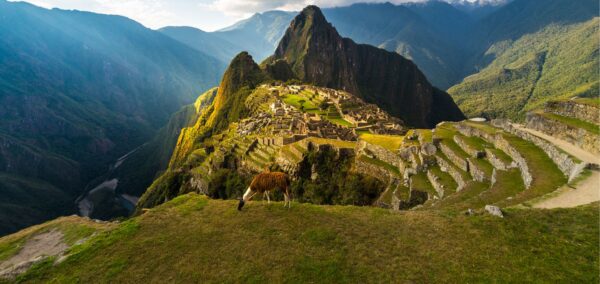
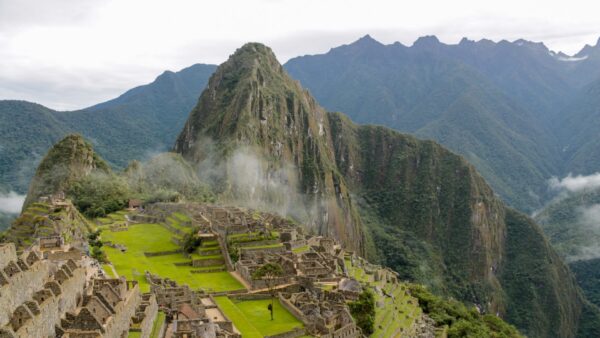
However, it's not just the highest peaks in South America that attract tourists and climbers from all over the world. The continent has amazing mountain locations that you will not see anywhere else. The most striking example is the alpine Inca city of Machu Picchu, the bizarre table mountain Roraima, as well as several other iconic points, which we will describe in more detail below.



Everyone knows that the highest peak in the world is Mount Everest (or Sagarmatha, or Jomolungma, as the locals call it), located in the Himalayas. But what if there are higher mountains? One of the contenders for the title of the highest is the Chimborazo volcano in Ecuador, whose summit, according to scientists' measurements, is the farthest point from the center of the Earth. The fact is that the 6310-meter-high volcano (6263 meters according to other sources) is located on the so-called equatorial bulge and almost at the equator. Thus, from the 16th to the early 19th century, it was believed that the highest mountain on Earth was Chimborazo.

The Andean stratovolcano Chimborazo towers so impressively over the country that on a clear day it can be seen even from the large port city of Guayaquil, located more than 100 km away. The peak is completely covered with glaciers and eternal snow, which are an important source of water for the population of the adjacent provinces. As the highest mountain in Ecuador, Chimborazo is very popular among climbers, but the route runs along glaciers and at high altitude, so high-altitude experience and practiced skills in moving on snow and ice terrain are highly desirable.

The second highest and most popular peak in Ecuador, the Cotopaxi volcano (Cotopaxi, Cotopaxi) with a height of 5987 m, is also one of the top highest active volcanoes in the world. Over the past 300 years, about 50 significant eruptions have been recorded, and since 2015, Cotopaxi has been constantly in an active eruptive process, but this does not interfere with mountaineering.
If you are interested in volcanoes in Ecuador, please make an application on the page programs for the Chimborazo and Cotopaxi climbs.
Several other volcanoes in South America offer relatively simple but very interesting and scenic routes for tourists. Among them, for example, is one of the easiest six-thousanders on the planet - the Chachani volcano in Peru with a height of 6057 meters. It is part of the Central Volcanic Zone of the Andes, the Cordillera Volcanica. Due to the arid climate, even at such a high altitude, no permanent glacier has formed, and during the dry season, the volcano can be climbed on foot without using any climbing equipment. And its location just 22 km away from the multi-million city of Arequipa, Peru, makes logistics fast and affordable, so it is possible to climb in just one day, subject to prior acclimatization on other mountains.

Here, near Arequipa, there is another picturesque and accessible volcano, El Misti, 5822 meters high. Unlike Chachani, El Misti is an active volcano, and although the last major eruption was recorded in the late 15th century, the crater is now constantly experiencing fumarole activity and periodic seismic tremors, which gives scientists and locals cause for concern. Accessibility also makes El Misty one of the most popular climbing destinations in Peru.

We offer to climb both Peruvian volcanoes in our program Climbing El Misti and Chachani volcanoes.
If you are not yet ready to conquer the height of 6000 meters, but you definitely want to climb one of the volcanoes in the Andes mountain system, a relatively simple 5,000-meter Nevado del Tolima in Colombia can be an alternative. In addition to climbing, you will get a vivid experience of traveling to exotic places, visiting coffee plantations, the desert and some of the best beaches in the Caribbean. Join us on a trip to Colombia and climb the Nevado del Tolima volcano.

In the Cordillera Blanca massif, next to Huascaran, there is another amazing mountain, which, although inferior to many peaks of the Andes in height, was named the most beautiful mountain in the world by the German magazine Alpinismus in 1966. Back then, photographers from different countries sent images of mountain peaks to the contest, and the judges awarded the sympathy prize to the snow and ice peak of an ideal pyramidal shape, Mount Alpamayo. To this day, thousands of mountain travelers and climbers agree with this decision.

Nevado Alpamayo has an altitude of 5947 meters, which makes it a difficult mountain to climb. The steep snow and ice slopes are cut through by numerous backstreets that lead to routes of varying difficulty, but there are no easy ones, and even the "classic" routes, such as the route of the famous Italian climber Casimiro Ferrari, are fraught with the danger of avalanches or falling ice seracs. Nevertheless, Mount Alpamayo attracts tourists, and commercial expeditions accompanied by local guides often climb it.
For those who would like to see the most beautiful peak in the world with their own eyes, we offer a 10-day trek around Alpamayo, also known as the Alpamayo Circuit, in which we will climb to an altitude of 4850 m and visit the southern and northern base camps, from where the ascent to the peak itself begins.
The mountains of Peru never tire of surprising travelers with their wonders. In the Peruvian Andes, not far from the city of Cusco and the world-famous archaeological complex of Machu Picchu, there are the bright mountains of Vinicunca, also called Rainbow Mountain (Montana Arcoiris) or the Mountain of Seven Colors (Montaña de Siete Colores, Cerro Colorado). These colored mountains in Peru attract tourists from all over the world who want to see the slopes of the Andes, painted with different colors, like a real rainbow.

You can get to the Rainbow Mountains either as a one-day excursion or as a multi-day hike through the Ausangate massif with no less stunning views. However, it should be remembered that the height of the Vinicuña is more than 5000 m, so before going there, you must definitely get acclimatized in the mountains around Cusco. We offer to visit the Rainbow Mountains in two of our programs:
Now we move from the northern part of the Andean Cordillera to the south of the continent, where the mountains become significantly lower, but due to the cooling climate, more severe and inaccessible for climbing. In the Argentine part of Patagonia, there is Monte Fitz Roy, known to tourists for its unique shape and to climbers for its extreme difficulty. The majestic granite walls of the massif rise above the Patagonian plains and can be seen many kilometers before arriving in the village of El Chalten at the foot of the mountain. The massif is part of the Los Glaciares National Park in Argentina.

The height of Mount Fitzroy is 3405 meters, which is relatively low by Andean standards. However, due to the very harsh, almost Arctic climate, with frequent precipitation, cold temperatures and hurricane-force winds, the weather conditions allow climbing in this region only a few months of the year. The best season in the Patagonian Andes is considered to be mid-December, January and early February, but even during these months there may be only short weather windows, not sufficient for too long and difficult climbs.

Climbers made the first ascent on Fitzroy in 1952. The team consisted of the Frenchmen Lionel Terreille and Guido Mannion, while the third member of the team, Jacques Poinsenot, tragically died while approaching the mountain, drowning in a river during a crossing. The first climbers named one of the peaks in the massif in his honor. Other peaks around Fitzroy are named after French pilots, such as: Guillaume, Mermoz, Juarez and Exupery. Fitzroy itself is named after an English captain who commanded the Beagle, a ship that explored the local coastline on behalf of the British crown in the mid-19th century. The local name of the mountain "Chalten" means "the one that smokes" in the local language of the Teuelche Indians. This name is associated with the fact that clouds often cling to the top of the mountain, which visually look like smoke from a volcano.
Next to Fitzroy there is an even more severe and inaccessible tower - Mount Cerro Torre, 3133 meters. The history of climbing this mountain is even more dramatic and includes the tragic death of the potential first ascender Tony Egger, two attempts by the Italian Cesare Maestri that were not recognized by the world community, and finally the first undisputed ascent in 1974 by an Italian team led by Casimiro Ferrari. During one of his attempts, Cesare Maestri used an automatic puncher to drive hooks into the rock every few meters and thus move up. After reaching the snow and ice mushroom at the top of the mountain, he declared that the snow was not part of the mountain and therefore considered his ascent complete and descended. However, other climbers did not recognize this and the glory of the first ascent never went to Maestri, although his route, called the Compressor, became historic.
Around Cerro Torre and Fitzroy, you can make a relatively simple several-day trek, staying in tents near picturesque lakes and climbing to viewpoints to meet incredibly beautiful sunrises, which in cloudless weather fill the surrounding mountains with a bright red glow.
In the Chilean part of Patagonia, the most famous mountains are the peaks of the Torres del Paine National Park. The hallmarks of this region are the Paine Towers and the Los Cuernos massif, which rises above Lake Nordenscheld. The highest point of the national park is Mount Paine Grande, with a height of 3050 meters. All these mountains are also extremely difficult for mountaineering.

For trekking in the park, there are options for the so-called O or W tracks. The O-trek runs in a ring along the entire massif and takes 8 to 10 days, but more popular among tourists is the W-trek for 4-5 days, which includes transitions between campsites and radial exits to viewpoints in mountain valleys. In Chile, the rules for visiting the national park are stricter than in Argentina: you need to buy a ticket and book campsites in Torres del Paine long before arrival, walk only on marked trails and at a certain time, and you can light a fire, even on a gas burner, only in specially designated places for cooking. Rangers monitor compliance with the order, and fines for violations are enormous. This is because the park has experienced two large-scale fires in its history that destroyed dozens of hectares of forest, and they were caused by the negligence of tourists. Therefore, the territory is now strictly protected, and even despite the presence of people, you can see many representatives of wildlife, such as guanacos, the local endemic Huemul deer, foxes, and occasionally even the largest predator in Patagonia, the puma.

If you are fascinated by the distant and mysterious Patagonia with its cold beauty, we suggest going on a New Year's tour to these distant lands with KULUAR: Journey to the End of the World.
We hope that the information about the Andes Mountains and trekking and climbing opportunities in South America was interesting and useful for you. If you are still not sure which of our programs to choose for your next trip, we recommend you to read the comparative article of two regions, where the features, pros and cons of each of the tracks are revealed, and the organization of everyday life and day transitions during the program is explained in detail: Peru or Patagonia: Which track to choose?

Kuluar - your life-changing mountain experience!
Author of the article: Yuliya Yurasova, Teamleader in South America