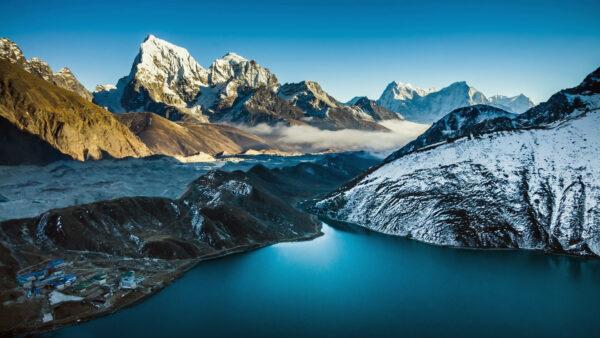
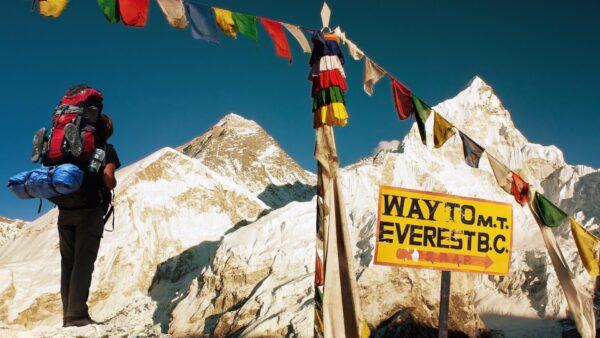
Everest is a peak called the "roof" of the world and is the highest point on the globe. The mountain is located in the Himalayas, on the border of China and Nepal. The international name Everest was given to it in honor of the British topographer George Everest. It is also known as Chomolungma, which means "Mother Goddess of the World" in Tibetan. Sagarmatha, as Nepalese people call the mountain, means "Goddess of the Sky" in Sanskrit.
We are sure that after reading this article, you will not be able to stay away and will dare to accept the challenge to admire the highest mountain in the world!


| 17.10-31.10.26 |
|
$770 | 8 | |
| 17.04-01.05.27 |
|
$830 | 8 | |
| 16.10-30.10.27 |
|
$830 | 8 |
| 10.04-27.04.27 |
|
$930 | 7 | |
| 09.10-26.10.27 |
|
$930 | 8 |
The mountain has many names that we didn't know about. In Indian culture, different ethnic groups used the following names: Shenmufen, Yomokangar, Chamokangar, Deodangar, Birap Langur, Barab Tan, Nyanam, and others. In Tibet, this peak was called Sherab Cham, in honor of the mother goddess (Sherab - the wisest, Cham-ma - loving mother) and Chomogangkar (Holy Mother, white as snow). These names, passed down by word of mouth, simply melted away or were forgotten over time. Thus, three main names remained widespread in the world: Everest, Jomolungma, and Sagarmatha.

The peak of Chomolungma in the Himalayas is also known as a mountain shrouded in myths and interesting discoveries. There are legends that at a certain height people are haunted by ghosts. People die every year while climbing this mountain. Many climbers say that shadows have been chasing them, stealing their clothes and following their heels. Many have even heard voices asking for help, but they cannot help them, otherwise the ghost will drag the living down with it.
Doctors explain everything quite logically. The oxygen deprivation causes hallucinations. After all, at altitude, intracranial pressure decreases, and the head begins to spin. This explains the appearance of shimmering shadows and sounds from the other world.

Another mysterious highlight of Everest is the Himalayan yeti, yes, the same Bigfoot. In the nineteenth century, reports about him appeared in the reports of British officials working in the mountainous regions of India and Nepal. The British resident of the Nepalese court, W. Hodgson, reported that his servants were afraid of a hairy, tailless humanoid creature during their travels.
Creatures similar to yetis are present in Nepalese and Tibetan religious images. Sherpas are very afraid of these creatures. And in some mountain monasteries, there is allegedly material evidence of Bigfoot's existence. In the twentieth century, when mountaineers began to make pilgrimages to the Himalayas and actively stormed the summit of Mount Everest, new stories about Bigfoot appeared. For example, his footprints were seen on the approach to Everest. In 1986, a lone climber, A. Woolridge, claimed to have met a two-meter tall yeti in the northern Himalayas and showed a long-range photograph showing a distant humanoid figure. These are the mysteries of Chomolungma.

The footprint presented as belonging to Bigfoot was discovered on the Menlung Glacier in 1951 during Eric Shipton's expedition to Chomolungma.
The name of the British topographer George Everest (1790-1866) is known to almost everyone on the planet. Is it deserved? He was a military officer, headed the topographic service of India, and had good mathematical skills. Thanks to this, in 1818, he became an assistant to the founder of the Indian Survey. Under the leadership of George Everest, the highest mountain peaks of the Himalayas were recorded, but without measuring their height. This work lasted for half a century, starting in 1806. It was because the staff of the British Indian Survey first measured the height of the highest mountain in 1852 that they decided to name it in honor of the head of the survey, George Everest.

We would like to share with you the facts that demonstrate the unique and extraordinary nature of Everest:

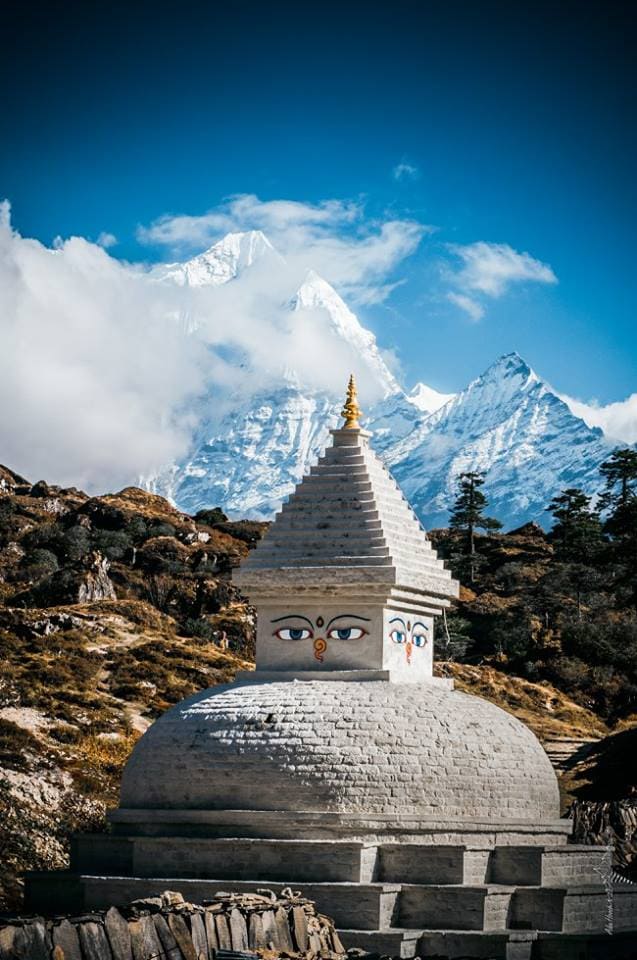
Climbing Mount Everest is a dream of everyone who has ever contemplated the view from the mountain peaks, but conquering Chomolungma is not an easy task, only the strongest and most enduring people can do it. It's difficult to describe in words the feeling that grips a person looking at the highest peak in the world - you have to feel it.
Maybe you dream of seeing a Nepalese sky goddess? Or to taste the local Tibetan kitchen? Or to smell the Himalayan herbs? In fact, all of these things can be realized, and, of course, you can add to the wish list - to see Mount Everest with your own eyes. Don't worry if you don't have any trekking experience, because with KULUAR everyone can visit Everest Base Camp.
For dessert, watch the video review about Trekking to Everest Base Camp and go in search of adventure with us.
If you go to the mountains - then go with Kuluar!