

Contents of the article:

Hiking in the mountains can be the most interesting and exciting experience, especially if you decide to change your lifestyle and get closer to nature in your adult life. So why do many girls deny themselves the pleasure of breathing fresh air, walking through meadows or glaciers, fooling around with friends at the campfire, meeting the sunrise on the top, swimming in alpine lakes and taking a bunch of unrealistic insta-photos?
Sometimes the answer is simpler than you expect: it's the fear of harsh living conditions associated with female hygiene.
If you have never been camping, how do you know how everything works? Read this article if you want to find answers to questions about how to go to the bathroom in the mountains; how to deal with sweat and unpleasant odors; what to do during your period in a hike; where, how and with what to wash; what if it rubs somewhere; about body, face, hands, teeth care. KULUAR team leader Nastia Domanova shares her experience👇

For me personally, the mountains are a special space, a separate world with its own laws, rules, difficulties and pleasures, and everything there does not necessarily have to be the same as in civilization. But if it's important to you (especially in your first hikes) to be as close as possible to the level of urban comfort in personal hygiene and continue to follow all the usual beauty rituals, it is absolutely realistic. The right choice of route and modern technologies will help you with this!

I'm willing to bet that after a full day of 6–8 hours of constant movement up and down the off-road, even if your backpack was small, you'll have a strong desire to finally sit quietly on a pebble somewhere. With a cup of tea, a meditative look, contemplating the scenery (and cursing the day you read an article and decided to go to the mountains). But first, you need to wash off all the vivid impressions in the form of dust, dirt and sweat.

If you spend the night at a stationary campsite with a shower, the main problem is to make an effort to get there first. But what if you spend the night in a gorge or on a mountain?
Usually, the team leader of a mountain hike chooses a place to camp near water. In this case, you only need a cosmetic bag, a towel, a camping mug, and a little courage to take water procedures. Sometimes it's also good to use a pot or a folding camping bucket. It's made of fabric and weighs a little, but it adds a lot of comfort if you like to shower often and walk in an area where there is a lot of water. The best strategy is to collect water from a river or lake, step aside into the bushes and wash yourself with a mug/flask/bottle and your (preferably biodegradable) shower gel.
Never wash with soap or shampoo in the water itself! Remember – dozens or even hundreds of tourists come here and all the chemicals they use for personal hygiene will almost certainly disrupt the fragile ecosystem, not to mention that the group will usually take water for cooking from the same reservoir. What's more, in many places, you can get a hefty fine for doing so. An alternative would be to swim in the lake first to refresh yourself, and then wash yourselves in whole or in zones with soap in the bushes.
There are also special shower heads for ordinary plastic bottles that make it easier for women to hygiene. And if you are going in a large, friendly company and don't need to save weight, you can buy a camping shower. This is something like a durable black plastic bag with a long flexible tube and a watering can nuzzle. You can fill it with water, hang it in the sun, and later take a full, warm shower.

For light hikers, instead of heavy bottles of gels and shampoos, I advise using a small piece of solid shampoo, modern tourist bar soap, or a special all-purpose detergent from any professional brand of hiking equipment (you can wash your body, head, dishes, and clothes with it, and you will have one bottle in your backpack instead of 3–4).
Mountain lakes and rivers are rarely very warm, so it's a good idea to try to take a cold shower at home before you go. If it's really hard, you can heat a couple of mugs of water on a fire or a burner, mix it in a flexible bucket with lake water and thus provide yourself with a more comfortable bath.

A towel is usually a rather bulky thing, so when you go hiking, choose only modern synthetic tourist options that dry quickly. I prefer super-thin ones in silicone semi-open cases so that you can dry them right on your backpack while walking. A hiking towel doesn't have to be big – 25x25 cm will be enough.
But what if there is no water nearby, or it is in short supply? A "shower" made of wet wipes is our everything! Especially now, when modern technology has led to the fact that there are separate wipes for face, body, intimate feminine hygiene, antibacterial, refreshing, with milk, with micellar water, etc. Just choose what suits you (does not cause allergies) in the right amount and don't forget to take it with you! Sometimes this version of the "shower" allows you to clean the feathers no worse, and even better, than a simple rinse with water. Always take a trash bag for used napkins with you and take them to civilization!
After a real or napkin shower, be sure to change into a fresh T-shirt, sleeping thermal underwear, or camping kit – any clothes you wear only in camp – so you can stay fresh for a whole week.
If the hike is short or winter, you don't need to do laundry at all – just put a special bag for dirty clothes in your backpack.

A common method to quickly freshen up your clothes is to put them in a mountain river for half an hour, and the turbulent river current will do everything for you. For washing on long hikes, you can use the universal tourist detergent we've already mentioned. Put your clothes in a thick plastic bag with a little soap and water, shake them several times, and rinse.
To dry the clothes, you can grab a rope and stretch it between the trees, or use the tent slings. Sometimes I take a spare silicone cover from a tourist towel and dry the washed laundry right on my backpack during the day.

Don't use cotton underwear and underwear made from cotton – they quickly get soaked in sweat, dry poorly, and can chafe. If sportswear and T-shirts don't suit you because you're allergic to synthetics, choose merino wool. Don't let the word "wool" scare you – thin underwear and thermal underwear are also suitable for summer hiking. Its great advantage and some magic is that even after several days of hiking, it does not emit an unpleasant odor.
When choosing a sports bra, try to get one that fits you exactly, or a little more roomy. Of course, the undershirt should hold everything it's meant to hold, but not too tightly – it's more important for us to be able to take a deep breath and exhale under the load of a heavy backpack.

But it is also important not to rub delicate areas – if the sconce is constantly fidgeting around the body, then at the end of the day you may encounter chafing in the most unexpected places. Do you know the effect of bleeding breasts in runners? (Just don't google pictures.) In fairness, I've never encountered this effect while hiking – we're walking, not running, after all. If chafing occurs, panthenol treats it well, and ordinary petroleum jelly or antibacterial cream will relieve the discomfort.
From our experience, the most comfortable types of sconces are smooth; seamless (or without a seam on the straps that falls directly under the backpack straps); with a zipper in front instead of a back zipper, which can be pressed by a backpack. For a week-long hike, it will be enough to take 2 sports bras – the main one and a spare one.
It is better to take extra-thin seamless panties that dry quickly and choose them for the hiking season. Running synthetic, with breathable inserts or made of merino wool. Also pay attention to underwear made of fabrics with antibacterial impregnation or silver thread.
It is better to choose dark-colored and neutral style underwear, so it can also be used as a swimsuit if you decide to swim in a mountain lake, river or hot spring, or just get caught in a very heavy downpour. Sometimes, in a friendly company and warm climate, it is easier to literally strip down to your underwear and walk around in this form under a backpack than to dry a full set of running clothes soaking wet around a campfire in the evening.

Somewhere along the way, you should have felt the call of the mountains and the desire to experience the cool life hacks of hiking for yourself. Join future hikes with Anastasia Domanova or choose from over 222 routes around the world with KULUAR
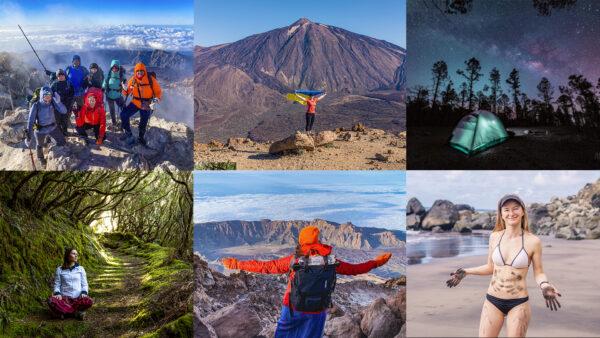
On the one hand, movement and fresh air in camping life have a very beneficial effect on women's beauty, but on the other hand, you will definitely need additional care. Let's take a closer look at how to take care of each area of the body so that the trip brings only pleasant emotions.
Basic lip and face care in the mountains. The active sun and dry wind are not the best for your skin. So take at least one of your favorite regenerating face masks with you, just in case you get too winded, to give your face a "quick moisturizing aid".
Take care of gentle evening cleansing of the face from the "shell" of sunscreen. Here you will need a sponge or cotton pads, enzyme powder, micellar water, or your favorite face wash. And if you have access to warm water, hydrophilic oil. Afterward, apply after sun, panthenol, or a regular moisturizer (depending on the situation and skin condition). It is better to pour all liquids into small bottles in advance and label them.
On the lips, apply sunscreen lipstick during the day and after sun balm in the evening (they are often sold in pairs).

Eye hygiene in a hike. Don't skimp on sunglasses! Be sure to choose a pair with a high level of protection. In the mountains, this is level 3 or even 4. Also take a napkin to clean them from dust and sunscreen residue.
If you know that the wind and sun make your eyes water or dry out, or if there are a lot of insects in the region where the route runs, you can take moisturizing eye drops with you.
If you wear contact lenses, choose one-day lenses.
Decorative cosmetics. Not the most necessary thing in a hike, but everything is individual. Of course, you are unlikely to draw arrows in the morning in the mountains, but if you are uncomfortable going out in public with a "bare face" or you have high requirements for your own photos from this hike, then you can combine business with pleasure and at least take not a regular sunscreen, but a tinted one to match your skin color.
Personally, on long hikes, my eyebrows and eyelashes burn out almost white and I look like Gioconda. Since this standard of beauty is outdated by about 500 years, it's easier for me to take a hypoallergenic mini mascara and eyebrow pencil with me and not suffer – you look okay and nothing else burns out. And for removing makeup in the evening, wet wipes with micellar wipes are great.

Faces before Kilimanjaro/during/after
A beautiful clean smile is the basis of women's hygiene and beautiful photos. And comfort in the mouth will add comfort to the hike itself, so brushing your teeth while hiking is definitely not something to ignore.
Nowadays, there is a large selection of different mini toothpastes and tooth powders that can be easily poured into small containers according to the number of days of the trip. There are also short and folding toothbrushes available. For hygienic reasons, it is better to choose a brush in a case.
Personally, I use a small compact battery-powered electric toothbrush as an alternative to large and heavy stationary electric toothbrushes.

Even if you chose to go hiking in a relatively northern region where the weather is not too sunny and hot, and a wet napkin freezes on the fly, it doesn't mean you don't need to bring sunscreen. Remember that in the mountains the atmosphere is thinner, and solar radiation is always more intense compared to sea level (a thin atmosphere absorbs less UV rays). The skin needs appropriate protection – at least 50 units. And the higher you go in the mountains, the more urgent the issue of protection is, and the cream index should be higher. You've probably seen photos of alpine climbers in thick down overalls with burnt (literally black) faces and chapped lips?
Once, after another Himalayan hike, I watched my friend, who decided to ignore the advice to apply cream regularly (she didn't want to stay pale after her vacation), simply remove the skin from her face like a mask-film. The same goes for lips, which can dry out, darken, and crack if you don't regularly apply balm or hygienic lipstick with a UV filter.
It is better to buy a filter cream in a tourist shop (usually it has mountains or something similar on it). Also, don't forget to bring your favorite sunscreen and after-sun lipstick (usually sold in sets).
Put both cream and lipstick in an external, easily accessible pocket of your backpack, otherwise there's a chance that you'll be too lazy to dig through your backpack in the middle of a day's work and won't update your protection layer in time.
The most common sun-related problems that I observe as a team leader in girls on mountain hikes in the Alps in summer and on the Canary Islands in winter and how to counteract them:
It's inconvenient to apply sunscreen on your hands, as it wears off quickly. We can advise you to wear not traditional T-shirts, but running thermal sweatshirts with long sleeves and elongated cuffs, as well as sunscreen gloves (made of thin, breathable synthetics or silk);
If you wear your hair in a ponytail, you leave your neck unprotected – don't forget to apply cream to this area as well. Or wear a buff or a hat with a very wide brim.
Use a higher protection index, apply the cream more often. If the weather is cool or foggy, it does not mean that you can skip applying the cream.
SPF should be applied to all exposed areas of the body, not just the face. Better yet, wear walking pants – it's both cleaner and safer.
Yes, lips also tan if the sun is really intense – don't forget to apply a hygienic lipstick with a UV filter even more often than a cream.
It could be an allergy to the sun or your cream doesn't work for you (don't forget to test it at home). Use a wide-brimmed hat for double protection.
In addition to protecting your hands from the sun, as we've already mentioned, disinfection remains a relevant topic in a hike. Don't forget to use sanitizer or antibacterial wipes regularly, especially before meals and before touching your face and eyes.
It is also always good to have a small package of fat cream with you to provide the weathered skin of your hands with the necessary nutrition in the evening in the camp. When hiking, it is better to use universal creams that are suitable for hands, feet, and chafing – so your backpack will not be crammed with a million jars.

Fingernails and toenails can have a hard time while hiking. The foot is tightly squeezed in the boot and sweating. Hands are constantly clinging to bushes and stones, pitching a tent, grabbing a trekking pole, and tamping things into a backpack. As a result, we often have broken fingernails and blue toenails.
How a female tourist can keep her nails beautiful and healthy?
Try to take off your boots immediately after the end of the day's activities in the camp, rinse (or wipe with wet wipes) your feet and change into crocs or other spacious and comfortable camping shoes. In the cold season, these can be fresh, dry socks and soft, warm camping slippers or chuni.
Always wear clean socks every day. Do not use cotton socks – only synthetic trekking/running socks or socks made of merino wool.
Inspect your feet every night after a day of walking and every morning before putting on your boots. If there is even the slightest hint of a fresh callus or abrasion, cover it with a plaster immediately!

If a callus has already appeared, it should be cleaned, dried, lubricated with iodine, petroleum jelly, panthenol, healing cream, or hygienic lipstick (depending on its condition), and carefully covered with a plaster or a so-called liquid plaster from a spray bottle.
For the health and comfort of your feet, I can also recommend taking a small spiked ball with you on a hike to massage your feet after a day of walking. This will help restore blood circulation to the ankle, which has been tightly wrapped in a boot all day, and revitalize feet tired from the rocky terrain.
Bring the smallest possible manicure kit in case of a broken nail. Sometimes Swiss knives or multitools have a metal file and mini-scissors built in, which will be enough for camping.

In addition to merino wool underwear, deodorant will help to cope with the odor. It is not necessary to carry a bottle of antiperspirant with you – you can take modern wet wipes-deodorants in mini-packs of 10 pieces. Just for a week-long hike. They cleanse the skin and at the same time apply a thin layer of deodorant. If you can't find them in the nearest store, then search for "deo wipes" on the Internet. Another option is to break off a piece of solid salt deodorant.
About the smell of hiking boots
If the shoes are not 20 years old, they are equipped with a modern breathable membrane, and your feet do not sweat too much, then there will be no strong odor. But if you are sensitive to the smell of stale feet and shoes and foot hygiene, you can bring shoe deodorant and scented foot talcum powder. Yes, it's definitely extra weight, but you can take one bottle for the whole group. An alternative is baby powder, which reduces foot sweating and refreshes after a day of walking.
It can be difficult to show off an elegant hairstyle while hiking. If your hair length is slightly longer than zero, then usually on the 3rd day of the hike, the choice of hairstyle is limited to a ponytail and braids. The negative cleanliness of your hair prevents you from creating something more decorative.

It's the same as with a shower – if you have excess water, why not freshen up your head too? It is better to pour the required portion of shampoo into a small plastic bottle in advance. The easiest option for a long hike is a solid shampoo that foams well. You can break off a small piece and take it with you.
If there is a shortage of water in the hike, dry shampoo (sprayed from a can) is suitable – it will not wash your head, but it will give you a certain feeling of freshness and a clean appearance.

If you don't want to wash your hair or it's inconvenient, you can make small African braids at home from your own hair or with the addition of bright strands of canekalon.
Another hygienic life hack that will help keep your hair clean longer is a long, thorough evening combing with an ordinary comb or with a small amount of cotton wool (applied directly to the comb or comb). If you alternate with a light massage of the scalp and hair roots with dry wipes, you can extend the period of cleanliness of the head to 4–5 days.
Don't take a huge, heavy home comb! There are plenty of great hiking combs and compact and lightweight brushes on the market now.
My comb is a small, handle-less brush with thick, short teeth that are closed on top with a protective plastic cap. It scratches well and is easy to clean.

Hair, like facial skin, needs protection from the active sun and dust. In the mountains, they are dried by the wind and can get very faded.
Bring some spray with a UV filter if your hair is prone to dryness and breakage and you don't like wearing hats.
But the best way to protect your hair in the mountains is to cover it up. Depending on the region, type of hike, weather, and season, choose a cap, hat, beanie, or buff (which will also allow you to create many interesting hairstyles or simply elegantly hide the mess on your head). Even a helmet will do – the main thing is not to expose your hair to direct sunlight.

It's just like home, but instead of a toilet, there's a shovel. It's a joke! But not really.
In the mountains, it's important not to leave your own waste products on the surface, especially in dry and hot climates, as well as near busy parking lots. When you go to the toilet in the mountains, try to bury everything or cover it with pebbles. Take an example from the cats! You don't have to do it with your hands – there are special shovels or tools like your trekking pole, a branch or a stone. If the group is camping for a long time, then most likely the team leader plans to build one compost pit (toilet) for the whole group, so it is better to clarify this point.

Intimate hygiene in a hike, related to going to the toilet in the mountains, involves the use of any kind of toilet paper – dry or biodegradable wet. Never use ordinary plastic-based wet wipes and certainly do not leave them in the forest.
Keep in mind that in some national parks and expeditions it is generally forbidden to go to the toilet outside the designated areas, and in some places you can only do it in special containers that you have to carry with you. But this is rather exotic.
If there are a lot of people you don't know and you're unusually shy, you may want to go further into the forest. It's not the best decision – it's better to find a thicker bush near the camp. Firstly, you might get lost, and secondly, some wild animals might like it.

If your bioreactor starts to malfunction and behave abnormally, don't be alarmed. A hike, especially if it's your first one, is stressful for both your body and your head. In the mountains, there may be interruptions in going to the toilet, or, conversely, you may have an overly active desire to sit down behind every bush. Drink more water – this will help you avoid swelling, unpleasant sensations in the body and skin, and help you cope with stomach discomfort. But be sure to monitor the purity of the water – if you are not sure of its quality, it is better to boil it.
A special place is occupied by going to the toilet in the mountains at night. The tent is warm and dry, the sleeping bag is soft and tender, but the call of nature pulls you outside into the rain, snow, wind – to where strange sounds come from (probably a bear!). Boys are lucky – they can do it in a water bottle! But what about girls? Well, it's pretty much the same. Nowadays, there are special urinal watering cans for women to make it easier to go to the toilet without taking off your clothes – just buy one of these if you're not a fan of nighttime trips out of the tent.

Usually, gynecologists do not recommend using daily pads, but hiking is exactly the case when frequent changing will help keep your underwear fresh longer – especially on long expeditions or in those trips where water is a big problem.
Please note that even if your "critical days" always come exactly on schedule, this does not mean that it will be the same in a hike. The strain of backpacking and long hikes, plus unusual food, often shifts the cycle, so it's best to always have pads or tampons with you, just in case.

If your cycle does catch you in the middle of a hike, don't worry – although it sounds counterintuitive, due to the increased blood circulation in the pelvis during constant movement, usually even the most painful periods are easier and faster. But in any case, it's better to bring your regular pills with you in case of emergency.
Choose intimate hygiene products for women depending on the type of trip – you shouldn't take pads for rafting or rafting, where you will be doused with water from head to toe, it's better to choose tampons. And don't forget to update your hygiene products more often – we go hiking for new sensations, and septic shock is not on the list.
Unfortunately, a menstrual cup, which many girls use nowadays, is absolutely not suitable for the format of the hike, as there is nowhere to disinfect it.
Also, don't forget to take your hygienic waste with you. To do this, take a few special plastic bags, a garbage bag, or a few zip locks (they are ideal for hiking because they are multifunctional).

Over time, you will learn how to pack a cosmetic bag that is ideal in terms of weight and content, but here are a couple of recommendations for starters:

The list can and should be adjusted depending on the duration of the hike, season, location, and your personal preferences.
This checklist can be called a "maximalist's list", but if you, like me, are more of a lightweight, here's my personal...

I hope that now you are really fully armed and nothing will stand between you and a hike in the mountains!
Author of the article: Anastasia Domanova, team leader of the KULUAR club