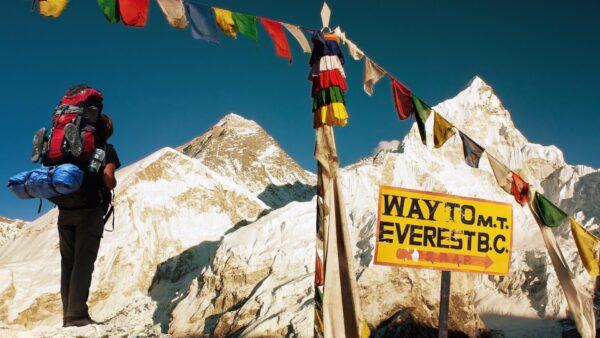
Trekking to Everest Base Camp gives you the opportunity to fully enjoy the views of the highest peak in the world.
Everest is located in the Himalayas, on the border between China and Nepal. The absolute height of the mountain is 8848.86 m, while the base camp is located at 5364 m. Trekking to EBC has a moderate level of stress, and does not require strong physical and mental preparation.


| 17.04-01.05.27 |
|
$830 | 8 | |
| 16.10-30.10.27 |
|
$830 | 8 |
To climb to 5364 meters, three main factors must coincide: the availability of money, time, and health. You should also consider the following factors that affect the difficulty of the route:
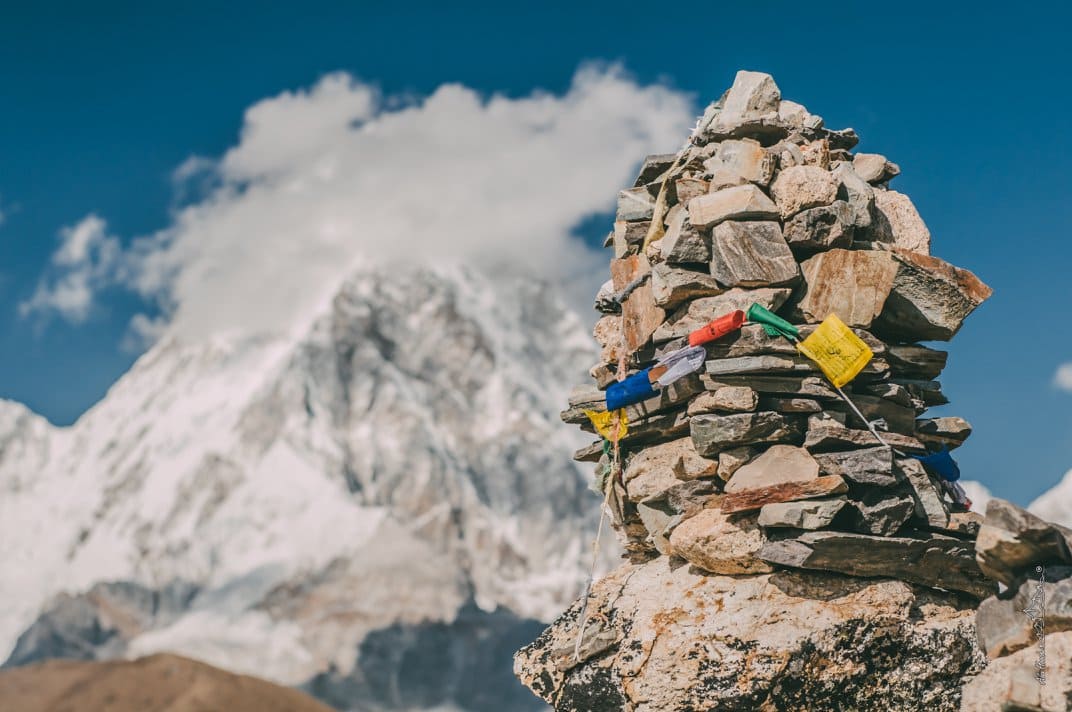
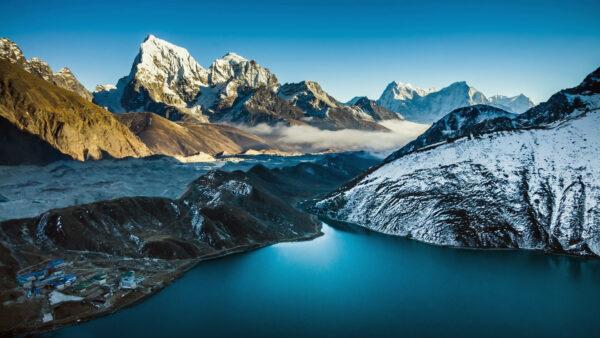
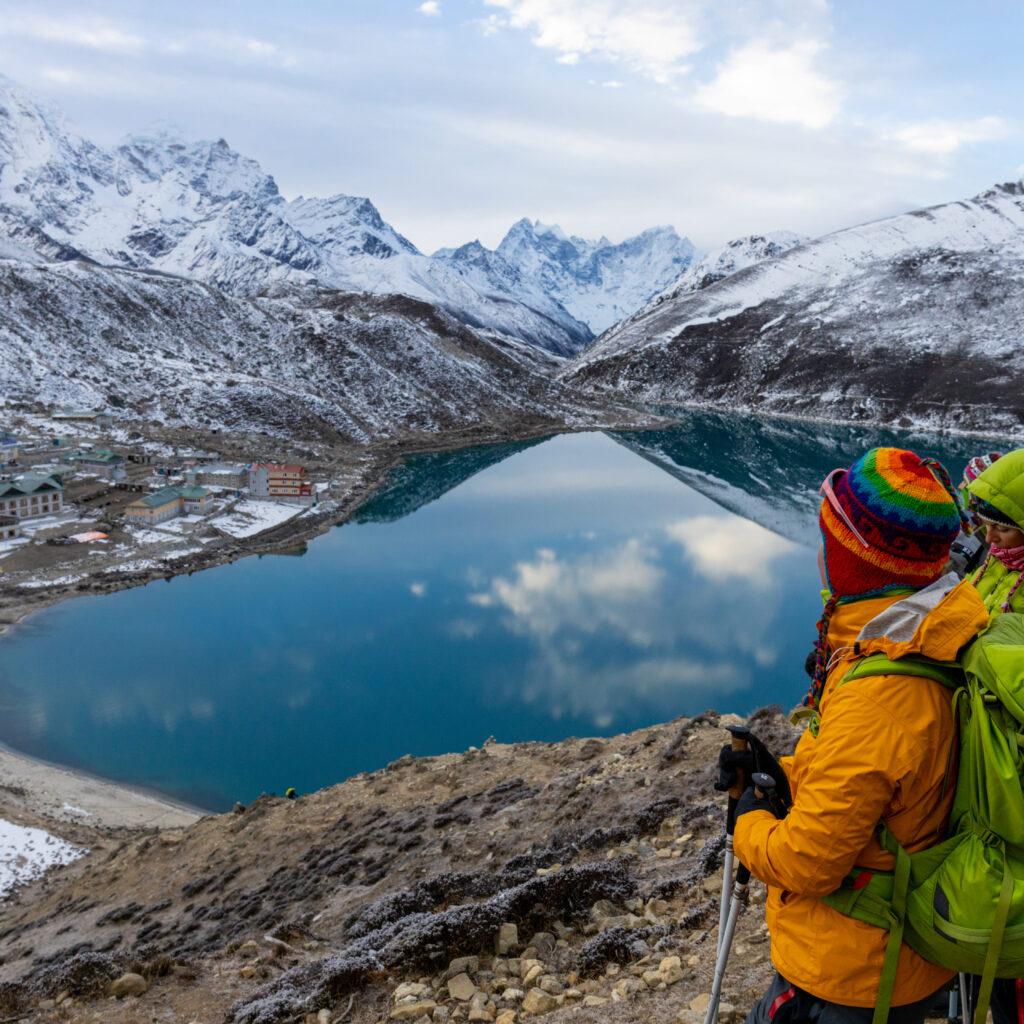
What should be the reward for overcoming all the difficulties on the route? If you choose the track to Everest Base Camp via Cho La Pass and Gokyo Lakes, you will see the emerald lakes of Gokyo, overcome a real mountain pass, take pictures against the backdrop of the highest mountains on Earth, climb Gokyo Ri (5330 m) and Kala Pattar (5648 m), get valuable experience of trekking in the harsh Himalayan mountains.
And when you reach the base camp, you will see excellent conditions for mountain hikers: comfortable tents with heaters, delicious food, Wi-Fi, and a well-organized life.
There are two Everest base camps: North (located in Tibet, China) and South (in Nepal).
The Northern EBC (5150 meters) can be reached not only on foot but also by car along the Friendship Highway. To visit the camp (and Tibet as a whole), you need to obtain a permit from the Chinese government and only in the summer months. On the way to the top, there is the highest monastery in the world, the Buddhist Rongbuk (or Dzarong). There is a legend that its founder dreamed of two temples on both sides of Chomolungma. He built Rongbuk and sent his disciple to Nepal, where he founded Tengboche. The two monasteries still maintain close contact with each other thanks to pilgrims and bless the brave ones who go to worship the Mother of All Peaks.
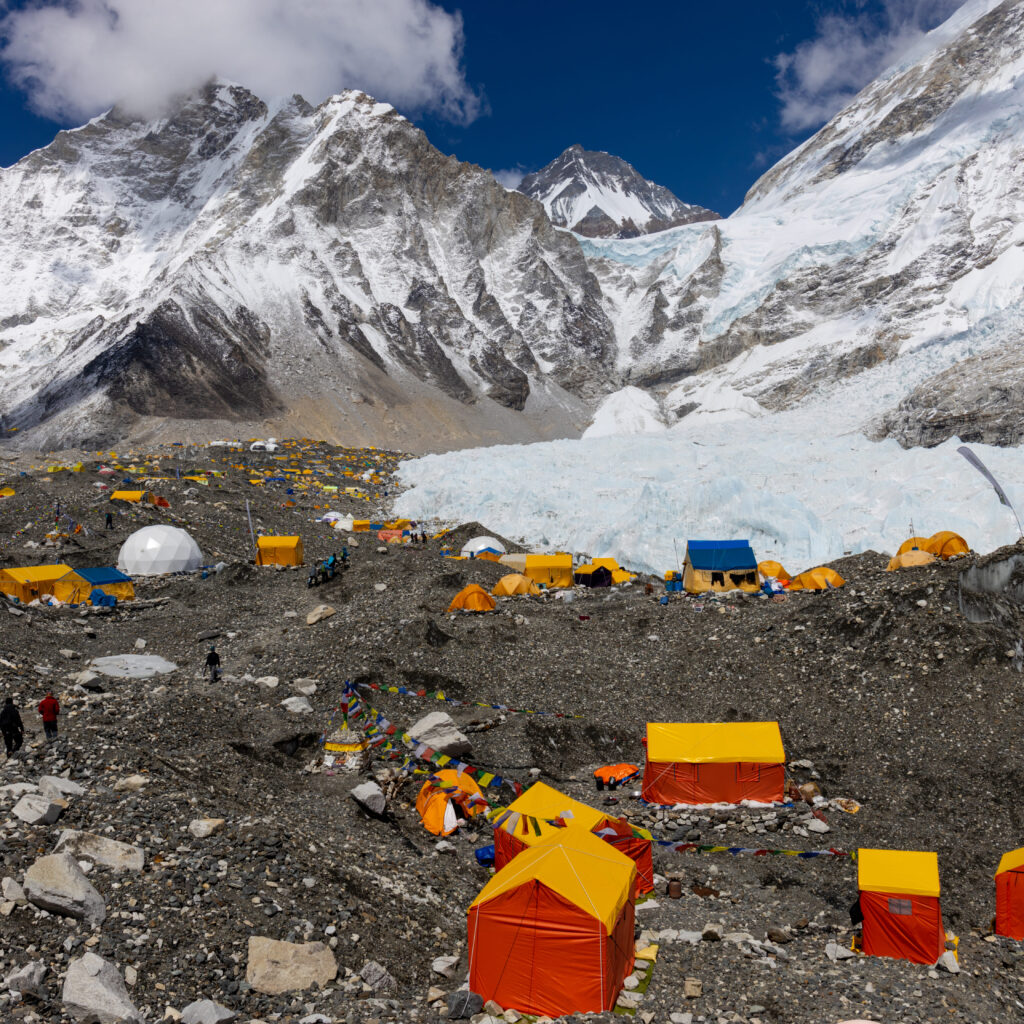
The southern EBC is located at a similar altitude to the northern one, with a difference of 200m – 5364m. The trek to the camp passes through the Sagarmatha National Park. Along the way, tourists cross all the climatic zones of Nepal: the tropics of Kathmandu, jungles, coniferous forests, alpine meadows, and permafrost in the highlands. The beauty of the track is that you simultaneously get acquainted with the cultures of Nepal and Tibet, join the unusual life of Buddhists and see many authentic villages and holy places (temples, monasteries – gompas, stupas). Above the southern base camp there are 4 more camps on the way to the top of Everest. They are located at higher altitudes:
The route with Kuluar starts from the town of Lukla. An airplane arrives there, or a helicopter (in case of bad weather). Then the route goes through Nepalese villages: Phakding, Namche Bazaar, Tengboche, Dingboche, Lobuche, Gorak Shep and returns back to Lukla along the same road. During the trek, you will go through approximately 130 km.
During the trek to the base camp through the Gokyo lakes, the road diverges from the classic track after Namche Bazar, and goes through a wilder gorge, and converges in Lobuche. This track is more difficult, longer, but also more spectacular. After all, it is circular: you will be able to see another eight-thousander – Cho Oyu from the Nepalese side.
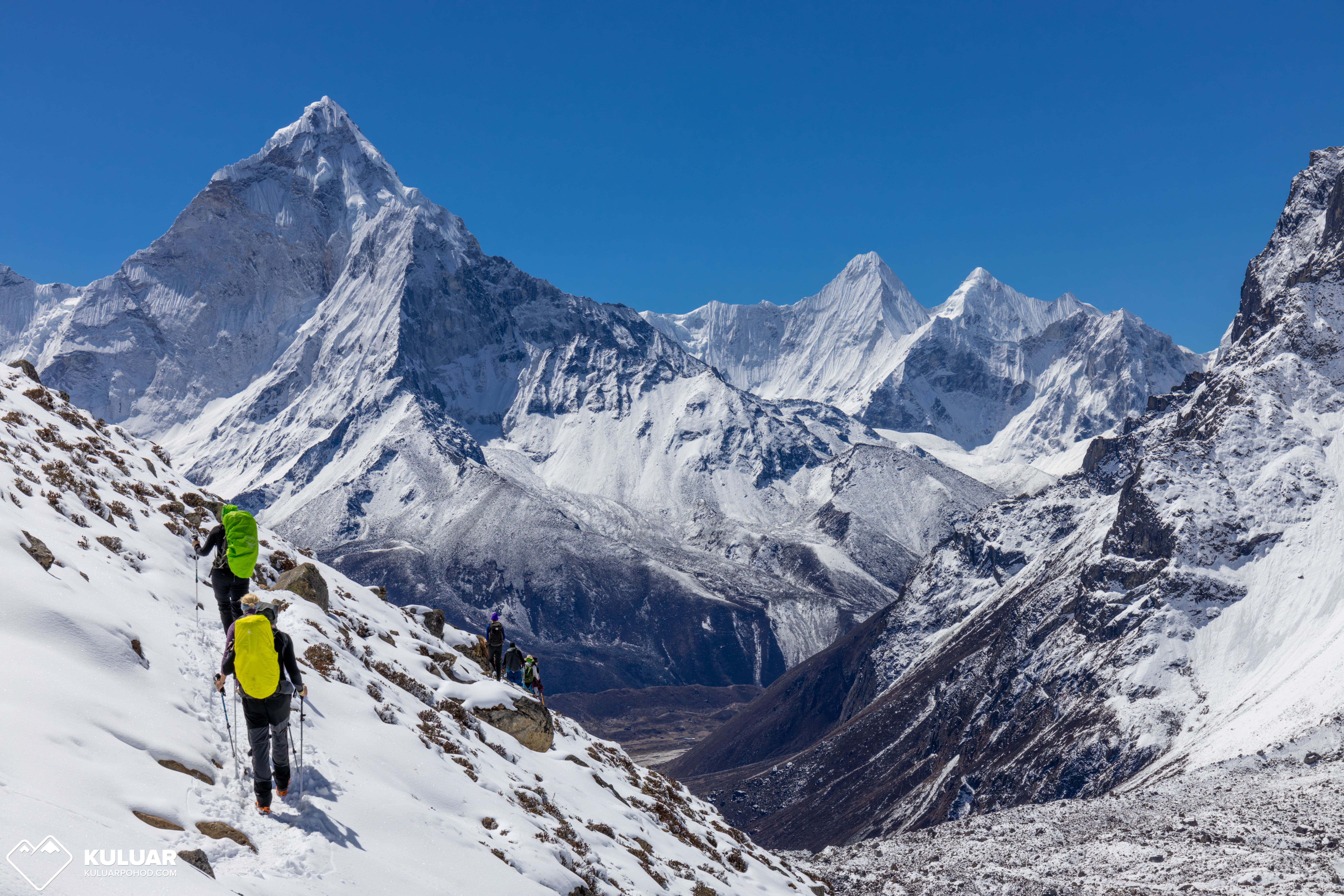
Many people ask themselves: "Will I be able to pass?". In our experience, most participants enjoy this track. The EBC track does not require any special technical or long-term training. If you are comfortable with weekend walks in the Carpathians in summer and can carry your own backpack, you will pass. If you have experience of winter hiking in the Carpathians, you can go without hesitation.
We have prepared tips for physical and mental preparation before the track:
But don't forget to have a positive attitude and faith in yourself – they will help you overcome any difficulties.
Factors that facilitate trekking in the mountains of Nepal
Group trekking usually provides better safety as you have the support and help of your fellow travelers. With no hassle of organizing, logistics and accommodation taken care of by Coulouar, you can fully enjoy your travel adventure.
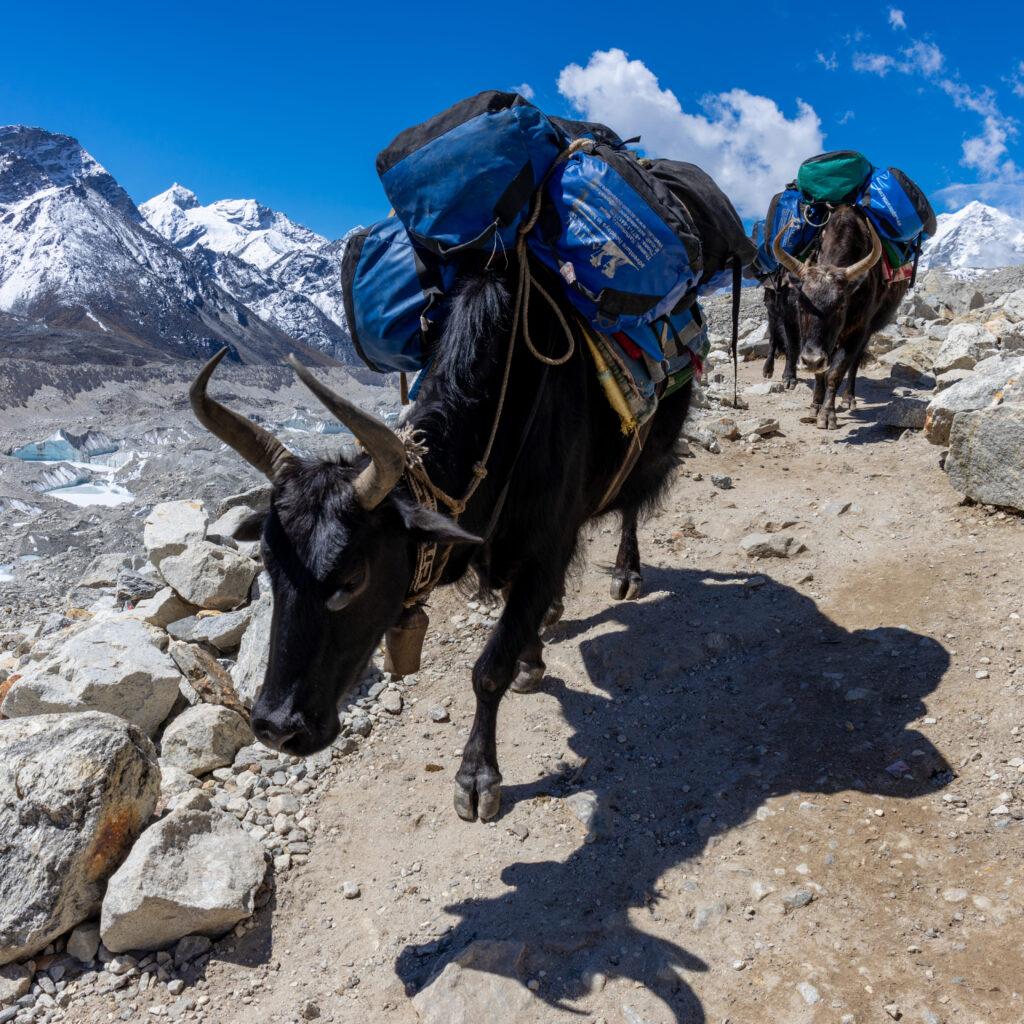
There are things that will make tracking more comfortable:
Of course, you can go trekking to the Everest Base Camp on your own, but if you are going to Nepal for the first time, it will be more comfortable and calmer to go trekking under the guidance of an experienced Ukrainian-speaking guide.
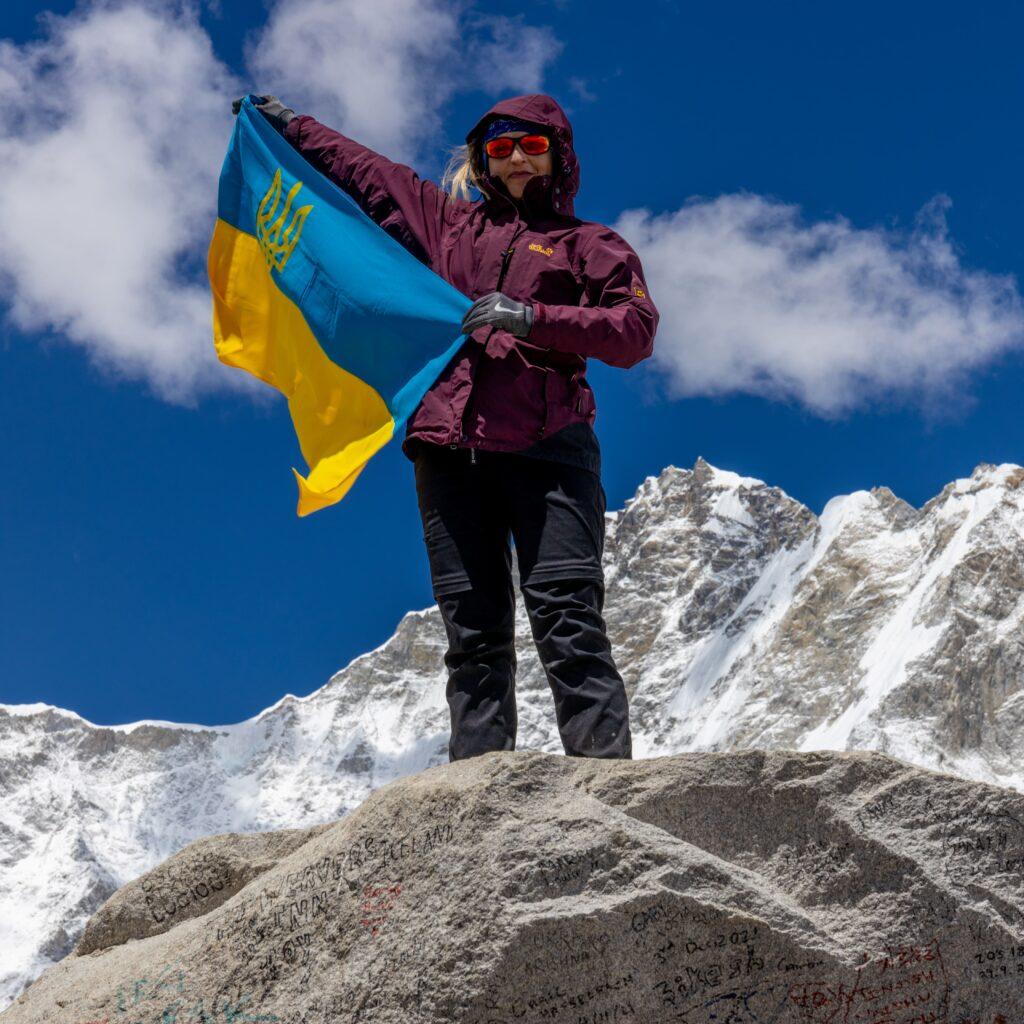
Review of the trip from the participant Olga: I went with Kuluar to the EBC track through the Gokyo lakes. This is not an easy track, sometimes with absolutely basic comfort conditions, and constantly at unusual altitudes (3–5 thousand meters), to which you need to skillfully adapt to avoid mountain sickness or its consequences. Therefore, I chose among professionals who know their job and have been doing it for years. The Himalayas are not a place where you just come and jump up on a mountain and quickly run down because you don't have time. It's a living ecosystem that can accept or repel those who are not prepared or ready to face the powerful forces of nature. It's about time, preparation, intention, focus, it's a way and an opportunity to immerse yourself in them and in yourself. And the Kuluar team very skillfully helps to make it as easy as possible, taking care of all the details of the organization, developing the right acclimatization plan and booking the best lodges along the route. Special thanks to the teamleader and consultant for their support, professionalism, all the tips, endurance, and friendly communication for several weeks before and after the trip. If you go to the mountains – then definitely with them, because it's Kuluarissimo:)
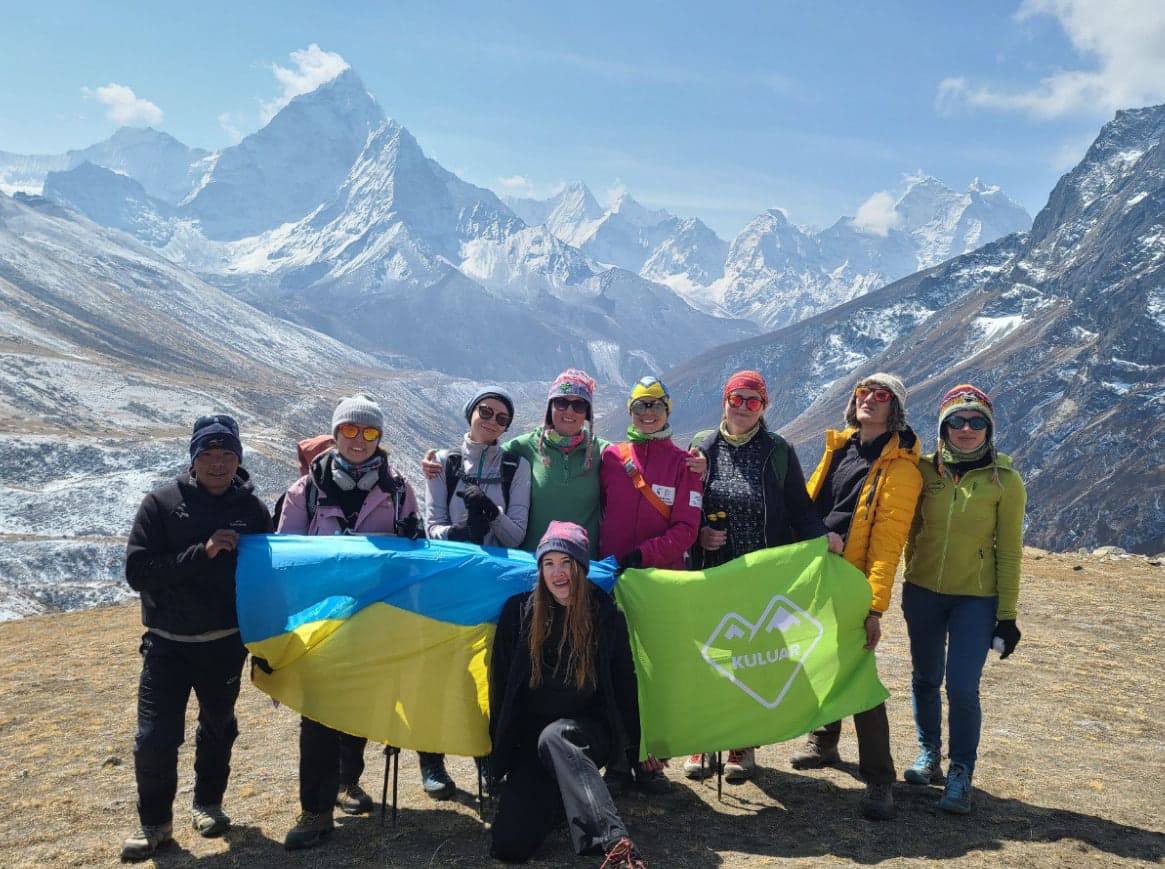
So, seeing Everest with your own eyes is quite possible for ordinary tourists of all ages, even people aged 60–65 can do it. This journey is worth it to get out of your comfort zone, look at the "roof of the world", test yourself, feel the majesty of nature and rediscover your love for the mountains.
If you still have questions, we recommend you to read the article Trekking in Nepal. Full guide, answers to common questions, because after reading it you will have all your doubts disappeared and you will be definitely ready to travel!
Kuluar – your life-changing mountain experience!