

Do you want to enjoy breathtaking views of Everest, the highest peak on our planet? Then it's time to check out the trekking program in Nepal! We offer you three routes which differ in difficulty level, price and duration. But what they all have in common are the breathtaking views of Everest and the chance to get up close and closer meet with the snowy ruggedness of the Himalayan mountains.

Trekking to Everest Base Camp – The Classic Route
Duration: 15 days, 109 km
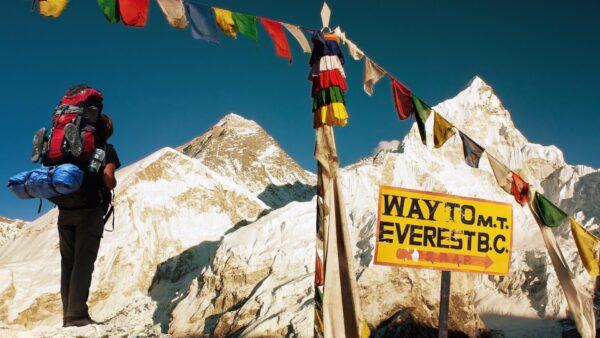
Benefits:
- Visit Everest base camp and meet the daredevils who dared to go to Dzhomolungma.
- Walk along the Dudh Kosi, one of the most arduous rivers in the world.
- Cross suspension bridges of incredible beauty.
- Visit the Hillary Memorial and School of one of the first people to climb Everest.
- See a real Yeti scalp in one of the high mountain museums.
Trekking to Everest via Cho La Pass and Gokyo Lakes
Duration: 18 days, 118 km
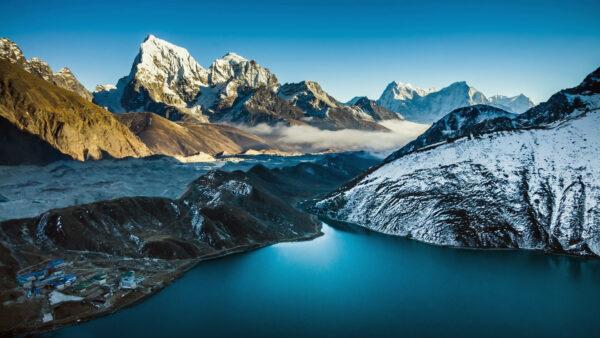
Benefits:
- See the emerald lakes of Gokyo.
- Cross a real mountain pass.
- Take pictures with the highest mountains on Earth.
- Climb Gokyo Ri (5,330 m) and Kala Pattar (5,648 m).
- Get a valuable trekking experience in the rugged Himalayan mountains (video of the trek).
Nepal Express Tour "See Everest"
Duration: 7 days, 48 km
Nepal

Distance 48 km
Duration
7 days
No program dates have been added yet. to the consultant and we will add convenient ones for you
Benefits:
- Even unprepared tourists can do it.
- It's short and intense, but not exhausting.
- You'll see the bridge, the memorial, and the Hillary School.
- Of course, you will see Mount Everest.
- Experience the national culture in the high mountain villages.
You can read more about each route below, and learn how trekking to Everest base.
Tours to Everest with Kuluar in numbers
700
participants
98
groups were led
68
reviews on the site
General Information
Everest is located on the border of Nepal and China at 8,848 m above sea level. Everest Base Camp (altitude 5,364 m) is the starting point for those who dare to climb the impregnable Jomolungma. Not everyone can boast of climbing such mind-blowing heights! However, the trek to the base camp and the climb to the peak are two different events. In this article, you will find a description of the first of them. If you want to climb Everest itself, you should go here.
In fact, Everest Base Camp (EBC) consists of two parts, one located on the southern, Nepalese side of the slope and the other (northern) on the Tibetan side. We will travel to the camp from Kathmandu, the capital of Nepal.

When choosing a trek to Everest base camp, it is important to consider several important aspects. Although this route is very popular among tourists, it is not an easy one. But don't let that scare you! You just need to be responsible in your preparations, and the managers of the Kuluar hikers' club will help you with this.
We do our best to make your trek to Everest base camp safe and fun. Get our guides' support, and the memories of this trek will serve as a source of inspiration for you and your family for a long time to come.
What are the things you should take into consideration when going on a trek in the Himalayas?
Weather and Equipment
The climate in any mountain is very changeable, so it's always important to consider the time of year and the peculiarities of the route. The simple rule is: the higher up, the greater the differences, so you need to equip yourself with thermal underwear and functional clothing. At the same time, during the day under the blazing sun it can be hot, and a strong wind can bring rain clouds. So your clothes should be windproof, waterproof, quick-drying, and comfortable. You should also choose sturdy boots designed specifically for hiking. Please note that they must not squeeze – make sure that even in a thick sock, your toe does not touch the toe of the boot. It is ideal if you have time to test the shoes before you start your hike. Read more about equipment here.

You should also take into account the time of year. The Himalayas have a subtropical monsoon climate, which means that in the summer it is humid because there is a lot of rainfall. Because of this, it gets muggy from time to time, although the temperature does not rise very high. In the winter, however, the winds blow from the mainland and the air becomes dry. Also, the temperature in winter can change as much as 15 degrees or more. In summer the fluctuations are not so strong, although at an altitude of more than 4500 meters at night there may be small frosts.
In this regard, the best time to hike in the Himalayas is spring and fall, when the climate is relatively flat. Spring is especially popular with tourists and if you also want to catch the Nepalese New Year, you should book a trip in April. But if you want a break from the hustle and bustle, we recommend choosing the autumn months.
Physical training – how can you feel at altitude?
There is much less oxygen in the high altitude air than we are used to. In combination with physical exertion and weather conditions, there is indeed a possibility of deterioration of health. Therefore, it is important to strengthen the body in advance with simple exercises. For example, squats and running will noticeably increase your endurance and allow you to acclimatize faster in the conditions of severe altitude.
Lifehack from the Kuluar guides: install the appropriate apps on your smartphone and work out without wasting much time! Even a simple but regular morning exercise will help you feel better.
However, if something is bothering you, it's worth consulting your doctor before you go. For a list of medical contraindications, click here.
Your personal preferences
Travelling to Nepal, and, moreover, trekking in the mountains is not a cheap venture. You will have to spend money not only on the program itself and the flight, but also on quality equipment. This is important, because it can affect not only your comfort, but often your life too. If you are a beginner and this is your first serious trekking, pay attention to the program "See Everest" – it is short and quite easy, but you will have as much experience as you had at the other two more difficult routes. If you are determined to try something harder, pay attention to the other two tours.

So, what's waiting for you?
Trekking to Everest Base Camp – the classic route
This route will suit both those who have already hiked the mountains and the less experienced enthusiasts. However, if this is your first hike, I would advise you to try another program. On this kind of route, you should be ready to face not only physical difficulties – a hike in the mountains is also mentally exhausting. However, the beauty and grandeur that you will see from the stops and observation points at the camping points and on the way to the camp is worth trying your strength on this trek.
Duration: 15 days, 109 km
Difficulty:
The altitude gain on this route will be uneven, as will the number of kilometers covered each day. One day you will cover 8 km, the next day – 19 km, today you will climb only 400 m, and tomorrow 1000 m. Read more about the climb here.
In spite of the fact that there will be some populated places along the way, the track itself does not always imply trails. You will also come across famous suspension bridges in some sections – the locals got used to them a long time ago, but you may find them uncomfortable. But don't worry, crossing the bridge is safe.
Also, you may have some difficulty with the climate. In the mountains it is very changeable, so take this into account when choosing your outfit. Do not forget to bring a cap and sunscreen – the sun can be hot during the day, and at night the temperature can drop to below zero. Choose a sleeping bag with a comfort temperature of -2 to 0 degrees Celsius, and if you tend to get chilly, -5 ℃ is fine.

Benefits:
The main benefit of this route is, of course, the views. Already during the first days, if the weather is clear, you will be able to see Everest. You will also walk along the Dudh Kosi River, one of the most challenging rivers in the world!
Although none of the trails involve climbing Everest itself, you will have the opportunity to climb the real summit, Kala Pattar, which is 5,648 m high! In addition, you will also see a rare mountain phenomenon – the Khumbu Icefall.
Along the way you will visit several villages where you can learn about the national culture, taste the local food, charge your phones and cameras and gain strength for the next treks.
In addition to the incredible Himalayan peaks, you can see the Hillary Monument and School. Edmund Hillary was a New Zealand mountaineer who was one of the first to conquer Earth Peak, for which he was honored as an honorary citizen of Nepal. With his help, hospitals and schools were built in the Himalayas – you will have a chance to see one of them.
Cho-La Pass and Gokyo Lakes Tour
Successful completion of this route depends largely on your physical training. This route is as challenging as it is fascinating. Like the previous route, here you will have the opportunity to pass the Dudh Kosi river valley and see Everest and the unforgettable mountain lakes of Gokyo, the emerald eyes of the Himalayas.
Duration: 18 days, 118 km
The main difficulty of this route is its length and the fact that you have to climb serious Himalayan peaks: Gokyo Ri (5,330 m) and Kala Pattar (5,648 m). It's important to remember that the air at altitude is thin, and this can cause some symptoms of mountain sickness.
You will also have to cross a real mountain pass. But it will happen only on the 10th day of the route, so you will have time to prepare for it, both mentally and physically. The climb will take about 4 hours and will seem impregnable at first. But you'll make it – just trust the years of experience of our guides!

Benefits:
The highlights of this route are the Gokyo Lakes, stunningly beautiful bodies of water scattered between the peaks of the Himalayan peaks. On day 7, you can see the first three: Longpong (4,650 m), Taujun (4,710 m) and Dudh Pokhari (4,750 m), with the Gokyo village on the shore, which will shelter you for the night. The next day you will go to see the lakes Tonak Tsho (4840 m) and Ngozumpa Tsho (4980 m).
In addition to the lakes and Everest, which is impossible to miss, you will also have the opportunity to enjoy the views of the other eight-thousanders - Cho Oyu (8261 m), Lhotse (8516 m), Makalu (8485 m).
Don't forget to charge your camera and phone regularly – I understand that surrounded by such beauty you can forget about everything, but just think how many incredible photos you can take! On your way you will meet a lot of mountain lodges – small hotels, where you can rest, wash, and try the national cuisine.
In addition, once you arrive in Kathmandu, you will have the opportunity to visit temples and other places of interest in the city.
Take a look at the video about the trek made by our guide!
Nepal Express Tour "See Everest"
This route is what you need if you're just starting out in the mountains or want to see the mountain peaks without having to go on a long expedition. Since this Everest tour takes only 7 days, it can also suit those of you who have a very busy schedule and vacation time is "worth its weight in gold".
Duration: 7 days, 48 km.
The most difficult part of the route is waiting for you on the 3rd day – 10 km. The difficulty of this section is that the trail goes past the Dudh Kosi River and over drawbridges, the most famous of which is the Hillary Bridge. Beyond the bridge begins a long climb to Namche Bazar, the main point of this trail, located at an altitude of 3,440 meters. This mountain village is located on the northeastern slope of the Himalayas in the Khumbu region. Here you can rest, refresh yourself, take pictures and buy souvenirs.

Benefits:
The main benefit of this route is that it's fairly easy, and just slightly inferior in intensity to the previous two.
By choosing this Everest tour, you can enjoy views of all the same mountain peaks from the other trails, and you will be much less tired.
In addition to Everest, you will be able to see and take photos of Mt. Lhotze (8416 m) and Ama Dablam (6816 m).
Also, on the fourth day, you will visit the school and the Hillary Memorial of one of the first people to summit Everest. You will also see with your own eyes a real Yeti scalp – it is kept in one of the surrounding monasteries!
Also, if you take a return ticket on a late flight, you'll have plenty of time left on the last day of the tour to walk around Kathmandu.
Why the Himalayas?
The Himalayas is a place of power. These stunning mountains, spread out under an endless dome of the sky, for a long time remained closed to foreign tourists and climbers.
One of the first daredevils to climb Everest was New Zealander Edmund Hillary. He made the historic climb in 1953 with Tenzing Norgay, a Nepalese. I would not be telling a lie if I said that we owe it to them to be able to see the Himalayan peaks.

No matter what route you choose, no matter what time of year you go, you can visit the most amazing places Nepal has to offer: Everest Base Camp, the peak itself, the amazing Gokyo Lakes, the incredible ice falls... and being in the mountains itself is a unique experience, both on the top and in the valley.
Himalayan trekking is a real adventure which will give you a lot of unforgettable impressions!
The big mountains are waiting for you, hurry up and choose the tour you like!