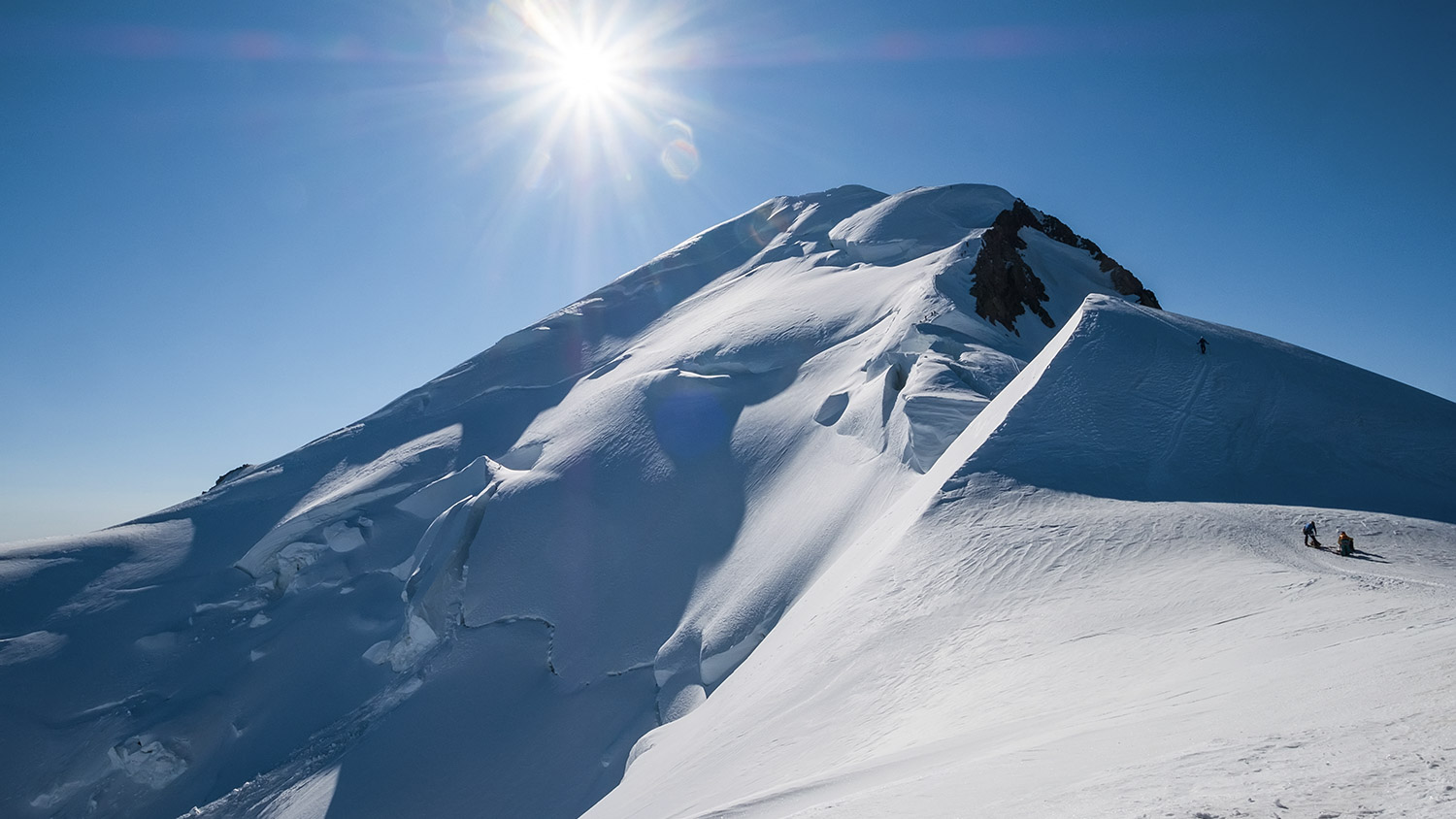
If you already have multi-day hikes, climbs in the Carpathians or high-altitude trekking in Nepal under your belt, you are probably asking yourself more and more often: “Why not try a real mountaineering climb?”
That is when Mont Blanc or Kazbek appear on the list of dream summits — two iconic peaks that become the first step into mountaineering for many people.
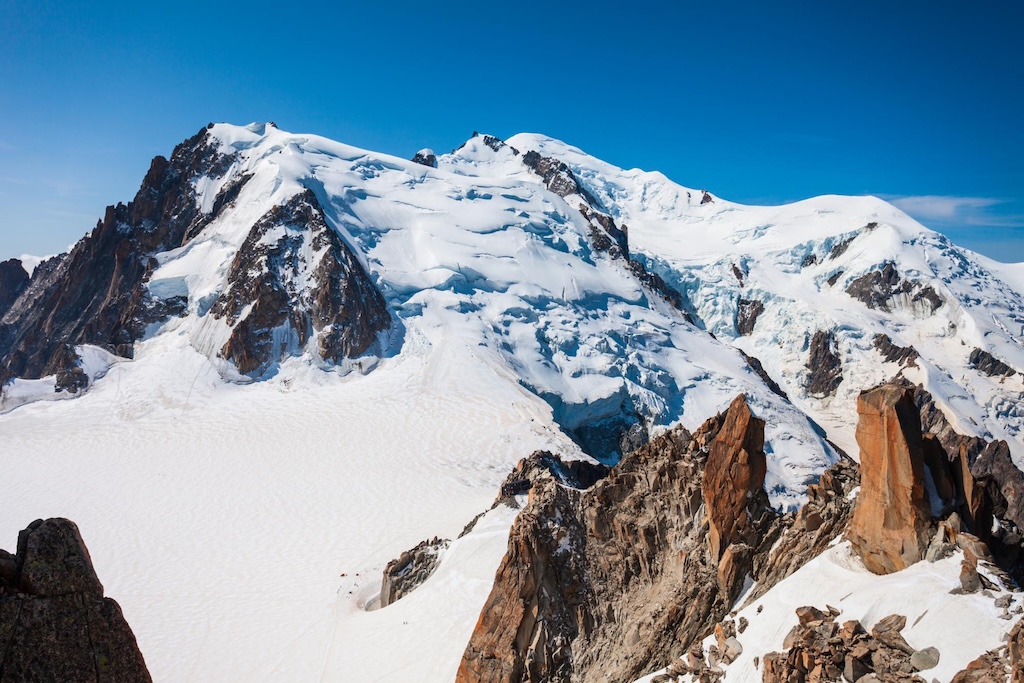
Mont Blanc is the highest peak of the Alps and Western Europe (4,808 m), on the border of France and Italy. It is a symbol of world mountaineering that attracts both beginners and professionals from all over the world. Mont Blanc is one of the summits of the Seven Summits programme, which makes climbs on it very popular.
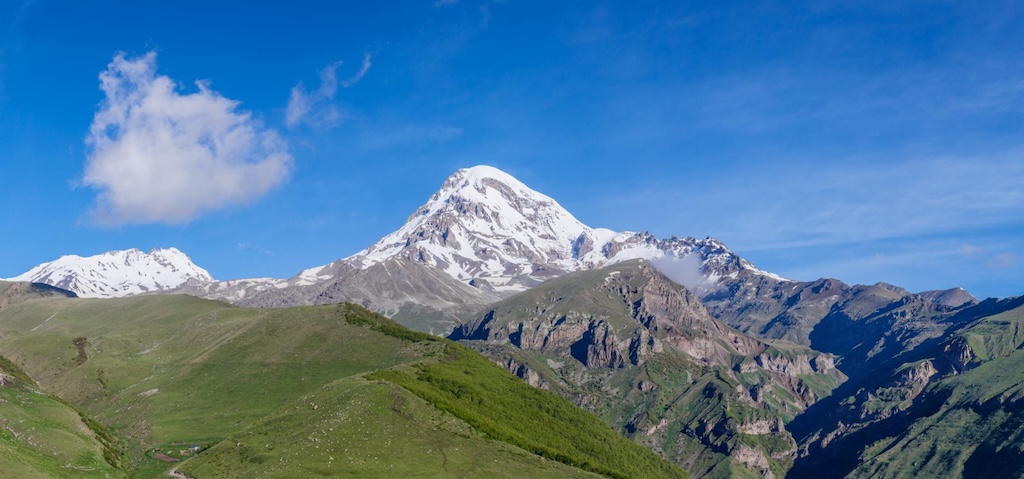
Kazbek is a dormant stratovolcano in the Greater Caucasus. Its height is 5,033 m according to international mountaineering maps (Georgian sources give 5,054 m). It is the altitude that makes Kazbek so attractive: it is a chance to climb your first five-thousander. The wilder character of the route makes it an interesting and ambitious goal for climbers.
Despite their reputation as “first mountaineering peaks”, climbing Mont Blanc and Kazbek is no walk in the park. Technically they are harder than ordinary trekking routes, but they are accessible to people without years of mountaineering experience — provided they prepare properly. What skills you will need, how to train, what gear to choose and what to pay attention to before you leave for the mountains — we cover all of this in this article.
Both peaks are considered a good choice for a first mountaineering experience: they combine relatively low technical difficulty with the opportunity to learn glacier travel, use specialised equipment and adapt to altitude. But they differ significantly from ordinary trekking routes — and it is not only about the altitude.


The altitude and difficulty grade of the classic routes on Mont Blanc and Kazbek are similar, but the nature of the climbs is different. So it is impossible to name one of the peaks as definitively harder: it all depends on the criterion — technical difficulty, infrastructure or objective hazards.
| Feature | Mont Blanc | Kazbek |
| Summit altitude | 4,808 m | 5,033 m (5,054 m according to Georgian data) |
| Difficulty grade* | classic Goûter route — PD; Three Monts route — PD+; Italian route via the Gonella hut — PD | classic route from Georgia — PD (2A) |
| Main difficulty | Goûter — rock, rockfall, sharp snow ridges; Three Monts — steep snow and ice slope; Gonella — getting around crevasses and seracs on the glacier | crevassed glaciers, steep slope below the summit |
| Dangerous sections | active rockfall in the Grand Couloir on the Goûter route; avalanches and serac fall on the other routes | hidden crevasses on the Gergeti glacier and the plateau, hard blue ice on the slope below the summit |
| Accommodation | mostly in mountain huts (book well in advance) | mostly in tents or at the Meteo Station hut |
| Infrastructure | well developed: mountain tramway, cable cars | almost none; some of the load can be carried up by horses |
*PD (peu difficile) is a grade on the French alpine scale meaning “a little difficult” or “moderately difficult”. For Kazbek, the grade in brackets is from the post-Soviet classification.
Of the three routes on Mont Blanc, a beginner should first look at the classic one — via the Goûter hut. Kuluar runs programmes on all three: via the Goûter, the Three Monts traverse and along the Italian ridge via the Gonella hut.
The season on both peaks runs from June to September, but each month has its own features.
The classic Mont Blanc climb is a long and exhausting ascent up the steep rocks of the Aiguille du Goûter from the Tête Rousse hut (3,167 m) to the Goûter hut (3,835 m). The most dangerous spot on the way is the Grand Couloir, nicknamed the “Couloir of Death” because of rockfall. That is why climbers usually cross it at night, while the frost holds the stones in place. The final stretch to the summit follows a very narrow, sharp snow and firn ridge.
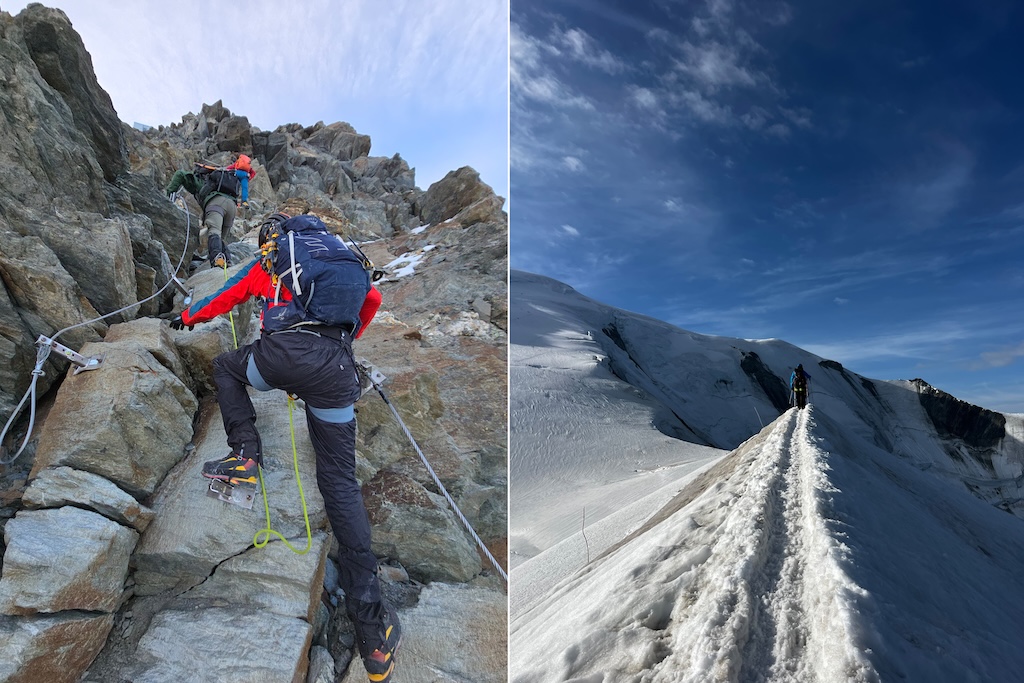
Mont Blanc is “civilised” mountaineering: an extensive network of lifts, a mountain tramway and huts with a roof over your head and hot meals.
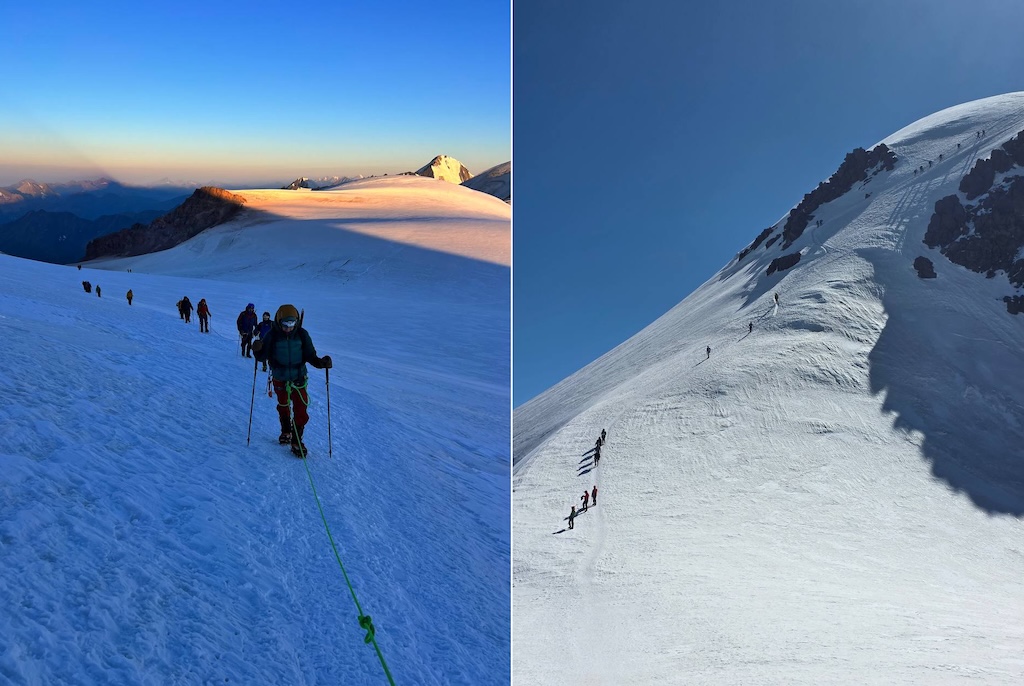
The Kazbek climb, by contrast, is almost entirely on snow and ice: there are no rock sections on the classic route from Georgia. The main danger is the Gergeti glacier with its many deep crevasses hidden under snow bridges. Hard ice is often exposed on the final slope — then extra protection with ice screws and flawless crampon technique may be needed.
Climbing Kazbek is “real” mountaineering. Packs are heavier here and the approach to base camp is longer: you will have to carry your gear yourself or hire horses for part of the route. The night at the Meteo Station (Betlemi Hut, 3,650 m) is spartan. Read more in our article about Mount Kazbek.
So Mont Blanc is a dynamic and technically more demanding climb, while Kazbek is a classic high-altitude test of endurance and self-sufficiency. That is why you should choose between them not on the basis of “which is easier”, but according to your own experience, fitness level and the format that suits you best.
The technical difficulty of the two peaks is similar, so the requirements for participants are the same. Depending on your starting fitness, preparation takes 3 to 6 months and covers three areas: physical training, basic mountaineering skills, and gear and clothing.
The main challenge on Mont Blanc and Kazbek is accumulated fatigue: steep slopes, long ascents and an exhausting summit day. The final push lasts 8–12 hours and demands great effort in conditions of oxygen deficiency, when every move is harder. The better your fitness, the less you will suffer on the way to your dream summit.
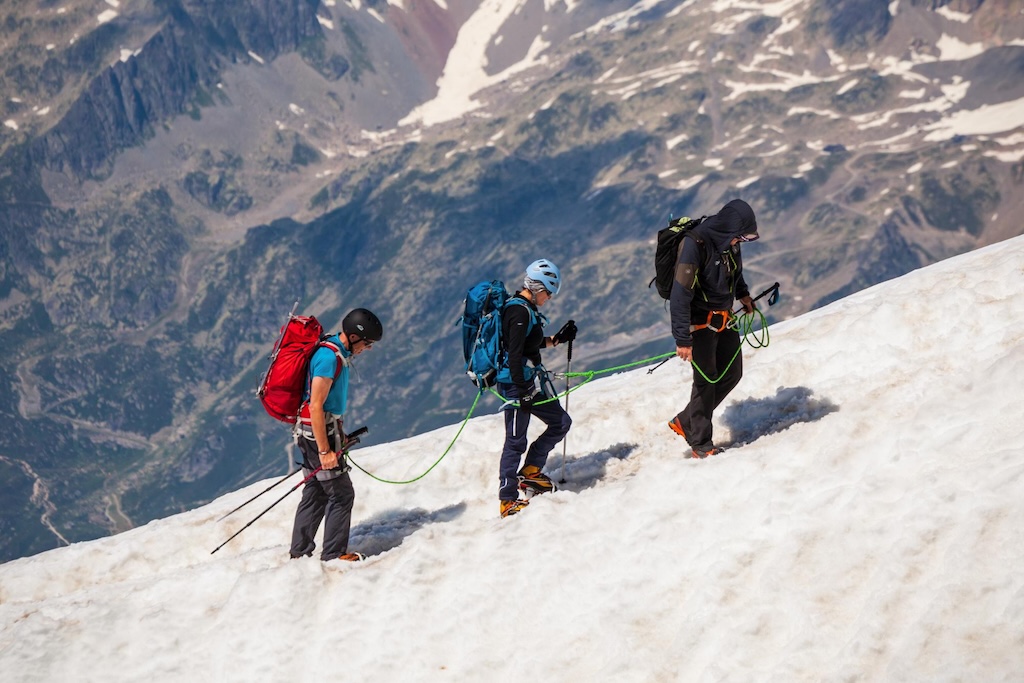
The goal of training is endurance. Work on several areas at once:
For more on physical preparation, including training schedules, see our article on physical preparation for a mountain hike.
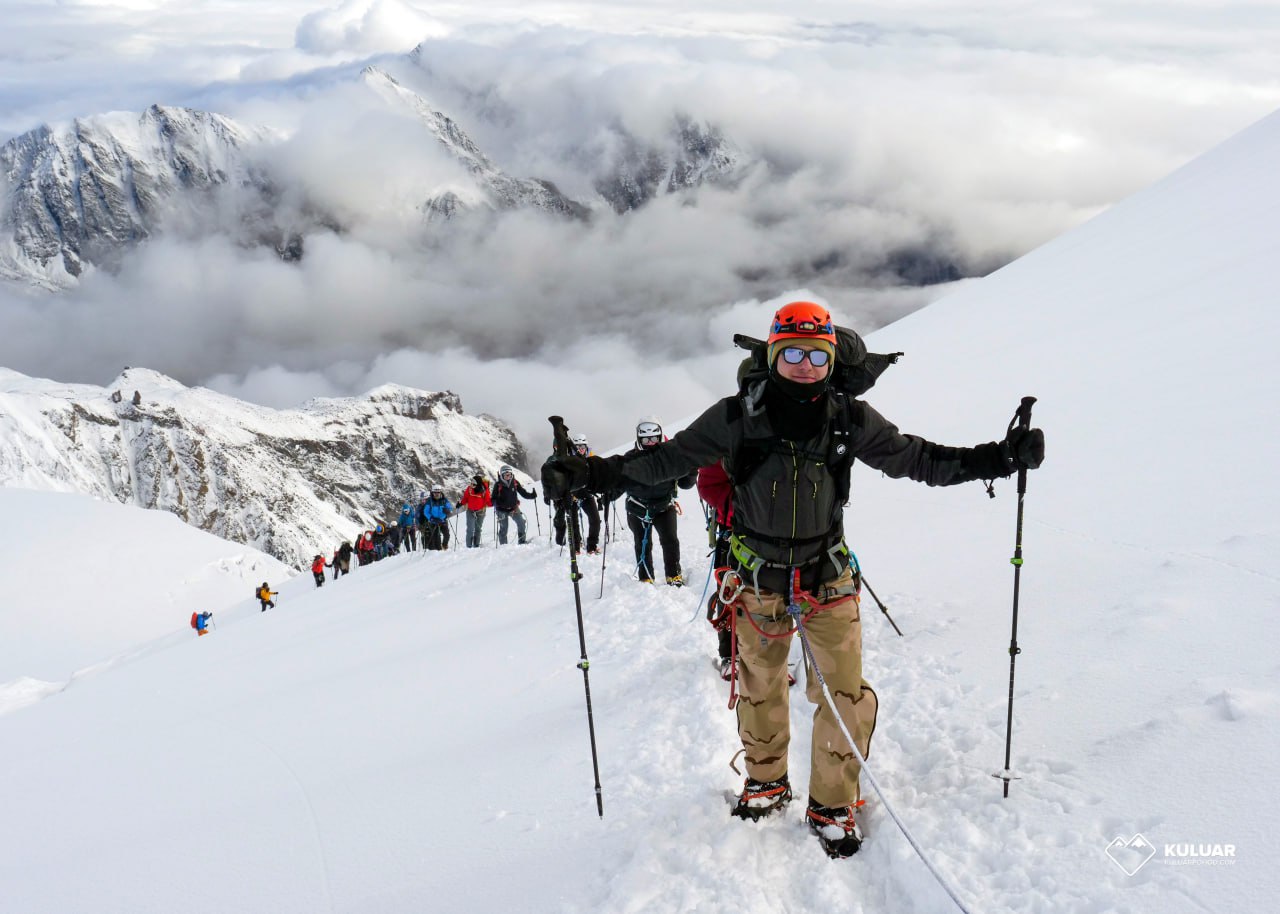
Climbing Mont Blanc and Kazbek requires basic mountaineering knowledge and skills. First of all, walking confidently in crampons on snow, firn and ice, using an ice axe and being able to self-arrest in a fall. It is important to learn to work on a rope team: to understand how to move on a crevassed glacier, keep the right distance between team members, know the basics of belaying and the safety rules on snow and ice routes.
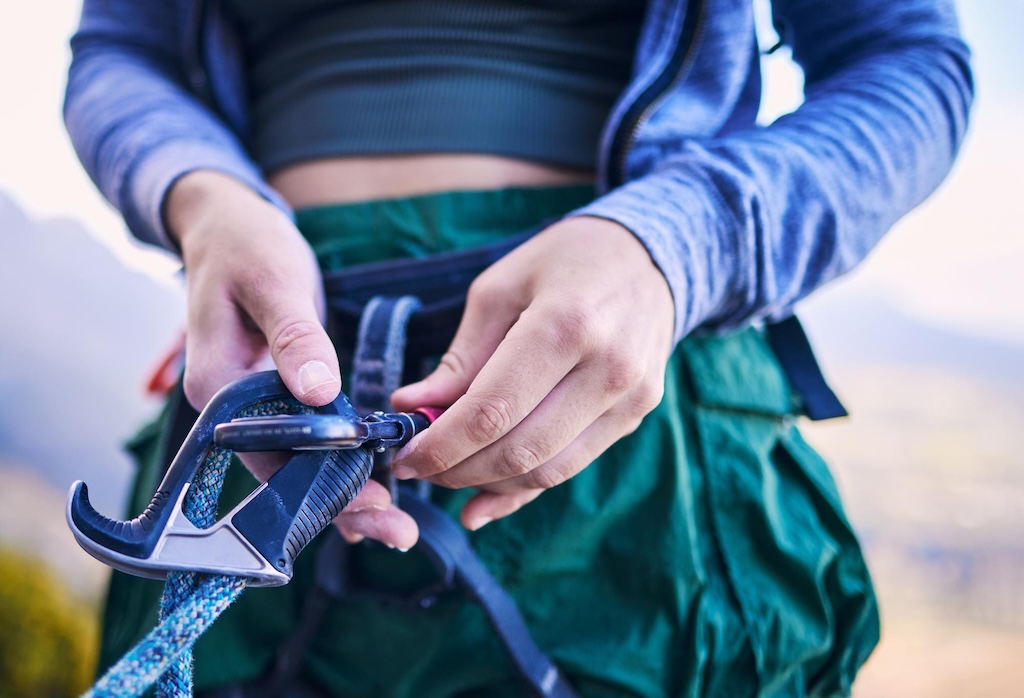
Basic training also includes rope work: the most common knots (figure eight, clove hitch, prusik), carabiners, belay devices and other basic climbing equipment. It helps to have a general idea of pulley systems used in crevasse rescue.
You will also need theory: basic mountaineering terms, rules of moving in the mountains, choosing your pace, breathing technique, hydration and other principles that climbing safety depends on.
The most effective way to gain this experience is under the guidance of experienced instructors. Practical sessions at a mountaineering school let you not only learn the necessary techniques, but also practise them in non-standard situations. Kuluar runs mountaineering schools for different levels with our experienced team leaders.
For the climb you will need a set of mountaineering clothing, boots and specialised equipment. Detailed checklists are in our materials: the full gear list for Mont Blanc and for Kazbek (in Ukrainian). Let’s look at the differences.
Sleeping bag. For Mont Blanc, if you sleep in huts, a sleeping bag with a comfort temperature of about 0 °C is enough (the exception is the tent camp near the Tête Rousse hut, where a warm sleeping bag is a must). For Kazbek you need a warmer one, with a comfort rating of roughly −5…−10 °C.
Camping gear is needed on Kazbek:
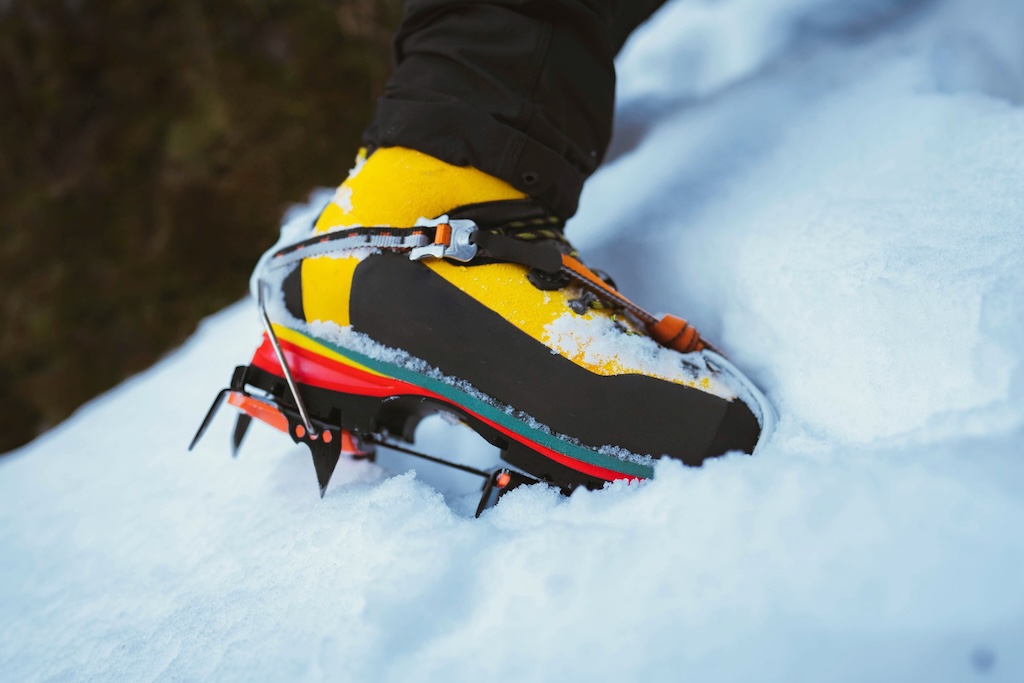
Mountaineering boots are required for both climbs. They are stiffer than trekking boots and designed to take crampons. For Mont Blanc in summer, good single-layer mountaineering boots are usually enough, while for Kazbek it is better to take insulated models.
Well-chosen gear is an important part of safety. Before you leave for the mountains, don’t just pack everything on the list — make sure your clothing, boots and equipment fit you: test them during training and learn to use them in advance.
Another challenge of Mont Blanc and Kazbek is altitude. At 5,000 m the air pressure is about half that at sea level, so each breath contains almost half as much oxygen. Your body needs time to adapt: without proper acclimatisation, altitude sickness can develop.
Acute mountain sickness (AMS) is a condition caused by oxygen deficiency (hypoxia) and low air pressure at high altitude.
Above 3,000 m many people feel AMS symptoms. Mild ones include a dull headache (most often in the morning or after exertion), mild nausea, loss of appetite, shortness of breath with minimal effort and insomnia.
Severe forms of altitude sickness are less common at the altitude of Mont Blanc or Kazbek than on higher peaks, but they cannot be ruled out, so good acclimatisation is a must for a safe climb. It works differently on the two peaks.
On Kazbek, acclimatisation usually happens on the route itself thanks to the logistics. For example: a night in Stepantsminda (1,740 m), a crossing over the Sabertse pass and a night near the Altihut hut (3,014 m), then on to the Meteo Station (3,650 m). From the Meteo Station climbers make an acclimatisation hike to the plateau (4,100–4,300 m) or to the Betlemi chapel (3,900 m) and come back down to sleep. The mountain itself sets the right schedule.
On Mont Blanc, lifts and the tramway take you to high altitude very quickly, so the risk of AMS is higher, and acclimatising on the mountain itself makes no sense. It is better to first do acclimatisation hikes on neighbouring peaks near Chamonix or go up to the Le Tour glacier for snow and ice training.
Technically the peaks are similar, so the format decides. Mont Blanc is a more dynamic climb with rock, lifts and nights in huts. Kazbek means a longer approach, camping and a test of endurance and altitude, but it is your first five-thousander.
Depending on your starting fitness, 3 to 6 months of regular endurance and strength training. During this time you should also complete basic mountaineering training and choose and test your gear.
You don’t need years of experience, but basic skills are a must: walking in crampons, using an ice axe, self-arrest and working on a rope team on a crevassed glacier. It is best to practise them in advance at a mountaineering school.
The season runs from June to September, with the most stable weather in July and August. But at the end of a hot summer the snow in the Grand Couloir on the classic route melts and the rockfall danger grows, so choose your dates with the conditions of the particular season in mind.
For both peaks — stiff, crampon-compatible mountaineering boots. For Mont Blanc in summer, good single-layer models are usually enough; for Kazbek, insulated ones are better.
Yes. Lifts and the tramway take you to high altitude quickly, so acclimatising on the mountain itself makes no sense. It is better to first do acclimatisation hikes on neighbouring peaks near Chamonix or go up to a glacier for training. On Kazbek, acclimatisation happens on the route itself.
Reaching the summit of Mont Blanc or Kazbek is a realistic goal for those who already have mountain hiking experience and are ready to prepare systematically. Here is what your preparation should include:
Following these recommendations greatly increases your chances not only of reaching the summit, but also of truly enjoying the climb. All that remains is to choose the mountain and the expedition format and start preparing.
If you are ready to take the next step from trekking to mountaineering, check out the Mont Blanc climb and Kazbek climb programmes by Kuluar.
Mountains? Go with Kuluar!