Plan of the article
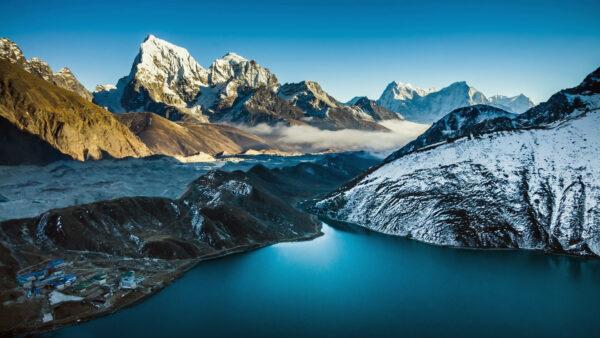
More than 40% of Nepal's territory is located at an altitude of more than 3 thousand meters above sea level. It is home to 8 of the 14 highest mountains in the world, including Mount Everest. What are the other attractions? More than 200 lakes of glacial origin, the deepest canyon on Earth, UNESCO World Heritage Parks, numerous reservoirs that are world-famous not only for their beauty but also for their spiritual value. It is the only country on the planet where the locals worship a living Goddess and keep a Sasquatch scalp in a museum.

Do you think Bigfoot exists? Read on to find out 😉
"Unity in Diversity" is how Nepal is called, although the origin of the name has not yet been unambiguously established and has several translations (Land of Pastoralists, Dwelling at the Foot of the Mountains). The country is located in the Himalayas, between the two Asian titans, India and China. Home to majestic eight-thousanders, it is an ideal location for outdoor enthusiasts. We know this firsthand! Nepal is open to tourists all year round, and there is always something to do for travelers of different skill levels. For example, you can go on short tours lasting 7–10 days, decide on a three-week program "Climbing Island Peak" or even "Climbing Everest" lasting up to 2 months.

| 17.04-01.05.27 |
|
$830 | 8 | |
| 16.10-30.10.27 |
|
$830 | 8 |
| 10.04-27.04.27 |
|
$930 | 7 | |
| 12.10-29.10.27 |
NEW
|
$930 | 8 |
Are you confused? Not sure what to choose? For your first date with the Nepalese mountains, we recommend trekking to Annapurna or Mardi Himal trek. Their highlight is the gorgeous views of the sacred Machapuchare peak, which is said to be the place where Shiva chose to live. If you want to see the natural sights of Nepal with your children, then we highly recommend the Happy Family Nepali Trip. More tips are in the article Going to Nepal. Which route to choose, where the founder of the KULUAR club Taras Pozdnii describes everything to the smallest detail, shares insights and life hacks, or in article Trekking in Nepal. Full guide, answers to frequently asked questions.

To find yourself on the "roof of the world" and understand the essence of mountaineering achievements, to feel the moment of weightlessness and the meaning of existence with every cell... That's why you should go to Nepal. A place where the harsh climate of snow-capped peaks turns into hot tropics. Where stone cliffs and rocks alternate with evergreen forests and fragrant tea plantations. Where the wildlife is considered one of the richest in all of Asia: it is home to more than 856 species of birds, which is almost 10% of the entire population on Earth. You can also see tigers, crocodiles, rhinos, elephants... Nepal is also famous for its unique culture. It is a country of Buddhist shrines, a place of power and the birthplace of the greatest sages. The world has a lot to learn from the Nepalese – not a single case of religiously motivated clashes, although there are more than 120 ethnic groups here.
An interesting fact: the climate here is very favorable for marijuana, so it can be seen everywhere, mostly in rural areas, along roads, ditches, on farms, and even on mountain slopes. Until 1973, weed lovers from all over the world came here to smoke the peace pipe, until the authorities passed a law banning it. In general, the music didn't play for long – and rightly so, because you need to get high from colorful sights and unique beauties!

This is perhaps the only place where you can both visit the foot of the glacier and raft down the Trisuli mountain river, admiring the magical canyon. It's also the best place to pray, to be alone and to understand yourself... We can go on and on. To make you fall in love with this place, like the whole KULUAR team, we will tell you the most interesting things that have been imprinted in our hearts forever.
Just think about this number: there are more than 1300 peaks in the Nepalese Himalayas suitable for climbing and hiking through passes. Therefore, it is not so easy to say which tracks are the best. Let's focus on the review of those routes in Nepal that we have completed (and more than once), and tell you what each of them is famous for. Let's go!

Before you choose a route to your liking, we have to warn you: you will not return from the Himalayas the same as you were. The mountains change your worldview completely and change the quality of life for the better. Therefore, we are sure that everyone should see the peaks of Nepal at least once! And at the same time get to know the cultural values of the country...

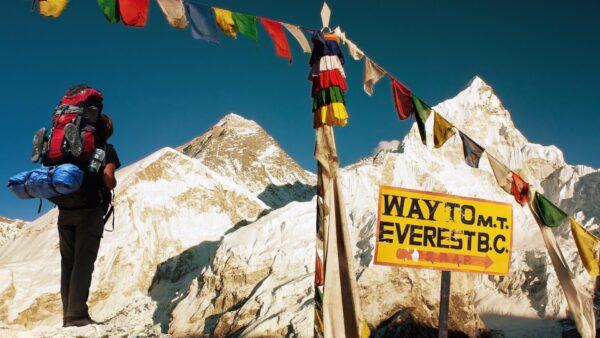
As the locals say, Nepal is a country where there are more gods than people. Buddhism and Hinduism with its vast pantheon, as well as Bon, Islam and Christianity, coexist peacefully here. Nepal has no islands or bounty beaches, its nature is majestic mountain ranges, charming plains and even wild jungles. The air is saturated with ancient history, and colored mantra flags flutter in the wind against the backdrop of snow-capped peaks.
You will remember the local culture and its atmosphere for the rest of your life, and it cannot be confused with anything else. Walking along the mountain trails or along the streets of Kathmandu, you will truly feel that Buddha lives here.

What to do in Nepal, what do we recommend visiting? Experience the history of Kathmandu, Pokhara, and Bhaktapur.
Almost any trip to Nepal begins in the capital. This noisy city is a hodgepodge of people, cows, mopeds, dogs, liberally seasoned with red dust 😉 However, the city still preserves the look of centuries ago. Kathmandu's must-see sights are the following:

"It was dark against the snow and, as far as I could make out, was not wearing any clothes" – this is how the climbers described the unknown creature, and its mysterious footprints in the snow were frightening. Let's take off our masks: this myth was finally debunked by Dmytro Komarov. The famous Ukrainian TV presenter of the World Inside Out program, in collaboration with researchers from the Otava laboratory, found that the hair sample he took from a Nepalese temple was indeed of biological origin and belonged to a Sumatran ibex. But the story was intriguing, right?

Vipassana and retreats. We recommend the center on the outskirts of Pokhara, where mindfulness is studied on the picturesque Beglas Lake overlooking the Annapurna massif. It's just like in the movie Eat, Pray, Love – meditation, Nepalese yoga, conversations with the teacher, silence...
An alternative means of "pacification" would be to try bungee jumping. The three-hour drive from Kathmandu is worth it, believe me. You can tickle your nerves in the ecological resort Last Resort. The main attraction of this place is the bridge over the Bhote Koshi River. It is specially equipped for jumping, and takes from 20 to 80 people on a given day. The jumping platform is one of the highest in the world – 160 meters of flight!
An unforgettable helicopter tour from Kathmandu to Mount Everest is a unique experience that combines adventure, spectacular scenery and panoramic views of the world's highest peak. An exciting journey through the heart of the Himalayas awaits you.

Bhaktapur you will see after traveling just half an hour by bus from the capital. This town is perhaps one of the most colorful. Here, time has stopped, an indescribable medieval atmosphere reigns, and there are not many tourists, which makes it possible to relax and meditate right in the process of walking.
Pokhara – is another town of interest in Nepal, as well as the starting point for most mountain treks. It is home to the large Fewa Lake, which welcomes guests with boat rides and a stunning promenade with mountains all around. We recommend going to the International Museum of Mountains, even before you set off on your first trek, to first learn how to distinguish the outlines of all the main peaks of the Himalayas, as well as to look at climbing equipment from ancient times to the present day. If you prefer a more active vacation, then go paragliding, and why not, the views in Pokhara are breathtaking.
A trip to Nepal cannot be considered complete without a jungle safari. The tropical jungles of the Terai are home to some of the subcontinent's rarest wildlife. In total, there are 22 protected areas in the country. We recommend the most famous places for active wildlife tourism: Chitwan and Bardiya National Parks, Koshi Tappu and Parsa Wildlife Sanctuaries. Thanks to the tropical climate and dense forests, Nepal's reserves support the population of wild elephants, yaks, tigers, leopards, bears, blue bulls, and wild dogs. In general, there is a lot to see.
Nepal – is a country surrounded by thousands of different myths and contradictions. Some people are convinced that unsanitary conditions and poverty reign here, while others travel to gain purity and wealth on the spiritual plane, to find the true meaning of life. Some travel here for the sake of the largest mountains in the world, while others come for healing and Ayurvedic practices... Whatever your goal, you need to understand how to prepare for the trip: choose the best season to go to Nepal, what to take with you, what to taste in local coffee shops, where to look for souvenirs and enlightenment.

When to go to Nepal?
The country has 2 seasons for large and small mountaineering adventures: from March to mid-May and from October to early December. The summer months are the monsoon season, and in winter the passes are often closed due to snowfall.
In the spring, turquoise lakes are still hidden under the ice, and the trails are a mix of mud and melted snow. And on the passes, there can be a rather dense blanket of snow. But there is a plus: April and May are the flowering season of the rhododendron, the national flower of Nepal. The entire jungle is decorated with bouquets of bright flowers, which looks especially impressive against the snow-capped walls of the Himalayas.

In the fall, snow lies mostly above 5000 meters – on passes, peaks and glaciers. At the same time, it is quite warm and comfortable during the day: at the beginning of the track, you can walk in a T-shirt, and above 4000 m – in a fleece and windproof jacket (although at night the temperature drops to zero).
What about safety?
Tourism in Nepal is quite safe – the crime rate is low, and the people are very friendly and open. By the way, they love gifts and candy 😉 However, in order not to spoil your trip, follow a simple rule: do not leave things unattended, as they become "no one's property" for the locals.

What to try from the local kitchen?
The universal rule of any tourist is to look closely at the locals and choose what they eat. And they do not change their traditional dishes, including dal bat (boiled rice, pea soup, curry, stewed vegetables, sour milk and poppa cake). All this is mixed and eaten with the same flatbread. A variety of dumplings with different fillings – from chicken to fruit – are also good. And if you want soup, then only spicy tukpa (with vegetables and meat).

Please note: eating food from street stalls, as well as unwashed or unpeeled fruit, can lead to stomach upsets.
What kind of water to drink?
Drink only from bottles. Of course, there is a certain romance to drinking water from mountain streams, but it is better to protect yourself from the risk of catching an intestinal infection.
What points to consider in Kathmandu?
The city is one of the ten most polluted and dusty in the world, so a mask will not be superfluous. Cross the road with special care, as vehicles here do not like to stop for pedestrians. Also, keep in mind that in the capital of Nepal, sockets can be either the usual ones with 2 "legs" (type C) or with three holes (type D, type M).
Do not forget to bargain, the price can be reduced by 10 times.

What to bring from Nepal?
Clothing made of homespun cloth and decorated with ethnic Nepalese ornaments is popular. As a gift for friends, you can buy statuettes of a particular deity, national dishes, carved bells and wooden masks of religious orientation. Nepalese artisans make strikingly beautiful rings and bracelets made of wood, yak bones, stone and beads.
The main souvenir is emotions and unforgettable impressions! Watch our video report and make up your mind, Nepal is always happy to welcome guests!
Kuluar – your life-changing mountain experience!