

you can be consulted:
Lyudmila

Have you ever heard of the ancient pilgrimage route to Santiago de Compostela? And about the edge of the world where the zero kilometer point is located?
We decided to combine the ancient, less crowded than other roads - the English Way (Camino Inglés), which goes to Santiago de Compostela with the Fisterra Way (Camino de Fisterra). This way you can get acquainted with the nature, history, culture and gastronomy of the Galician region.
The English Way was born in the middle of the Middle Ages through a combination of spiritual and material-technical considerations, the result of a skillful fusion of commercial and passenger transport that allowed many believers from Great Britain, Ireland or Northern Europe to board merchant ships to visit the relics of the Apostle James.
This road is inspiring, filled with a variety of views, from the blue coast to the green mountains. It is the shortest way to get the full pilgrimage experience.
Another route, the Fisterra Way, is an extension of the Camino de Santiago, connecting the Galician capital with Cape Finisterre, located on the legendary Costa da Morte. This is a different and special route because it does not lead to Compostela but starts from there. For this reason, it is used as a continuation or epilogue of the journey that every pilgrim has taken and now there are only five days left to the "end of the world", where the zero kilometer of the route is located.
The end of the dirt road, you're at the ocean. The end of the physical world, where the path finishes under your feet, and the journey begins from something much more subtle, yet just as real - dreams.
You can expect a reset, fatigue, laughing a lot, and have time for reflection. Each day will start with breakfast. On average, the route lasts from 5 to 8 hours and we will cover from 18 to 27 km per day. We will have lunch in villages along the way. Dinners will take place in restaurants in the towns where we stay overnight. Luggage will be transported from the albergue to the hotel by a transport company.
In addition to this program, we have two more Camino routes that are conducted in spring and autumn:
- "El Camino - Portuguese way to Santiago de Compostela" - a classic 15-day route that is very popular.
- "The St. James way from Tui to Santiago de Compostela" - a version of the same classic route, but for 8 days - for those who have little time.


The program was extended to the very edge of the world - Cape Finisterre on the ocean. To leave the previous problems and doubts behind once and for all
We do not cancel or reschedule groups. If the consultant gave you the go-ahead to buy a ticket, you can buy it. The program will not be canceled through our fault.
Experienced team leaders from the Kuluar will accompany the group along the entire route, making your trip as safe and unforgettable as possible!
The Way of St. James is one of the most famous hiking routes in Europe, which in recent years has been gaining popularity not only among pilgrims, but also among ordinary tourists who have nothing to do with religion
The consultant who will collect you before the trip knows all the details of the route thoroughly.
More than 25000 participants have already gone with the Kuluar and 97.8% were satisfied. We are sure you will be too!

Ferrol is a naval outpost in northern Spain. In the XVI century, the Castillo de San Felipe and La Palma fortresses were built to protect the city, which are now important landmarks in Ferrol.
Breathing at the sea air, you can walk through the narrow streets from the port to the fishing quarter, where fishermen's houses are huddled together, tightly pressed together. And in the evening, visit restaurants that offer seafood, vegetables, meat and fish products, as well as Galician liqueurs. After all, Galicia is washed by the Atlantic Ocean and serves the best seafood. The most popular dish is octopus (Pulpo a la Mugardeza).

The Camino Inglés is a name that dates back to very ancient times. Since it was dangerous to travel overland in the Middle Ages, most Englishmen and pilgrims from Northern Europe arrived at the port of Ferrol, in northern Spain, to reach the city of Santiago de Compostela.
It is believed that the first day of the Camino pilgrimage contains magic that can be found in few other life events.
Today we will walk along the estuary along the footpaths and enjoy the beautiful scenery. We will smell the ocean. Moreover, the route to Santiago de Compostela is not just a walk, it is also an acquaintance with the people who inhabit this territory. We will see how hard they work to harvest shellfish at low tide. Here in Galicia, this is a purely women's job, men fish.
We will leave the Ferrol estuary. From the town of Fene, we will cross the lowlands that separate the Ferrol and Ares estuaries, the route will pass through the historic city of Pontedeum, where in the evening, if we have the strength, we will visit the Torre de los Andrade tower.
Distance: 25 km

Today is a pleasant route, despite the small ascents, it will be comfortable to walk. The route passes mostly through the countryside. In the morning, we will leave the city across the medieval bridge, which was one of the largest in Europe. Halfway through, we'll rest on the beach in the town of Minho. We will finish this day in one of the most interesting medieval cities in Galicia - Betanzos.
Distance: 19.7 km

In theory, today is the most difficult and lonely stage of our Camino. We will enjoy a nice view of the countryside as we pass small villages with almost no cafes.
Overnight in an interesting town, the Hospital de Broome, a place where many centuries ago there was a hospital for pilgrims, and where today the municipal albergue is located.
Distance: 24 km

Today will bring us more descents than ascents on paved and dirt paths, crossing towns. Throughout the day we will enjoy several sections through beautiful forest with fantastic green tunnels.
Keep in mind that there will be almost no cafes today, only a couple of bars at the beginning of the day.
Distance: 24.5 km

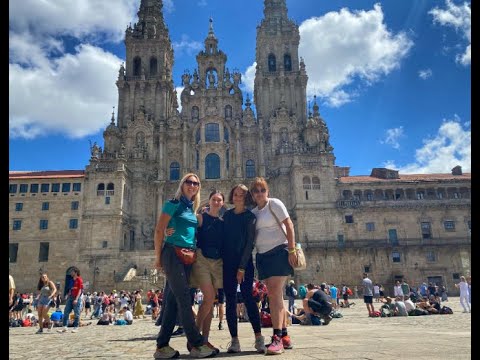
Despite the fact that today is a very early start, we will spend 4-5 hours on the road, and around noon we should arrive at the cathedral in Santiago. The first two-thirds of the route passes through the countryside and forest, then, on the last stretch, we will cross the Tambre industrial zone and continue our journey through the streets of the northern districts of Santiago de Compostela.
We will receive a Compostela, a document certifying that the pilgrimage has been completed. And, if you wish, you can also purchase a "Distance Certificate", a document that certifies the day and place of the start of the pilgrimage, the chosen route and the number of kilometers traveled. We rest until tomorrow.
Distance: 16 km

The exit from the Galician capital, unlike the entrance, is relatively quick and comfortable. We leave the city of the Apostle through the beautiful Rua das Hortas, from where we will enjoy one of the most beautiful views of the Cathedral of Santiago. Already outside of Santiago, the road passes through various churches and chapels, although the most interesting is perhaps the city of Ponte Maceira with its impressive medieval bridge, a monumental complex. There will be climbs, but moderate, with the exception of Alto do Mar de Ovellas, where we will have to overcome a 210-meter drop in just 2 kilometers.
Distance: 20.6 km

Today's route will be in a completely rural environment with lots of uphill and downhill sections, although most of them are not that bad. The first ten kilometers will be one of the most beautiful stages of this route through mixed forests of pine and oak trees, before entering a more open area. We will end the day in the small village of Santa Marina, an ideal place to relax and gain strength.
Distance: 21.5 km

The hardest day is today, there will be a long climb to Mount Aro, but the descent will compensate us for all the effort, we will be able to enjoy beautiful views of the Hallas Valley and the large Ferwenza reservoir.
Distance: 23.5 km

Today's section of the route is one of the most interesting in terms of cultural heritage, in addition to being very attractive, culminating in the first pilgrimage site: Mujía, the alternative end of the Camino de Santiago. Our route passes through villages such as Trasulfe and São Martiño de Ozón, which houses a huge granary.
These typical structures in Galicia are called Orreos and are intended for use in agriculture. They have been successfully used to dry, cure and store cereals (especially corn) before they are consumed. The Orreo of São Martiño de Osón, located in Mují, is notable for being located in the architectural complex of São Martiño de Osón. This orreo has a large size, about 27 meters, and is considered one of the largest in Galicia. Its enormous size is explained by the fact that it belonged to the clergy, who collected tithes from the harvest from the farmers of the parish (which was about 10% of the total harvest).The last few kilometers before Muxia we will have a short but hard climb.
Distance: 22 km

On this last leg of the journey, we leave the Muhia peninsula and head along the Lourido beach towards Lires. From Lires, we will walk towards Duio, either along the regular route or along the Pro Rostro option, which passes by the beach of the same name. Both converge in São Martíneo de Duio, a town associated with the legendary Roman city of Dugium. Legend has it that it was swallowed up by the waters because of the sins committed by its inhabitants in persecuting the disciples of St. James who carried his body. Next, we will reach Langostra, where one of the most incredible beaches in Galicia is located, and finally Fisterra.
And now we have only three kilometers to go to climb the road that leads to the famous lighthouse. We are at the end of the world. Fisterra has long been considered the westernmost point of Europe. Behind its rugged coastline stretched the great Ocean, or, as the ancient Romans called it, "Marem Tenebrosum", the sea of darkness.
In the old days, pilgrims used to hurry to the end of the earth before sunset. For them, this is a symbol of the end of the past life and the beginning of a new one. Pilgrims officially begin a new life. For most pilgrims, the Way of St. James is an attempt at rebirth. In any case, reaching the ocean after many days of walking is a release from all that is superfluous. A meeting with a new self.
Distance: 27.5 km

Today we have a free program. We get some sleep and everyone can plan their future plans - either to continue the journey and stay on this cape longer, enjoying the fantastic scenery to the fullest, or to hurry to catch a plane home.
The teamleader has the right to make changes to the route depending on the weather conditions and general wishes of the group.
Citizens of Ukraine need a biometric passport, insurance and a return ticket to visit Spain (you may be asked for these documents at the airport). Citizens of other countries need to have a Schengen multivisa or apply for a visa to Spain specifically for the Santiago Way tour. We provide all the necessary documents and help with the registration. It's not as scary as it might seem at first glance;)
To participate in the hike, you must be free from illness з from this list.

As always, we recommend purchasing tickets in advance, but only after we confirm your participation in the hike.
Luckily for us, Ferrol is a fairly popular city, and it's not difficult to get there. First, you need to fly to Santiago de Compostela and then take a bus to Ferrol.
To find the most convenient flight option, compare prices on aggregator sites and check them directly with the airlines. Don't be afraid to take a 1-2 day reserve. Sometimes it's more cost-effective than taking a ticket for the exact dates of the trip, even with accommodation and meals in Spain.
You can find our recommendations for flight matching services at this article.
In the summer. Because it's the north of Spain, it's never hot there.
The whole of Galicia is generally rainy, although it depends on the time and, above all, on the location. Santiago de Compostela and the surrounding valleys are quite humid and have a lot of rainfall throughout the year, so it is advisable to wear membrane jackets and backpacking raincoats.
To participate in the program, you need travel insurance to cover trekking in Portugal and Spain. Please do not neglect this point. It has saved some participants thousands of euros.
The group meets at the Albergue in Ferrol. Arrive at the meeting in the morning. If suddenly your flight is delayed, be sure to inform the guide about it so that you can be waited for.
Detailed information with the meeting point and the guide's contacts will be sent to you 7–10 days before the start of the hike, be sure to check your mail!
You can arrive later, during the day or late in the evening, but then you will miss a walk around the city with the group. It is better to look for return tickets the day after the end of the hike. The nearest airport is in Santiago de Compostela.
It is possible to order a transfer of things along the route, which makes the hike much easier. If you are not confident in your abilities, or you do not want to carry a backpack, please inform the consultant in advance so that we can book a transfer. The cost is from €10 per day.



Minimum group for this program: 5 participants. We have calculated the costs for a smaller number, but increased them slightly. So as not to be in the red ourselves.
So we can confirm the date earlier, and you will have the opportunity to buy tickets and plan your unforgettable trip!
| Number of participants | Value |
|---|---|
| 5 and more | €1080 |
| 4 | €1130 |
| 3 | €1250 |
The total amount of additional costs, which are not included in the price, will range from 320–360 euros for 12 days, depending on your appetite. You can eat in a café for €10-15. Gourmets will surely want to bring home a variety of cheeses and try local seafood, so keep this in mind :) We advise you to have 100–200 euros on your card in reserve.
If the amount of prepayment is too much for you at the moment, but you still want to book a place, write to the consultant and he will break it down into comfortable parts.
👉 Check out: payment methods and refund conditions in case of cancellation or departure from the route
Dear friends, please don't take 500 euro banknotes. There are always problems with them when settling payments with partners in Europe. Thank you for your understanding!
*Please note: the consultant will help with the selection and search for air tickets, recommend an insurance company, but it is not his task to purchase them. Participants do it themselves or contact our partners, all contacts are in the article: tickets, hotels and insurance
