
Table of contents of the article:
South America has long been very popular among European tourists. This continent is extremely rich in historical monuments, breathtaking landscapes, and natural wonders. The ancient city of Machu Picchu in Peru is one of the most famous tourist destinations in South America. Every year, thousands of visitors come to see the unique archaeological complex located among the majestic mountains at an altitude of more than two thousand meters above sea level. Both history lovers and lovers of beautiful scenery should go here, because the road to Machu Picchu will somehow pass through the mountainous terrain, which is striking in its beauty and unique landscapes.
That is why tours to Peru with a mandatory visit to the historical complex of Machu Picchu became one of the first destinations of the "Kuluar" in South America. It is a very good combination of trekking opportunities in the highlands with a well-developed tourist infrastructure, which allows you to make the trip as comfortable as possible and at the same time plunge into the heart of the Andes, climbing mountain passes near snow-capped peaks, and in a few days find yourself in the tropical jungle and relax in a modern hotel with all the benefits of civilization.

Based on our own experience, we have compiled a program that includes visits to the most interesting places in the vicinity of Machu Picchu, the historical complex itself, and the most spectacular mountain ranges in the Cusco region. Starting from the capital of Peru, Lima, we move to the Sacred Valley of the Incas, follow the path of the pioneers through the mountain passes of the Salkantay trail, and after exploring all the historical sights, we head to the Ausangate mountain range, where the fantastic Rainbow Mountains are located. All this is waiting for you in the classic trekking in Peru program.

Peru is such a diverse and fascinating country that later we developed a second trekking program, this time in the northern part of the Peruvian Andes: trekking around Alpamayo. But, although Machu Picchu is located in a completely different part of the country, it would be unacceptable to ignore it during a trip to Peru, so we offer those who have not yet had time to visit this sacred place, before the main track, an additional program for a week, which includes visits to Machu Picchu, the Sacred Valley of the Incas and a day trip to the Rainbow Mountains. Also, this preliminary program will serve as an excellent acclimatization before the next climbs.

Perhaps no other archaeological site of antiquity has caused so much controversy among scientists and given rise to so many legends and mysterious versions of its origin as the story of Machu Picchu. It is only known for certain that the city was built during the Inca Empire and played an extremely important role in the civilization of that time, but historians still do not have a single agreed version of the exact status and purpose of this place. It is also not known why and how the inhabitants left the city, but due to the fact that the Spanish colonizers in the 16th century did not find the buildings hidden deep among the mountains and jungle, the architecture of Machu Picchu has survived to the present day with virtually no changes, and walking through the narrow streets and terraces, you can imagine what the daily life of the locals looked like many centuries ago.
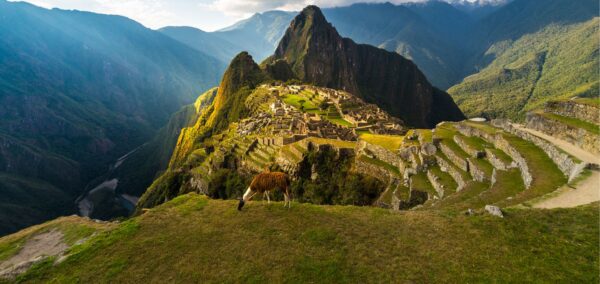
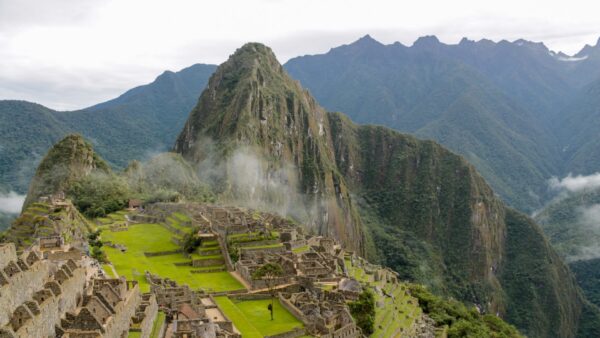
Thanks to its unique history and beauty, Machu Picchu was not only recognized as a UNESCO World Heritage Site in 1983, but also included in the list of 7 New Wonders of the World, along with such grand historical sites as the Taj Mahal, the Colosseum, the Great Wall of China, Chichen Itza, Petra and the statue of Christ the Savior in Rio de Janeiro. Widely known photos of Machu Picchu are recognizable at first glance due to the unique landscape of the area. The stone structures located on terraces at the foot of two rocky mountains are a classic angle for photography, available at the beginning of the sightseeing tour. The mountains depicted in these famous photographs are called Huayna Picchu (the highest of the two) and Uchuy Picchu, and those who wish to climb one of these peaks during a visit to Machu Picchu have the opportunity to climb one of these peaks, although you need to buy a separate ticket in advance, which is sold no more than 400 per day.

The question of how to get to Machu Picchu is of concern to many travelers planning their trip to Peru, as the city is located in a remote mountainous region in the middle of the jungle and has no connection to civilization by road. Therefore, getting to Machu Picchu on your own can be a rather non-trivial logistical task for those who are going to visit this historical landmark for the first time. However, if you know the nuances of local transportation and tourist routes, it's not that difficult.
First, you need to arrive by international flight to the capital of Peru, Lima, which is located on the Pacific coast. From here, take a domestic flight to the main city in the Peruvian Andes, the former capital of the ancient Inca Empire, Cusco. The flight takes only an hour and a half and costs an average of 80–100 dollars one way. There is also the possibility of a more economical bus ride, but due to the rather long distance and very winding mountain serpentines, this option takes more than 20 hours and is too exhausting for a tourist trip.

Cusco is located in a mountain valley in the center of the Peruvian Andes. The city's outskirts are called Valle Sagrado de los Incas, or the Sacred Valley of the Incas, which is cut by the turbulent mountain stream of the Urubamba River. There are many ancient buildings and monuments of the ancient Tahuantinsuyu Empire, including the majestic fortress of Sacsayhuaman, the Temple of the Sun of Coricancha, the ancient cities of Pisac, Chinchero and Ollantaytambo, the Kenko labyrinths, the Moray Salt Terraces, the mysterious Moray Circular Terraces, the Tambomachay Sanctuary and many others. All these places are worth visiting and can make no less impression than a visit to Machu Picchu itself. In addition, the city of Cusco is located at a considerable altitude of 3400 meters above sea level, so arriving there without prior altitude acclimatization can be a certain stress for the body. A trip to the Sacred Valley will allow you to lose some altitude and allow you to get used to the conditions of the highlands during leisurely excursions to the historical sites of the Inca Empire.


But to get to where Machu Picchu is, it's not enough to just come to Cusco. You need to travel about 80 kilometers through the Andes mountain ranges. The ancient Incas did this on a road that is now called the Inca Trail. However, visiting this route is strictly regulated by local authorities and only 500 tourists per day are allowed on the trail, and the route can only be completed as part of an organized group with a licensed guide, cook and porters. You need to book a place on a tour to Machu Picchu along the Inca Trail at least six months in advance. There is also an alternative route through the Andes, the somewhat more physically demanding Salkantay Trek, which requires overcoming a pass 4600 meters above sea level, but this option is also more spectacular, with mountain views of snow-capped peaks over six thousand meters.

The easiest way to get to Machu Picchu for those who don't want to walk tens of kilometers through the mountains on foot is to take a train to the village of Aguas Calientes (recently also called Machu Picchu Pueblo), located at the foot of the mountain, where the ancient city itself is located. The trains that foreigners can travel on are designed specifically for tourists and have a fairly high level of comfort, even in economy class. The cost of the cheapest tourist ticket for a 4-hour trip from Poroy station near Cusco to Aguas Calientes is about $70. And for $600, the most discerning tourists can enjoy a premium class trip in the Belmond Hiram Bingham named train with food, drinks, a private guide, and a cultural program included.
From Aguas Calientes, the ancient city is only a short distance away. Five kilometers and 400 meters of elevation gain, which can be overcome on foot along a winding path through the jungle, or you can take a bus for an additional $15 and go back down to the village in the same way. Those tourists who arrive at Machu Picchu via the Inca Trail enter through the Gate of the Sun, located in the upper part of the city. Those who ascend from Aguas Calientes will go around the city from the lower gate, gradually going up.

Seasonality for trips to Peru is determined by the specifics of the local climate. Not only the air temperature, but also the amount of precipitation, which depends on the season, affects the conditions of your stay during trekking in the Andes and excursions to Machu Picchu. In Peru, there are summer and winter, which are opposite to the usual European ones here in the southern hemisphere. That is, from December to February it is summer, and from June to August it is winter. But don't rush to pack for a trip to January. At this time, unfortunately, in addition to warm air masses, extremely heavy rains come to the mountains. The best season to visit Machu Picchu is the dry season, which lasts in the Peruvian Andes from May to mid-October.
At Kuluar, we always plan our tours to Machu Picchu in Peru in such a way that we have the highest probability of having clear and sunny weather throughout the route, but at the same time do not get into the peak tourist season with the largest number of visitors in the region, so we traditionally go to Peru at the beginning of the season in May, as well as at the end of the dry months - in September-October. At this time, you can expect somewhat cooler weather at an altitude of over 2000 meters, so we recommend bringing warm clothes for walks in the evening and overnight stays. During the day, when the sun is shining, due to the proximity to the equator, the weather on Machu Picchu, even in relatively cold months, feels almost summer-like and allows you to walk in a light T-shirt.

The weather in the mountains of Peru is quite variable, and even during the dry season, cloudy and rainy days are still possible. The part of the mountain range where the archaeological complex of Machu Picchu is located is called the "cloud forest" for its ability to plunge into thick fog every morning. Later in the day, the fog lifts, giving the impression that the city is floating above the clouds, which is why Machu Picchu is often called the "city in the sky".

The archaeological complex opens for visitors at 6 am, and usually at this time there is already a long queue of people who want to be the first to board the morning bus to get to the observation decks when the internal buildings and terraces are not yet crowded. Today, the number of visitors to Machu Picchu is regulated by the hour, so you should buy entrance tickets in advance before your trip. The ticket is issued for entry at a specific time, and the best morning hours are sold out the fastest.
Please note! Exploring the city usually takes between 3 and 6 hours, depending on whether you are going to climb to the observation deck at the top of Huayna Picchu or Uchuy Picchu. You can also take one of several hour-long walks to choose from: to the Inca Bridge, the Moon Temple, or the Gate of the Sun. Another option that will take almost all of your day is to climb the eponymous Montana Machu-Picchu mountain with a height of 3082 m.
All buildings of the complex can be viewed during a standard Machu Picchu tour, but keep in mind that you will not be able to return to the observation decks. The tourist flow is allowed only along the signs in one direction, and the guards strictly monitor that there are no violators of the order. It is also forbidden to climb the walls and take any stones with you.
A few more interesting facts. The name of the city is translated from the Quechua language as "Old Mountain", but the historical name used by the Incas in the heyday of the city was different. According to one version, it could have been called Llaqtapata. Unfortunately, the Inca civilization left no written monuments, and what the locals could tell was carefully erased from the memory of generations by the Spanish colonizers, so we don't know much about the history of Machu Picchu today.

According to one version, the city in the mountains served as the emperor's summer residence. According to another, it could have been a university where rich children of Inca nobility were taught the sciences. Another version of the city's purpose, which is located in an extremely strange way, is that it was inhabited mainly by women, priestesses of the sun god Inti. The fact that the city was of important religious significance is evidenced by numerous finds and its internal architecture. There was a large sacrificial altar and several temples, among which the Temple of the Sun, the Temple of the Condor, and the so-called Temple of the Three Windows, which apparently served for astronomical observations and calendar keeping, stand out for their perfectly matched stonework.

Until the early 20th century, Machu Picchu remained unknown to the New World. During the conquest of Peru, the Spanish conquistadors did not find it, and the locals abandoned and forgot about it. Although there were legends about the lost Inca city, no one knew its exact location. That was until 1911, when the American explorer Hiram Bingham went on an archaeological expedition, having received permission from the local authorities to search for the city of Vilcabamba, where, according to legend, the last Inca emperor hid gold before his death. He did not find the gold, however, but with the help of a local boy, whom he paid only one coin, Bingham came across a real historical treasure in the form of a perfectly preserved ancient city.

The excavations and clearing of dense shrubbery took several years. During this time, Bingham managed to take many archaeological finds to the Yale University collection before the Peruvian government passed a law prohibiting the export of such monuments from the country. Subsequently, the news of the discovery of the lost city spread around the world, and since the mid-20th century, numerous tourists began to arrive here. As of 2017, more than 1.4 million tourists have visited Machu Picchu. Nowadays, the number of visitors is limited by the Peruvian authorities to preserve the integrity of the complex and amounts to 2500 people per day. So, if you are inspired by ancient history and the spirit of adventure, you can be one of the lucky ones to see Machu Picchu with your own eyes by going on a trip to Peru with KULUAR.

Author of the article: Yuliya Yurasova, Team Leader in South America
Peru is not only home to the legendary Machu Picchu, but also dozens of other unique places that are worth seeing. With our tracks, you can combine a visit to the main attraction of the Incas with trips to the mountains, jungles, and desert oases.
Choose a route to discover Peru from all angles.

