telegram
en
en ruua

Mountaineering Equipment: A Complete Checklist and How to Choose

Choosing mountaineering gear correctly is not only about comfort – first and foremost it is about your safety and your chance to reach the summit and come back down unharmed. A climber’s equipment is a system: every element matters and together they work like a single, reliable mechanism.

Approach every purchase thoughtfully and responsibly. Before you buy, think about how that item will interact with everything else you already own. The main criteria are functionality and comfort; only after that come looks and price. That is why we have prepared a full checklist of the must-haves – all for you! And if you want to dive deeper, KULUAR’s mountaineering schools will give you hands-on skills and an introduction to alpinism and rock climbing. So, let’s get started 😉

Basic Mountaineering Gear List: Where to Start

Thanks to modern fabrics and technology you can now manage with a minimal clothing system even in harsh conditions – the key is to pick pieces that layer well in changing weather. We have already written in detail about clothing for mountain ascents; here we will focus on the “iron”: hardware that can vary depending on the route. On one line you will need more ice tools, on another – more rock protection. If you can invest in lighter, more technical kit you can realistically save several kilograms.

Personal “Iron”: the Mountaineer’s Core Hardware

Primary hardware – helmet, crampons, ice axe (or several ice tools), harness

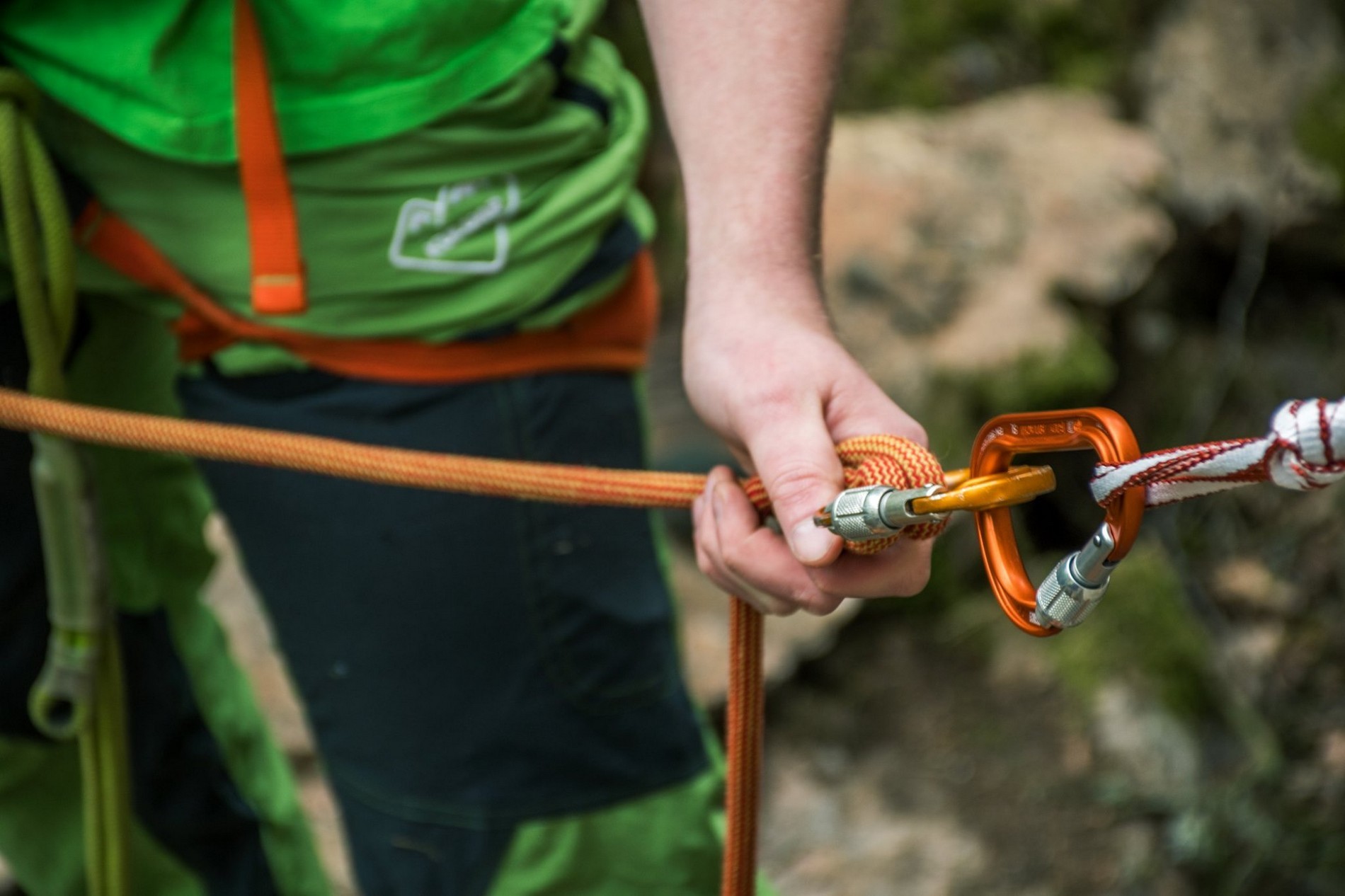
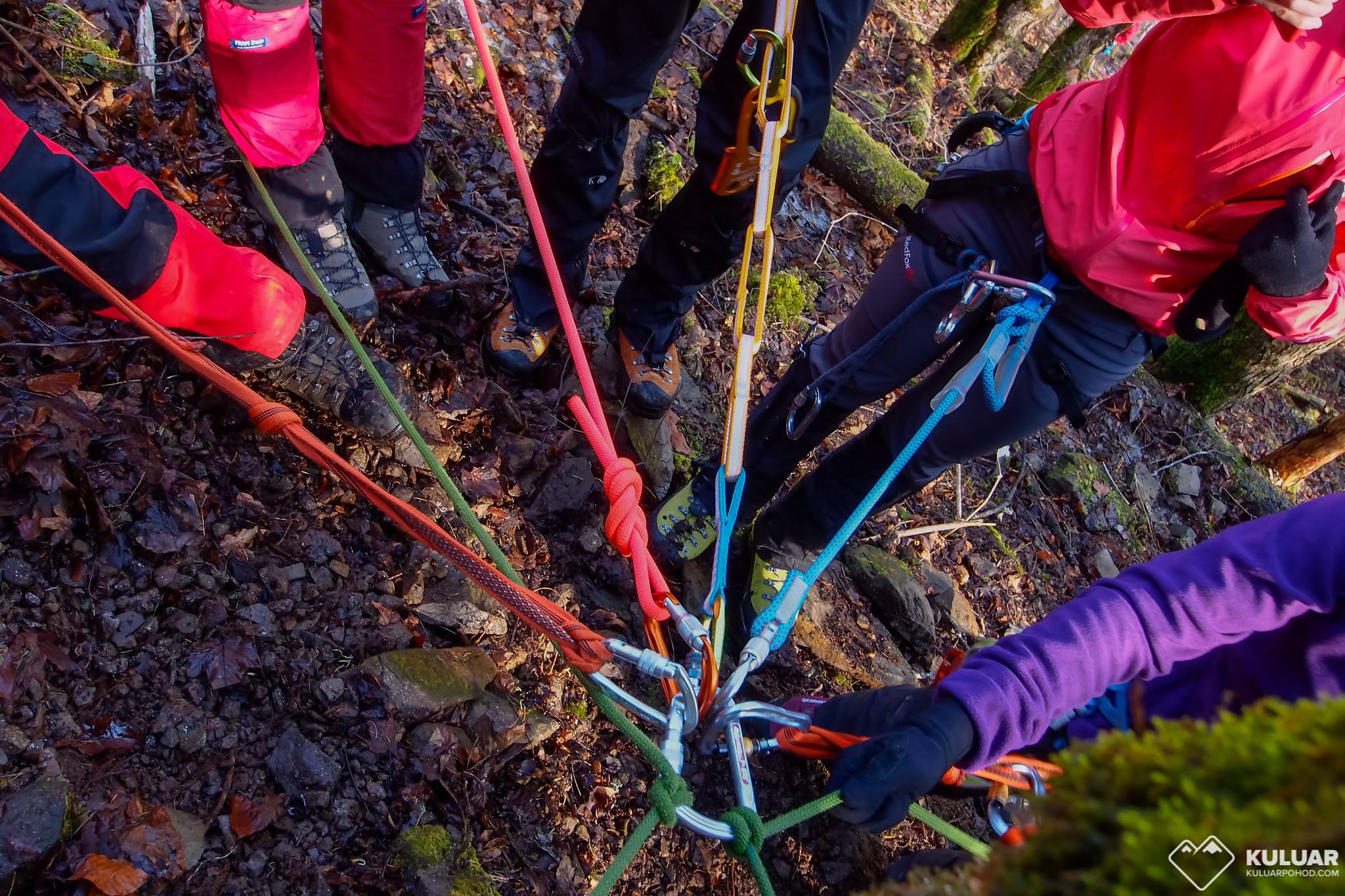
What hangs on the harness – a loop of accessory cord for a prusik, a belay / rappel device, a pulley, several carabiners, a jumar (mechanical ascender), etc. The ascender holds your position and stops you sliding down; it is invaluable when climbing steep fixed lines.

You can adapt the list to your own preferences – some harnesses are lighter, others heavier, and on certain routes you may not need a pulley at all. It all depends on the conditions and on your experience.
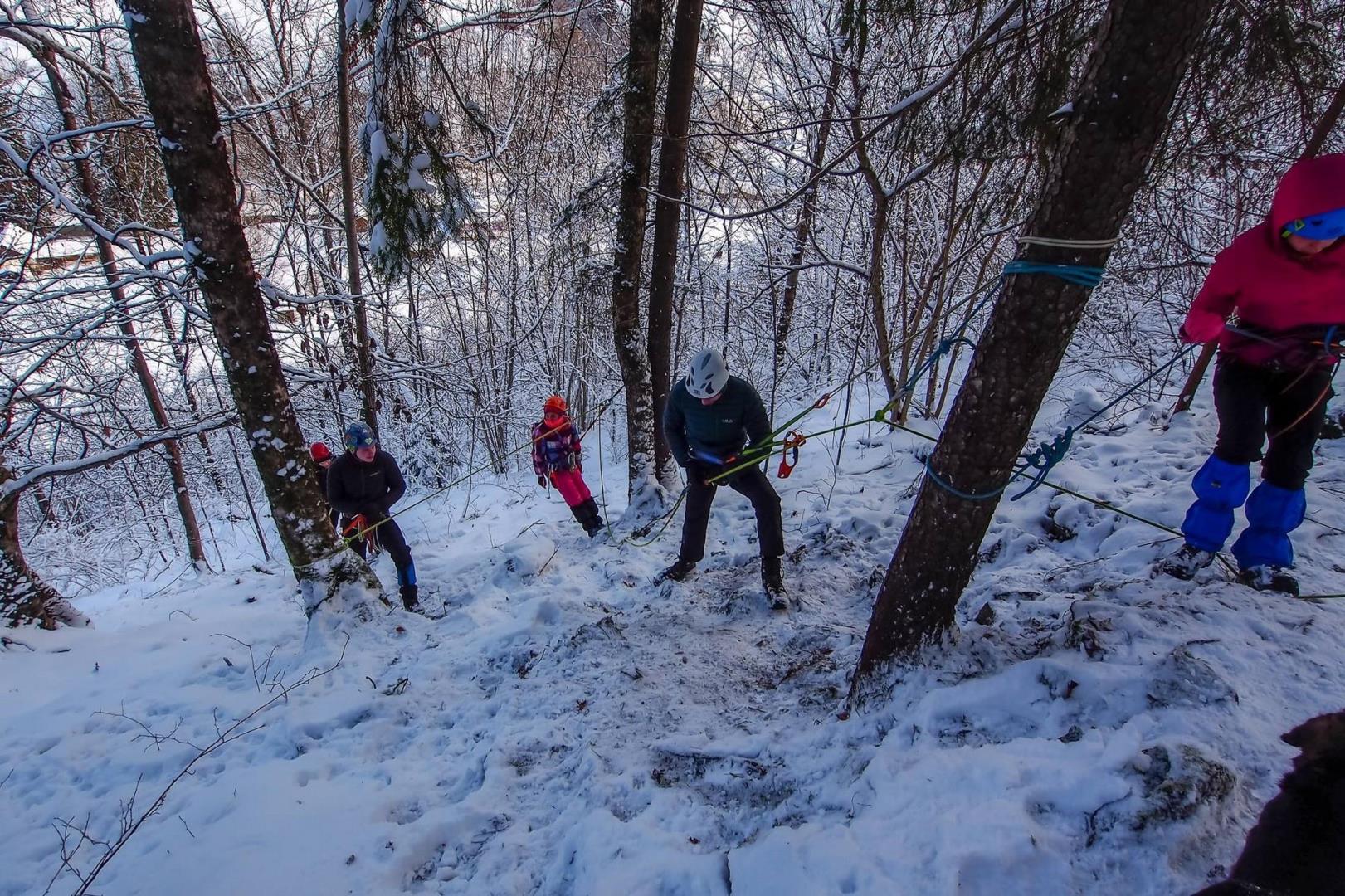
Снежно-ледовые занятия

Belay devices: most climbers favour universal “tubers” (ATC-style devices) while semi-automatic devices such as GriGri have also earned wide recognition. Their key advantage is that they will lock the rope by themselves in a fall, even if the belayer is momentarily distracted.

Personal anchors: besides a belay device, every climber should carry a personal anchor system for added safety while resting, building anchors or dealing with gear. Main types:

  • Y-lanyard (double lanyard) – a Y-shaped sewn sling with two carabiner ends. It can be dynamic or static; dynamic models absorb more force in a fall.
  • Etrier (aid ladder) – a flexible ladder-style sling with several steps, used in aid climbing (A0, A1). It lets you stand higher, place new gear and move through difficult sections with no natural holds.

Single loops of accessory cord or webbing cut to length can also serve as personal anchors when needed.
Key Clothing Characteristics for Mountaineering
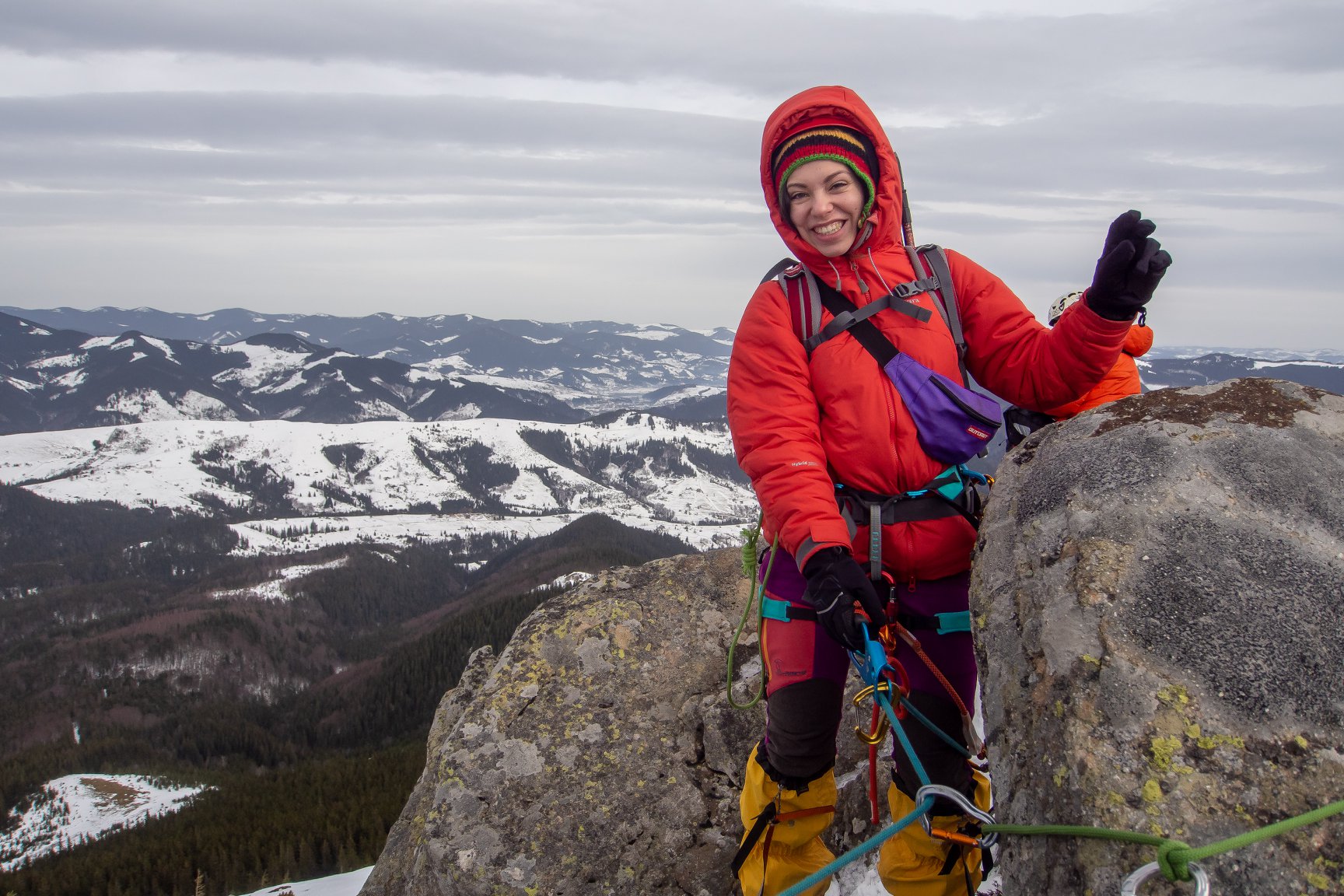
  • Harness-compatible cut – the garment must not interfere with ropes, carabiners or the harness, everything should integrate into one functional system.
  • Active ventilation – pit zips on jackets; side-zips (sometimes full-length) on pants.
  • High-set pockets – remain accessible over a harness or pack hip-belt.
  • Helmet-compatible hood – larger volume and shaped to fit over a climbing helmet.
  • Extended zipper pulls – easy to grab with gloves on.
  • “Full-side-zip” (drop-seat) pants – unzip completely for quick on/off without removing boots.
  • Protection from crampons & snow: reinforced cuffs against crampon cuts; draw-cords and gaiter cuffs keep snow out; many modern boots now have built-in snow gaiters.
  • Gaiters or over-boots (optional) – shield against snow, mud and cold; useful in bad weather or deep snow, especially in shoulder seasons or on glaciers.

Choosing Your First Harness and Crampons: 5 Guide Tips for New Mountaineers

Подбор первого снаряжения - важный шаг для начинающего альпиниста, который повлияет не только на ваш комфорт, но и на безопасность в горах. Обвязка и кошки - ключевые элементы экипировки, и ошибка в их выборе может дорого стоить. Вот 5 практических советов от гидов клуба Кулуар, которые помогут сделать правильный выбор.

  • Skip ultralight race gear for your first trips. It costs more, is less versatile and needs skill to use. Go for mid-weight models with straightforward adjustment and a comfortable fit.
  • Crampon attachment systems – strap-on (universal), semi-automatic or fully automatic. Pick the one that matches your boot. For early outings, universal strap-on crampons are best – they fit almost any footwear.
  • Harness fit – it should adjust at waist and legs, not pinch, not restrict movement. Gear loops: minimum four.
  • Stick to proven brands such as Petzl, Black Diamond, Singing Rock, Climbing Technology, etc. Good gear needn’t be top-of-the-line – there are many reliable entry-level models with excellent price-to-quality ratios.
  • Price ≠ suitability. The most expensive isn’t always the best for you, and the cheapest isn’t always a bargain. Aim for kit that matches your routes and conditions.

Expert tip: The right gear comes with experience. What fits one climber may not suit another. The best way to learn is to attend a mountaineering school, where you can test everything in real conditions and discover what works for you.
Italy
Altitude complexity 3/10
Technical complexity 4/10
Duration 5 days
Price 1150€
Ukraine
Complexity medium
Distance 20 km
Duration 3 days
Price 9800₴
No program dates have been added yet. to the consultant and we will add convenient ones for you
Ukraine
Complexity medium
Distance 20 km
Duration 3 days
Price 11500₴
No program dates have been added yet. to the consultant and we will add convenient ones for you

Climbing-Specific Gear: How It Differs from Mountaineering Equipment

Rock climbing and classical mountaineering share much, yet they are distinct activities that demand different gear philosophies. In mountaineering the kit must be as universal as possible and cope with severe weather, whereas in sport climbing the emphasis is on lightness and freedom of movement.

What a climber doesn’t need but a mountaineer does:

warm layers, over-boots, down parkas, hardshell jackets – climbing routes are short and weather usually stable;

crampons, ice axes, over-boots, large packs – no snow, ice or bivouacs;

bivy gear (sleeping bag, pad, tent) – overnights on route are rare in sport climbing.

Non-negotiables for the climber

  • Climbing shoes – precise fit, stiff or flexible sole with sticky rubber; let you stand on tiny edges and smears.
  • Climbing harness – ultralight, compact, often fixed-leg-loop to save weight on short pitches.
  • Chalk & chalk-bag – dries hands for better friction. Optional for mountaineers, essential for climbers.
  • Helmet (optional indoors, recommended outdoors) – for stonefall and head impacts.
  • Belay/rappel device – climbers tend to choose smaller, lighter units or assisted-braking devices for added safety.
  • Quickdraw set – number depends on route length; short, lightweight draws preferred.
  • Rope – single rope, 9.5–10 mm, 60–70 m depending on routes. Mountaineers more often use half or twin ropes (usually 8–8.5 mm) with dry treatment.

Скальная школа в Коростышеве

May also come in handy

  • hold-cleaning brush;
  • tape or “liquid skin” to protect fingers;
  • gear-tote bag or “crag bag”.

Rock climbing demands simpler but more specialised gear. If the mountaineer is a “generalist” ready for snow, wind and bivouacs at altitude, the climber is a “technician” working at the limits of body and friction. The gear therefore has to be ultra-light, ergonomic and laser-focused on one task – sending the route.

If you are just starting out and unsure what will suit you best, a course at a mountaineering or climbing school is the perfect launch pad. There you can put various gear to the test and choose what really fits you.

Good luck – and remember:

If you head to the mountains, go with KULUAR!
I want to participate

Been with us before?
Log in to your Kuluar Camp and most fields will auto-fill 💚
0/350
By clicking on the "Submit request" button, you agree to the processing of personal data.
Your application is accepted
The next step is
It is good if you fill it out now. Also, a manager will soon contact you and advise on all issues.
We will try our best to make you happier in the mountains. This is our mission. See you!
Your application is accepted. Our manager will soon contact you and advise on all issues.
Something wrong! Try again later Your application is accepted. Our manager will soon contact you and advise on all issues.
Давайте українською? 🇺🇦
Пошуковик чомусь вирішив показати вам ру-версію сайту. Пропонуємо перейти на українську! Якою продовжити?
Українською
We donate at least 20% of profits to support the UAF. Details and reports here. Hike with KULUAR — help bring victory closer! 🇺🇦