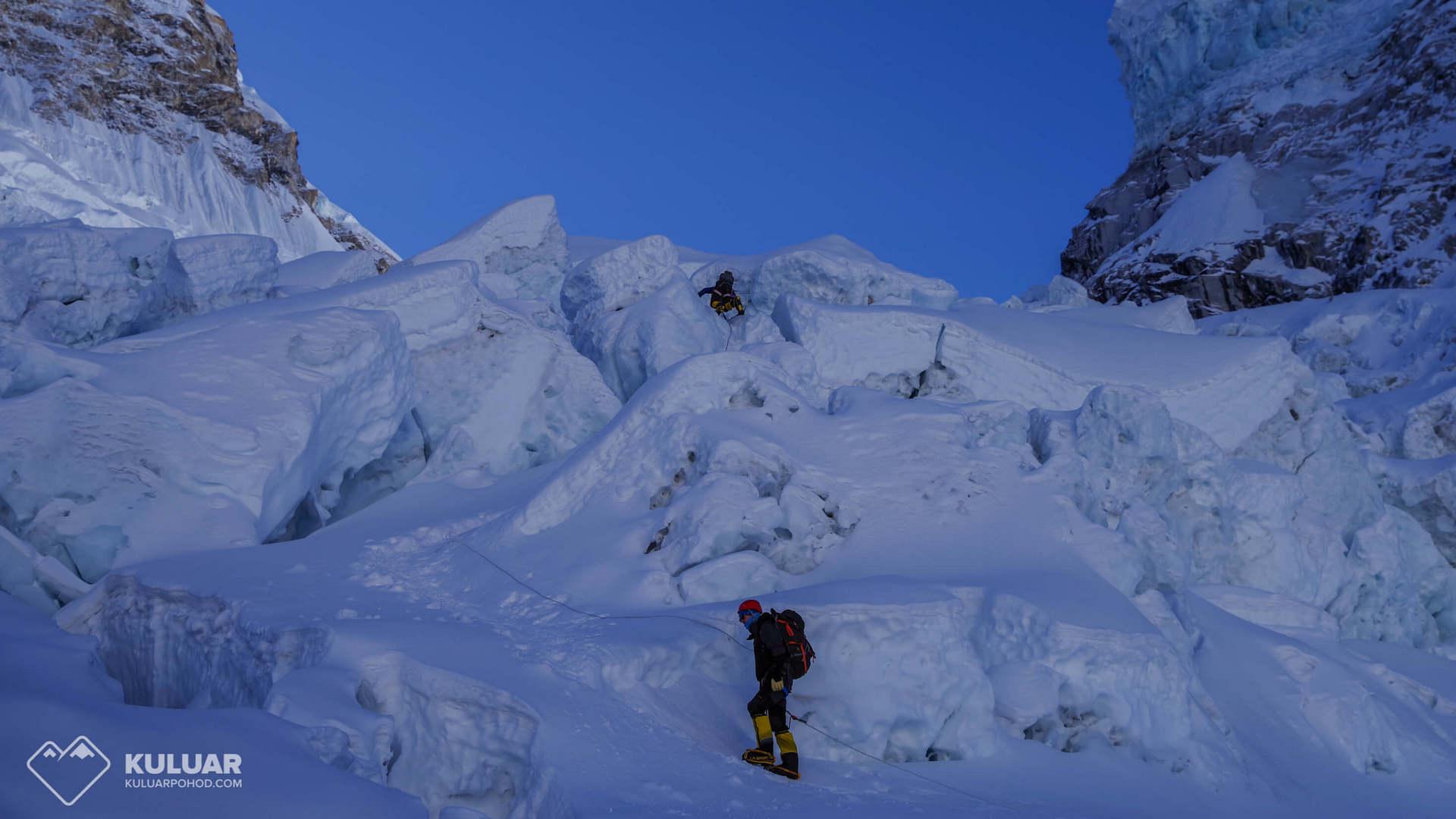
How much does it cost to climb Everest? One of the most frequently asked questions, the answer to which regularly leaves me slightly or not so shocked. I usually ask, “What do you think? Well, those who are not in the mountains, call the price of $ 2,000, someone will say 10,000. It makes you smile, because the value of Everest is measured in tens and sometimes hundreds of thousands of dollars.

Friends, this is Taras Pozdnii, and today we are going to talk about money, a topic of interest to everyone. I will tell you about the price of Everest in 2024, and what it depends on. We will also talk about the cost of climbing the other eight-thousanders, and at the end we will calculate how much it costs to go to the Crown of Earth - to climb all 14 eight-thousanders in the world. I have a video about this program on my channel.
If you don't want to read but would rather watch, here is a video on the cost of Everest 2024:
First, let's understand what the cost of expeditions depends on.
On both Everest and the other eight-thousanders, there are two main possible packages - base camp service and all-inclusive.
The base camp package includes virtually all expenses up to the level of the base camp itself. This includes hotel accommodation in Kathmandu, domestic flight to Lukla and back or ground transfer to the trekking start point, accommodation and meals during trekking, personal tent and meals at the base camp for the whole expedition. As well as a permit (permission to climb) and all the necessary documents.
By the way, the permit itself costs $11,000 for Everest and $1,800 for the other 8,000ers - that's the first factor in the high price and big difference between Everest and the other 8,000. The Permit is just a permission from the government to climb the summit this season; if for any reason you don't manage to climb, no one will give you this money back.
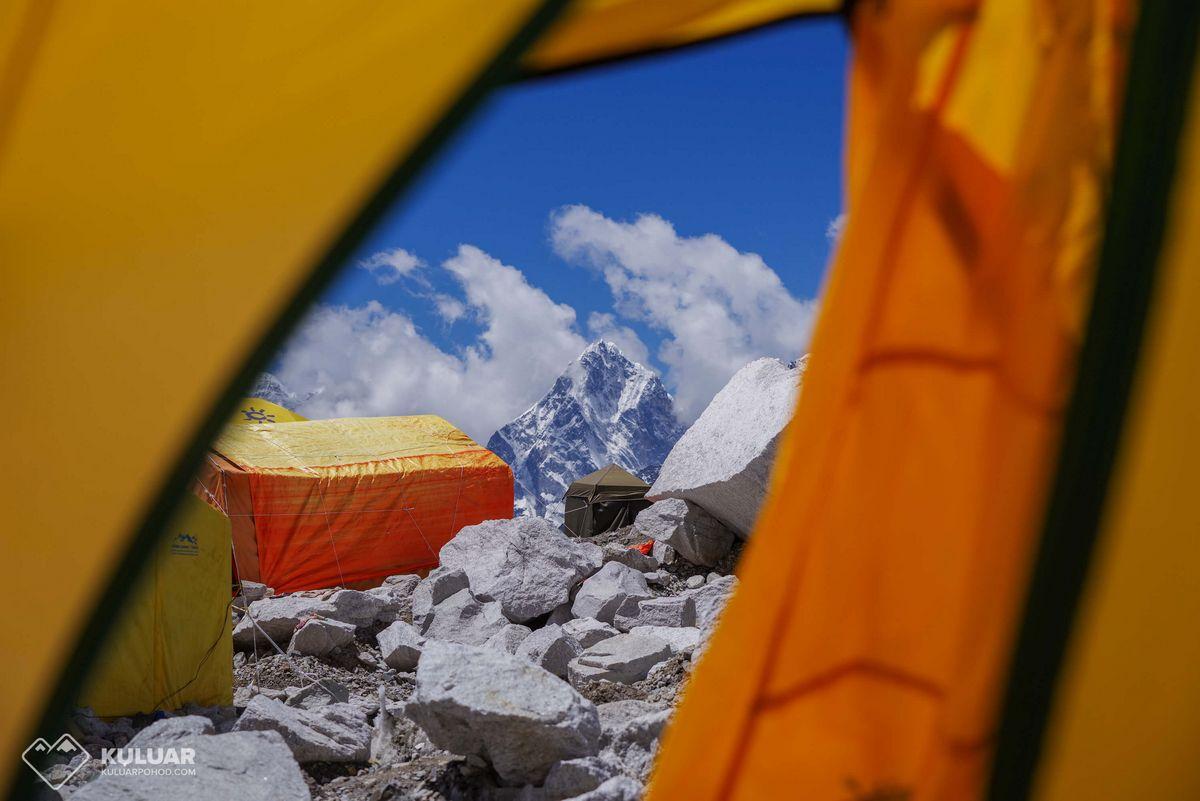
What is included in the base camp package - is clear, and what is not included is very well described by one phrase: the service of the company above the base camp is equal to zero. This means that you have to have your own tents, food, gas, oxygen, if necessary, and carry it all up the mountain yourself. I did that on Manaslu, and for the low 8,000s it's a working scheme that saves a lot of money. But not for Everest. It is almost impossible to ascend Everest with such package and without oxygen. More exactly, it is possible, but not for many people, not for us.
The cost of the package of base camp is about 20 000$, but almost nobody takes the clients on Everest with such package.
The second, the most popular and optimal option to go to the summit and not to stay on it forever, is a full package. The difference with the base camp is that it includes service and above the base camp, firstly it is: availability and installation of tents in high altitude camps, meals in high altitude camps (the second one even has a kitchen and a big canteen), Sherpa escort, usually 1 to 1, and oxygen equipment.
There are also different levels of VIP packages, but these are all add-ons to the full package.
It is possible to find a Nepalese company directly, and such an offer is usually cheaper. This is logical, because you also have to pay for the team leader, the cost of the permit and the organizational expenses, as well as the fee for the program, which adds up to a considerable sum of money, and this influences the price of the expedition.
My opinion is: if you are experienced enough, if you know English and you are able to manage your schedule, to provide the maximum safety and rationality of decisions - you can go without a team leader.
But if you are not experienced neither in ascents, nor in organization of similar expeditions, it is better to go with a teamleader. His task is to ensure maximum safety and efficiency of expedition. Believe me, Sherpas are not that anxious about your ascent or not, and sometimes they sabotage your ascent. It is the presence of an authoritative team leader that can solve such situations. Also, the team leader controls the host party and decides all the organizational nuances. Sometimes you may not even see them - but believe me, there are a lot of subtleties. And one of the most important is making decisions about going on an assault depending on the weather.

For example, in the spring of 2021 we didn't want to climb the mountain in bad weather and waited until the last moment - on the first day of June all 6 participants climbed Everest. And many of the teams folded their expeditions and did not go to the summit.
The cost is also influenced by the level of service.
Here the differences can start from the level of the hotel in Kathmandu to the type of tents in the base camp. Both personal and canteens. An important point is the food. Why do we make a separate camp for Kuluar, although it is a little bit more expensive? Because we have our own team in the kitchen, which cooks more adapted and familiar to us food. Including normal soups and even borscht, sometimes we fry potatoes and cook buckwheat. There is also the presence in the diet of fresh vegetables, fruits and meat every day. These are important details that are not noticeable at first glance.
Nepalese organizers have a cost ranging from $40,000 to $45,000.
Regarding foreign organizers: Here are some examples of the cost with a foreign team leader:
Alan Arnett, a well-known and reputable climber who actively follows the eight-thousanders, cites statistics showing that the average cost of climbing Everest with Nepalese companies is $44,500, and with a foreign team leader accompanying it is $74,000. But that's the data for 2020.
Kuluar for 2022 has an Everest climbing cost of $55,000, and I hope we reach the more expensive companies in terms of service. Cool dining tent with panoramic windows, good food, personal lodge tents, quality selection of Sherpas we know personally. And a number of little perks. And one of the most important is teamleader Nikita Balabanov, the best climber in the world in 2016. Most likely, he will be recognized the best in 2021 for their team's ascent of the new route to Annapurna 3. Under Nikita's leadership last season, all the participants climbed Everest. I will be in the baselage only situationally, because I have Annapurna and Lhotse in my plans for the spring. This is only a moment of advertisement:)
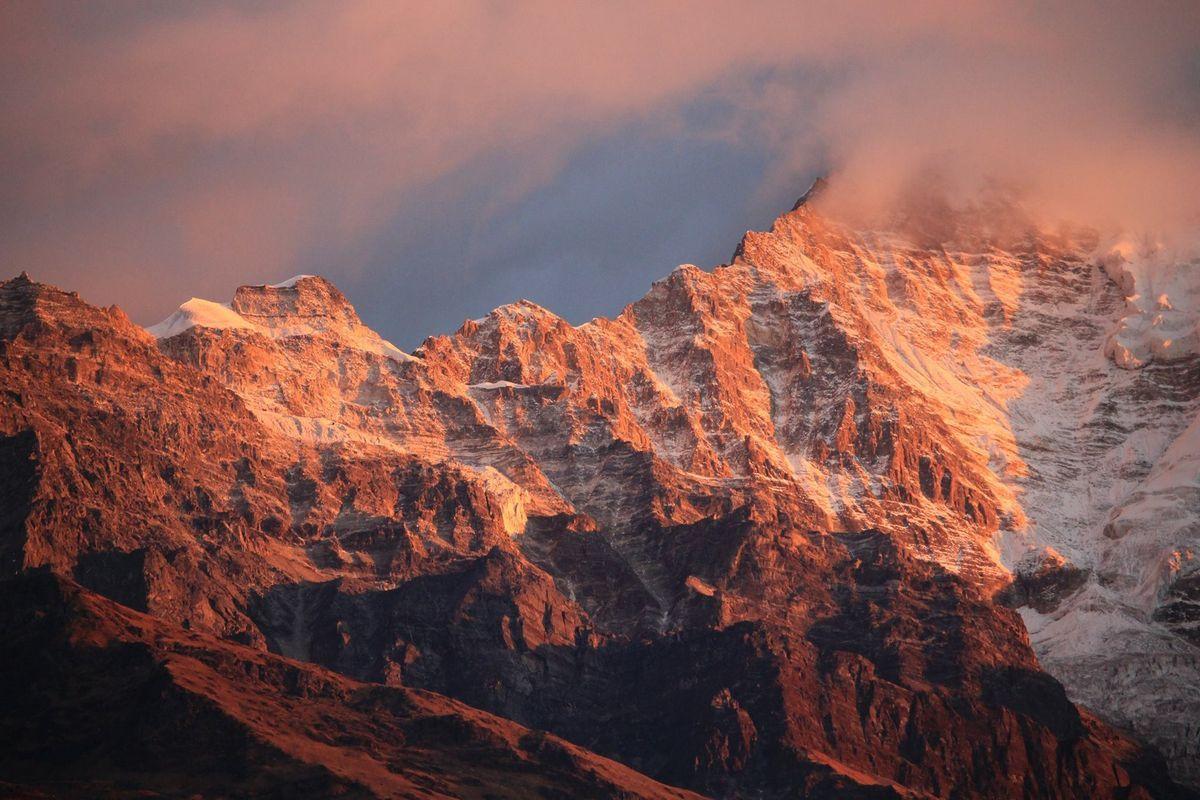
By the way, our host partner a VIP service for $170,000. And also super vip for as much as $300,000.
So with Everest we are done, let's move on to the other eight thousand meter peaks.
As you can see, the cost can vary greatly. For ease of calculation, I will be guided by the Kuluar prices, as they are averaged minimum with the support of a teamleader. And for those programs that do not - I will write an adequate price of my mind.
Keep in mind that prices can be found both cheaper and more expensive, and you can climb with a base camp package, which will make the program much cheaper. But I suggest counting for the average person, not the athlete.
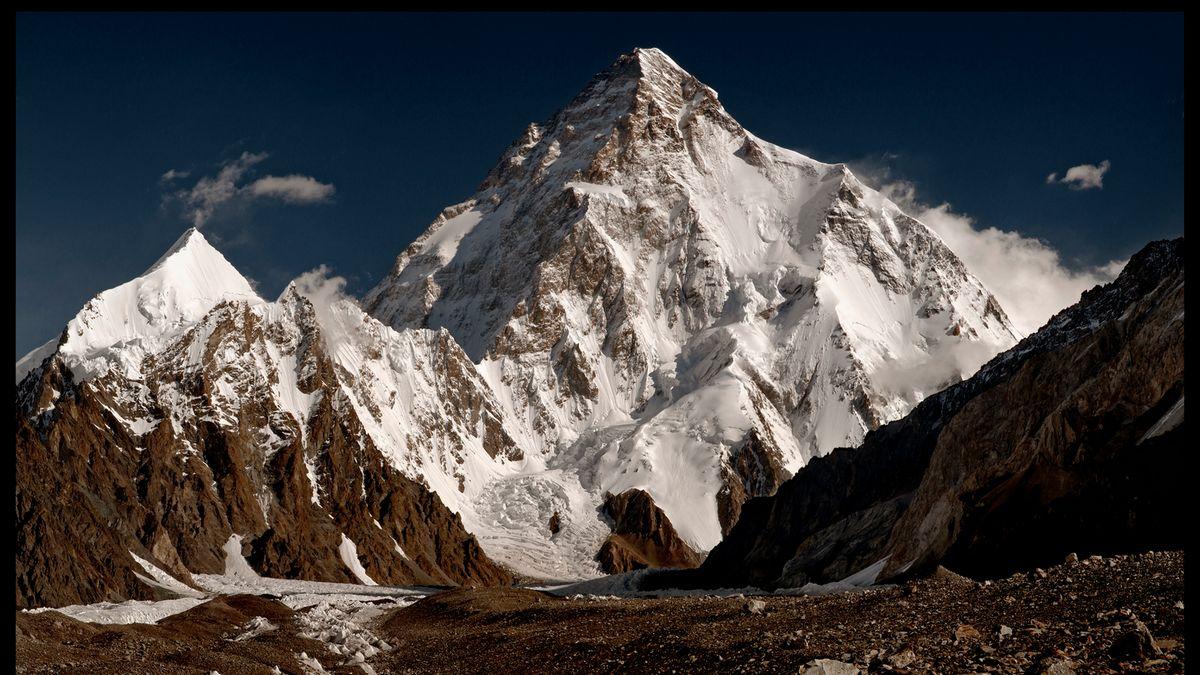
Let's start with K2, it is the second highest and the second most expensive. Here are the price averages around $40,000. Although there are also some at $80,000.
Next in price are 8,000m peaks, which are hiked from China, there is no service base camp - you must take a Sherpa, plus you have to pay for all the Nepali staff (and Sherpas and cooks are mostly from Nepal) and the cost is about 27,000. There are two such peaks - Cho Oyu and Shishapangma.
All the other eight-thousand summits cost anywhere from $20,000 to $35,000,000 - if you count with a team leader escort. I would average the price of Kuluar at $23,000. It does not matter whether it is Nepal or Pakistan. Besides, we have 10 tops for $23,000, let Manaslu at us costs $15,500, instead of $23 thousand - globally on the calculation it will not affect.
Also, do not forget that there is an additional cost for each summit. Let's round them up to $5,000 per trip, most often they will be less, but if you go with Sherpas (then you need a summit bonus) and use helicopters - and everyone usually does, upgrade gear for their own money, it's somewhere in the neighborhood of $5,000. Sometimes more, sometimes less. Total, the extras will take another $70,000 or so for all the summits.

So, the total cost will be: 55,000 for Everest + 40,000 for K2 + 27,000*2 for Cho-oyu and Shishapangma + 23,000*10 for all the other eight-thousanders + 70,000 for extras. Which equals $449,000. Almost half a million! A huge amount, and one of the reasons why there are only 45 climbers on all 14x8000 in the world.
But, let me remind you, this is a commercial price - if you go with the base camp packages and save, you can implement a plan at least twice cheaper.
That, friends, is the math. The conclusion is one - high-altitude mountaineering is not only dangerous, but also expensive. But I would like to pay attention to the fact that there are a lot of cars which cost more than Everest. And there are many more of these cars than there are Everest climbers.
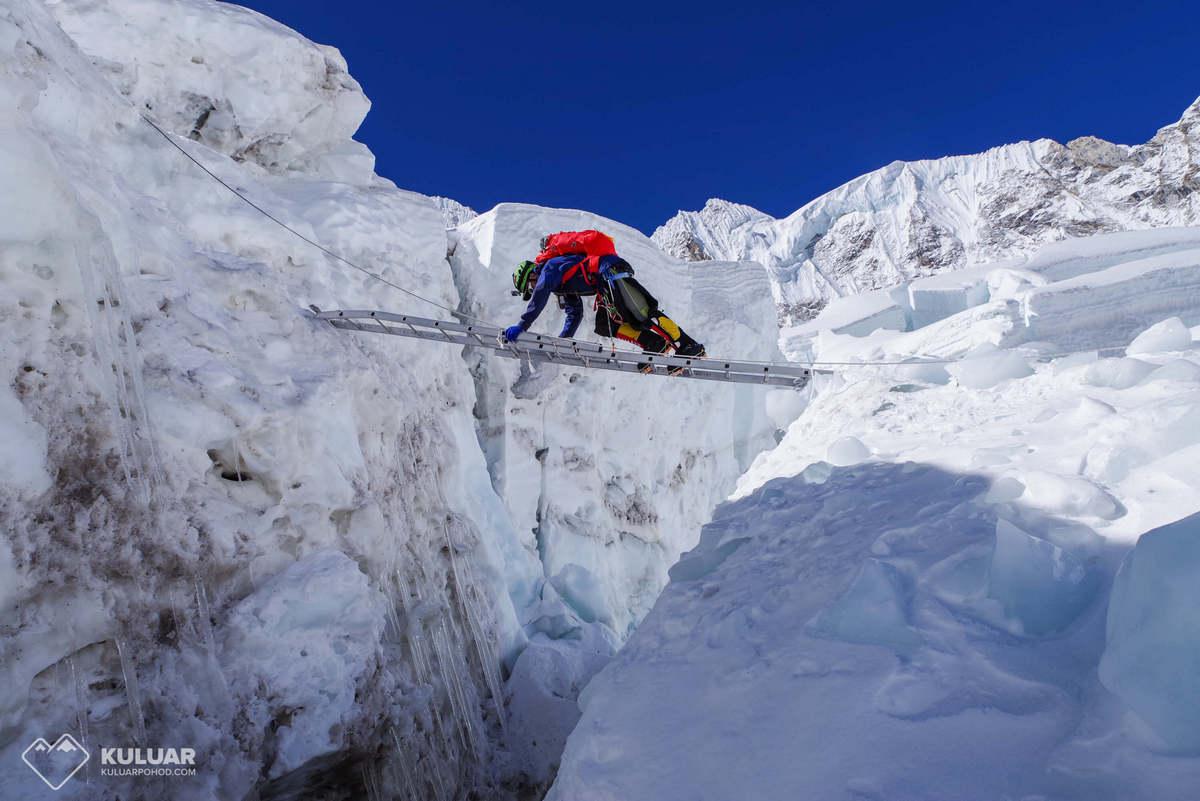
If you have a dream, you have to look for options, and I'm sure you'll find them. You do remember that I also plan to go all the way up to 14x8000, right? But not for the half million I don't have. Gradually, by breaking the big dream down into smaller goals, you can achieve what seems unrealistic. I know this for a fact!
So let each of you have your own big dream, and let there be options for how to achieve it!
Taras Pozdnii, founder and head of the Kuluar Club