

We invite you to one of the most interesting and attractive countries for tourism in South America. Tours to Peru offer a variety of activities and landscapes for every taste: the majestic Andes Mountains with unique landscapes, the world-famous highland Lake Titicaca, active and dormant volcanoes, mysterious images in the Nazca Desert and the humid rainforests where the lost city in the sky, Machu Picchu, is hidden.
The territory is so vast and diverse that it is simply not possible to see all the interesting places in two or three weeks of travel. That's why we've created several program options for you, each of which has its own characteristics and covers a specific region that is most conveniently located in terms of logistics and the availability of attractive tourist locations. All of our routes are original, developed by experienced travelers who have spent more than one season in South America. Therefore, we share information that will help you choose a tour to Peru that best suits your interests and preferences, and will certainly leave the best travel impressions.
Tourist travel routes in Peru
Peru

Distance 20 km
Duration
8 days
No program dates have been added yet. to the consultant and we will add convenient ones for you
Peru

Distance 30 km
Duration
7 days
No program dates have been added yet. to the consultant and we will add convenient ones for you
Distance 100 km
Duration
13 days
No program dates have been added yet. to the consultant and we will add convenient ones for you
Peru

Distance 110 km
Duration
15 days
No program dates have been added yet. to the consultant and we will add convenient ones for you
Peru
Distance 100 km
Duration
16 days
No program dates have been added yet. to the consultant and we will add convenient ones for you
Why you should go to the mountains of South America with KULUAR
Perfect knowledge of the country
The teamleaders have visited both popular tourist destinations in Peru and remote regions, so they know how to organize the best conditions for staying in each part of the country
The most picturesque mountain tracks
We will see impressive alpine lakes, unique landscapes of the Colored Mountains of Vinicunca and the most beautiful peak in the world Alpamayo
Convenient logistics
We do not overload you with unnecessary long-distance travel. Between remote cities, we choose a local flight, a comfortable tour bus or a private transfer
Comfortable tracking
You go with a light backpack, the rest of the load is carried by mules. We spend the night in spacious double tents with soft mattresses, eat in a large tent with tables, and are cooked by a cook
Rest in civilization
In cities, we eat in good local restaurants, stay in hotels with hot showers, power outlets, internet and other benefits of civilization
Immersion in the cultural environment
Our teamleader will tell you about the history of Peru, modern traditions and local life. During the excursions, you will see architectural monuments of the Inca era and the Spanish colonization period
Kuluar - your life-changing mountain experience!
Trekking tours in Peru with Kuluar in numbers
21
participants
12
groups were led
1
reviews on the site
Photos from trekking in Peru


Features of tourism in South America, Peru
South America is a distant and mysterious continent for Europeans, and traveling to Peru is still considered exotic and something very rare and special. There are several reasons for this, one of which, of course, is the cost of a tour to Peru, which, in addition to local expenses, also includes a fairly high flight price from Europe. Yes, indeed, for most people, information about how much a tour to Peru costs is crucial. But unfortunately, the only way to reduce the cost is to significantly reduce comfort, so we have long since abandoned this option and optimize costs to ensure the best travel conditions.
The second feature is the travel time. After all, a flight from Europe takes an average of 12-16 hours, and if you buy a tour to Peru from Kyiv, you still need to add the time to get to the nearest European airport, which can be quite tiring. Therefore, if you are planning a trip to such a distant country, it makes sense to go for a fairly long period of time: at least two weeks, and possibly for a whole month.

You should not forget about safety while traveling, because in Latin America, especially in large cities, there are always risks of encountering the criminal world. Therefore, always ask your guide for advice on which areas are safe to be on the street and where it is better for tourists not to appear, especially at night. Always keep valuables and documents in a safe place: in a hotel safe or a wallet. It is better to keep cash divided into several parts. It is usually enough to have 300-500 dollars with you, which you will exchange for local currency to buy food and souvenirs, while reserve money can be kept on bank cards, which are generally accepted everywhere in large cities.
Exotic diseases in Peru are common only in the Amazon jungle zone, so there are no mandatory vaccinations for visiting the country. However, in the Andes, there is a chance of altitude sickness, which can begin above 3000 meters above sea level and manifest itself in the form of headaches, weakness, loss of appetite, and sometimes even nausea. Proper acclimatization and supportive medications will help to combat these symptoms. In all other respects, traveling to South America is as safe and exciting as traveling around the world.

Two-week track in Peru: Salkantay, Ausangate, Machu Picchu, Rainbow Mountains
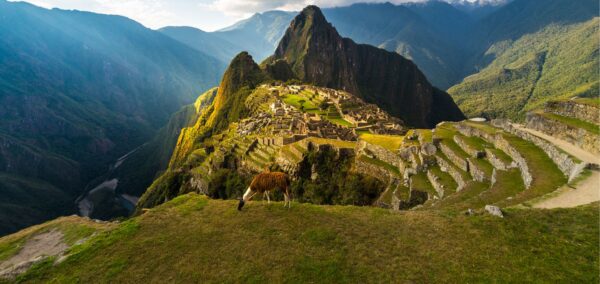
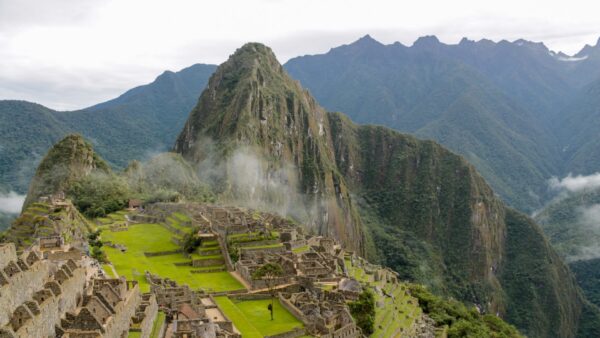
The most famous historical landmark of Peru and the country's business card is Machu Picchu, an ancient city of the Inca Empire, located in the Andes Mountains on the border of mountain ranges and tropical jungle in the Cusco region. That's why, when developing programs in Peru, we primarily chose this region for trekking. The tourist infrastructure is well developed here, there are many other ancient archaeological sites and there are several options for mountain trekking of varying difficulty and length.
Among all the possible options, we chose two of the most picturesque and exciting routes - the Salkantay and Ausangate trails. Both routes run at a considerable altitude, reaching 4500-5000 meters above sea level, so preliminary acclimatization is required before starting. It is ensured by the fact that the first three days after arrival in Cusco we devote to a cultural and educational program, visiting the historical sites of the Sacred Valley of the Incas, slowly walking through the hills around the city at an altitude of 2600-3500 m. During this time, we live in comfortable conditions in a hotel and eat in restaurants.

After the start of the track, we gradually ascend along a well-trodden path to the 4650-meter-high Salkantay Pass. On the way, we visit the sparkling blue Lake Umantay and descend into the valley on the other side of the Andes, heading to the village of Aguas Calientes, where the goal of our trek is located - the ancient city of Machu Picchu. The whole trek takes 4 days, of which we spend 2 nights in tents in the mountains. After visiting the archaeological complex, we take a tourist train back to Cusco, where we rest at the hotel and prepare for the second part of the trek.
The Ausangate trek lasts 6 days and passes through several passes up to 5000 meters high. Along the way, we will contemplate snow-capped peaks and crystal-clear mountain lakes, and at the end we will see the famous Colored Mountains of Peru - the Vinicunca, or as they are also called by tourists, the Rainbow Mountains or Cerro Colorado.

The overall difficulty of this trekking can be assessed as quite high primarily due to the fact that a significant part of the route lies at high altitude, so previous experience of staying at least 3000-4000 meters is mandatory. It is ideal if you have already done, for example, trekking in Nepal or climbed Kilimanjaro. Although it can be vice versa, when trekking in Peru is a preparation for higher or more difficult routes. The main thing is to be prepared to deal with the symptoms of altitude sickness and prevent its exacerbation, and our experienced guides will help you with this.
As for the terrain. The ascents and descents are on mountain paths that are well marked, but sometimes there are unstable stones or slippery areas where you need to be especially careful. The height gain per day can be up to 700 meters. The path is made easier by the presence of a caravan of mules that carry all our belongings and equipment for the night. Therefore, backpacks do not create additional difficulties on the transitions and during good weather there is enough time on the route to enjoy the views from the high passes.

Combined tour of South America: Titicaca, Nazca, volcanoes of Peru
This program is a logical continuation of trekking in the Cusco area, from where you can return to the Peruvian capital of Lima by direct flight. Alternatively, you can continue your journey by land, visiting a few more iconic tourist sites along the way. Transportation takes place on local long-distance buses, which, despite possible expectations, are quite comfortable in Peru. We always choose only reliable transportation companies with a good reputation and buy seats in a superior comfort class, so even a 6-7-hour trip is not too tiring.

On this tour, we will visit Lake Titicaca, the highest navigable lake in the world. We will also get acquainted with the life and traditions of the Uros tribe, who live on floating islands right in the middle of the lake. After that, we will go further south to the second largest city in Peru, Arequipa, overlooked by an active volcano almost six thousand meters high, El Misti. If desired, tourists will be able to make a two-day climb and look into the volcano's crater. And for those who do not like high-altitude climbs, there is an option to visit the famous Colca Canyon and watch the flight of huge birds, condors.

Finally, we will head to the desert, where the mysterious Nazca lines are located, inscribed in the local landscape either by the ancient inhabitants of this place or by aliens from other planets. The images in the Nazca Desert can only be viewed from above, so we will head to the local airport, from where we will take a 30-minute flight in small 4-6-seater airplanes, where each passenger is provided with a window seat and an unforgettable experience. Before returning to Lima, we will spend the sunset in the dunes of the Huacachina oasis.

This intense program will be a great addition to trekking in Peru and will add a vivid experience to your trip.
A week-long tour to Peru: The colored mountains of Winicuña and the city in the sky Machu Picchu
This is a short trip lasting one week. It allows you to see the ancient Inca city of Machu Picchu, the main archaeological sites of the Sacred Valley, and visit the Colored Mountains of Vinicunca in the format of a guided tour. There are no overnight stays in tents or long trekking trips. We make the most of the region's transportation capabilities, traveling to Machu Picchu and back by tourist train, and reaching the Vinicuña Mountains up to an altitude of 4600 meters by a tour minibus.

The main goal of this program is to see the most outstanding places in Peru and get acclimatized to the altitude before starting a long trek in the Cordillera Blanca.

Trekking around Alpamayo in the Cordillera Blanca mountains
Mount Alpamayo was recognized by the authoritative jury of the German magazine "Alpinismus" as the most beautiful mountain in the world and we are convinced that this recognition was not unfounded. The Cordillera Blanca mountains in Peru are one of the most picturesque parts of South America and trekking here will certainly not leave indifferent any connoisseur of mountain landscapes. Giant snowy peaks with real glaciers rise above the wide valleys, letting ordinary trekkers get incredibly close to their brilliant beauty.

Since this part of the Andes is very close to the equatorial latitudes, the snow line lies at altitudes above 5000 meters, and you can actually walk through the high passes on fairly well-trodden paths. The difficulty of the track lies primarily in getting used to the thin air, but we do our best to make the adaptation as smooth as possible, gaining altitude gradually.

The duration of the trek can also be a challenge. Trekking involves 10 days of complete isolation from civilization with overnight stays in tents. Mules will carry bivouac equipment, food and your personal belongings, so it will be easier to overcome the ups and downs of the route without big backpacks. To ensure comfort during overnight stays for such a long time, we take with us spacious tents, soft mattresses and large gas cylinders, which will serve not only for cooking, but also for providing warm water for washing and even a shower. As on the Ausangate and Salkantay trails, our meals are prepared by a local chef, taking into account the wishes of the group and adding local special ingredients. Breakfast and dinner are served in a large dining tent, which will provide protection from adverse weather conditions.

The daily hikes are 10-15 km, and the elevation difference is from 500 to 1000 meters. Therefore, it is highly advisable to do physical exercises and jogging before this trek to prepare the body for such loads. The highest point of the trekking is 4850 m, and the level of many overnights is about 4000 m, so it is also desirable for participants to have previous high-altitude experience to understand how your body will react to altitude for a long time.

The track itself runs along fairly well-trodden paths, and does not require special skills or climbing equipment. However, a prerequisite is to have good hiking shoes with non-slip soles and ankle support.
What is the best season to go to South America
The seasonality of the southern hemisphere is generally the opposite of what we are used to in Europe. When summer comes here, it's winter in South America, and vice versa. Therefore, the best time, for example, for Argentine or Chilean Patagonia will be the New Year holidays or early February - at the height of the local summer. However, for Peru, which is much closer to the equator, it is not so much the temperature regime that matters as the intensity of precipitation, which is a more significant factor in determining seasonality. It so happens that most of the rain falls in the Peruvian Andes in the summer: from November-December to the end of March. The dry season and the best for planning trips will be the local "winter": from May to the first half of October.

These recommendations are valid if you are going on a trekking trip to Machu Picchu or a mountain hike in the Cordillera Blanca. If the purpose of the trip is other regions, such as the Nazca Desert, the Pacific coast, or the Amazonian jungle, then the seasonal boundaries are not so strict - it is comfortable to visit these regions almost all year round.

Why it is better to plan a trip to Peru in spring and autumn
The best time to travel to Peru, in our opinion, is the beginning and end of the dry season: late spring or early fall, when the weather conditions are already quite favorable for hiking, but the bulk of tourists have not yet arrived at the most popular tourist destinations. At this time, you will find the best mountain views without crowds of other hikers on the trails, get to museums and archaeological sites without waiting in lines and standing in traffic jams. And you can also safely book comfortable accommodation and transportation for a reasonable price, which will increase significantly during the high tourist season.

Temperatures at this time are quite moderate: Cusco usually has quite warm, sunny weather and about 20 degrees Celsius during the day, but in the mountains at night it can drop to 0 or light frost. Therefore, it is important to bring warm clothes, a down jacket and a sleeping bag to keep you warm in the cold evenings.

The difference between the spring and autumn landscape will be manifested in the contrasts of nature. In autumn you will find yellowed grassy slopes and crystal clear blue skies, while in spring the mountains will be full of greenery and the sky will be covered with thick cirrus clouds in the afternoon.
What is the weather like in June - August
The "high" tourist season in Peru usually begins in June - August. These are the driest but also the coldest months of the year. At this time, the number of rainy days does not exceed 5 per month, and the total rainfall is only 20-30 mm. During the day, the sun also warms the air to 15-20 degrees Celsius, but at night the contrasts become even more pronounced and the temperature often drops below zero, and in the mountains you can expect even serious frosts down to -20, depending on the altitude. At 4500-5000 meters, snow can already be found.

Is it worth planning a tour to Peru in winter (New Year's Eve or February 14)
If you have an idea to visit Peru in winter, on New Year's Eve, Christmas, February 14 or other holidays, we advise you to give it up. You should definitely not go trekking at this time. In February, during the peak of the rainy season, mudslides, river flooding and road erosion are common in the Peruvian Andes. There are several cases when tourists were trapped by bad weather in the mountain gorges around Machu Picchu and could not reach civilization for several days. Therefore, for a holiday trip, it is better to choose other regions of South America at this time, such as Patagonia, where the short circumpolar summer is in full swing, or the Atacama Desert in Chile, where the weather is good all year round.

We also recommend

Climbing El Misti and Chachani volcanoes in Peru
Climbing in the mountains is always exciting and challenging, but climbing a volcano is doubly so, because you get to see all the way from the foot to the top and appreciate the difference in el...

Journey to Peru: Lake Titicaca, El Misti Volcano, Nazca Lines
Peru is a very interesting country with a rich history and amazing landscapes. It is difficult to fit all the attractions of the region into one trip. But we have tried to put together a program...

Peru. Machu Picchu and Rainbow Mountain
When traveling to Peru, it is impossible to miss its main attraction and the calling card of the country - the ancient Inca city of Machu Picchu, lost among the mountains and jungle at the foot ...

Trekking around Alpamayo. Cordillera Blanca - Peru
Trekking around Alpamayo is one of the most scenic hiking trails in the Peruvian Andes. Back in 1966, thanks to a photograph of Alpamayo that was published in the German mountaineering magazine ...

Trekking in Peru: Machu Picchu, Salkantay Valley, Ausangate Trek
What calls you to go trekking in Peru?
Without a doubt, it is the ancient city of Machu Picchu. The main attraction and the calling card of any trip to Peru. But it is twice as interesting...