Annapurna base camp or ABC (Annapurna base camp) is the destination of one of the most popular treks in Nepal and the starting point of ascents to the 10th highest eight-thousander. In this article we will tell you all about it.

Few people know that there are two Annapurna base camps - northern and southern. Usually, when they talk about the base camp, they mean the southern one, because it is the famous trekking route to it.
Annapurna South Base Camp is located in the national park of the same name, one of the most popular trekking spots in Nepal. Each year the park is visited by more than 100,000 tourists from around the world! Travelers are attracted to the scenery of the grandiose Annapurna mountain range, which includes 1 eight-thousanders and 13 seven-thousanders. The national park also boasts the world's deepest gorge, several high mountain lakes, and amazing biodiversity (over 160 species of animals and almost 500 species of birds).

One of the most unique and beautiful places in the national park is the so-called "Annapurna Sanctuary". It is a small glacial valley, which is located at an altitude of about 4,100 m and is densely surrounded by a ring of the highest mountains: Annapurna South, I and III, Hinchuli, Machapuchare and Gangapurna. This is where the famous Annapurna South Base Camp is located! It is accessible only through a narrow passageway between Machapuchare and Hinchuli. That is why the Europeans discovered this place only in 1956, after the first ascent of Everest.
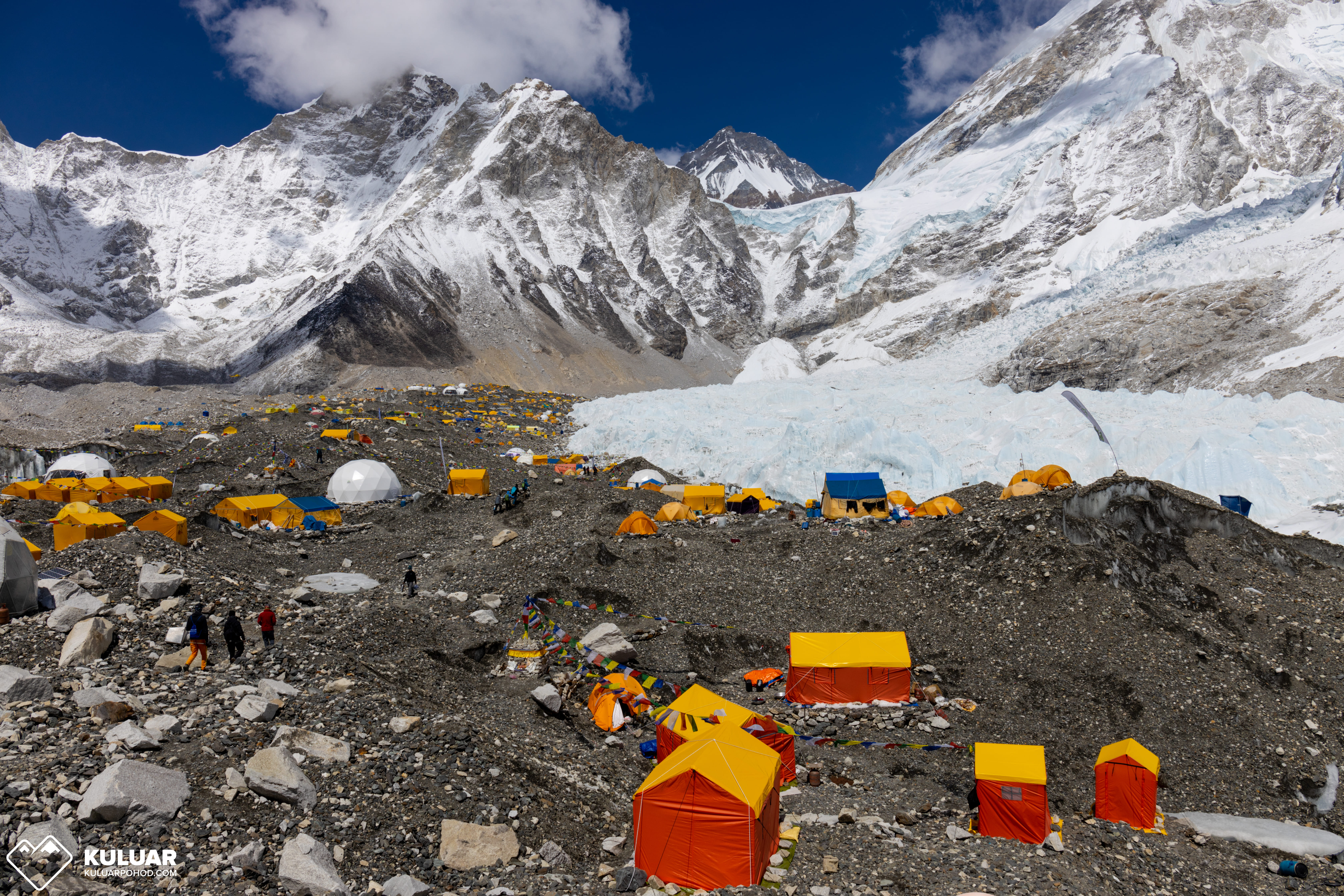
Today, the southern base camp is a few teahouses, from which you can observe the fantastic panorama of the surrounding mountain range. The scenery is especially impressive at dawn, when the sun's rays slowly descend down the southern wall of Annapurna, illuminating it more and more with each passing minute.

The Annapurna North Base Camp was first used in 1950 by the French expedition of Maurice Herzog, who then made the first successful ascent of the eight-thousanders in history. The camp is located on the north side of the mountain in an uninhabited area with no villages, lodges, or signposts. Its surroundings offer no less beautiful views than those on the south side. It is at the base of the northern camp that expeditions to Annapurna along the classic route take place.
You can get to the south base camp by trekking to Annapurna. This is a classic trek that starts in Pokhara and usually takes 10-15 days for the entire program. Our trek is 12 days long and is designed to capture all the interesting locations in the vicinity. We will pass through 6 natural areas from the hot tropical jungle to the arctic wilderness in the Himalayan highlands. We will also stroll through colorful Nepalese villages where we can observe the way of life of the locals. One day we will climb Poon Hill at sunrise to watch the beautiful sunrise with views of Annapurna (South and First), Dhaulagiri, Machapuchare and Nilgiri. And on the way back we stop at the village of Jinu Danda to bathe in the hot springs.

For all its richness the trekking to Annapurna is of low complexity by the standards of the Himalayas. Throughout the route, participants stay overnight and eat in guest lodges. It is also possible to hire porters for a small fee to carry all your belongings. The trek takes place at moderate altitudes, which reduces the likelihood of mountain sickness symptoms to a minimum. The main difficulty on the route is the countless stone steps, on which participants traverse numerous descents and ascents. If you have no problems with your knees, you will overcome this trek without any problems.
As for Annapurna North Base Camp, it has its own trekking route. It was opened to tourists in 2019, and not many people know about it yet. The route goes through the wilderness, where there are no lodges, so participants sleep in tents and cook their own food. Another difficulty is the lack of any signs, which increases the possibility of getting lost.
Trekking in Nepal. Full guide, answers to frequently asked questions will help you to prepare better for the journey.
At the same time the hiking tour is very diverse and rich. Jungles, waterfalls, lakes, hot springs and, of course, landscapes of the highest Himalayan peaks: Annapurna (South and First), Dhaulagiri, Nilgiri, Tilicho and others await trekkers. Also on the way to the northern base camp there is a chance to meet exotic representatives of local fauna. With a lot of luck you may even encounter a snow leopard.
The Annapurna Trek, or Annapurna Ring, is one of the most famous hiking trails on the planet! It doesn't pass through the base camps of the eight-thousanders, but it gives you a chance to see all the most famous peaks of the Annapurna massif from different angles. In addition, the participants visit the most beautiful mountain lake Tilicho, located at an altitude of 5 thousand meters.

Throughout the route we will be accompanied by the rushing mountain rivers Marsyandi and Kali Gandaki. The latter flows between two eight-thousand meters high Annapurna and Dhaulagiri, forming the deepest gorge in the world! The key section of the route is the Torong La Pass (5,416 m).
Compared to the trek to Annapurna base camp, this route is more difficult due to its higher absolute altitude.
The Mardi Himal trek runs in parallel with the Annapurna BC trek. Unlike the latter, Mardi Himal runs along the ridge and is therefore more scenic. Another advantage is that it is safe to walk in early spring, when avalanche danger persists on the Annapurna Gorge track.
The route is relatively new, and there are not yet as many tourists as on the more popular trails in the national park. However, there are lodges here, so there will be no problems with overnight stays and meals.

The main "feature" of the Mardi Himal trek is the stunning views of the sacred peak Machapuchare, to which we will gradually approach during the trekking. This hiking tour is of low difficulty and can be recommended for exploring Nepal. It is also a great choice for those who are unsure of their physical fitness but want to see the real Himalayas.
Annapurna Base Camp, like other mountain areas in Nepal, is best visited in spring (March-April) and fall (October-November). The winter months will be considerably colder, and the summer is the rainy season in the Himalayas.
There is also a difference between the spring and fall seasons. Rhododendrons, one of Nepal's national symbols, bloom in spring. This blossom is especially beautiful against the backdrop of snow-white mountain peaks. Also in the spring there can be a lot of snow on the heights. On the one hand, this makes it a little more difficult to get around, but on the other hand, it makes the trek even more beautiful and atmospheric. Also, during the spring months, there may be a haze in the air that impairs visibility.
In the fall, the air is clearer, the snow remains only very high up in the mountains, and the rhododendrons are no longer in bloom. There are also more trekkers on the trails in the fall months. Overall, each of the two seasons has its advantages. Whichever one you choose, Nepal will be able to pleasantly surprise you!


