


And since I wanted to organize a trip for my students myself, the option where everything was already planned out—all I had to do was buy tickets, pay for the program, and show up—seemed simply perfect.
The itinerary itself was also ideal. First, because of the dates—Monday was a day off, so there was no need to take time off work.
Second, it’s listed on the website as an easy hike, and for people visiting the Carpathians for the very first time, that’s very important.
Preparation
I’d like to say a few words about the preparation. There was more than enough information from the consultants.
I especially want to thank Natalka, who answered my—what I thought were—silly questions even at almost midnight.
For example, whether it’s cold to sleep in the cabins. I’m terribly sensitive to the cold and really hate the cold, so that’s what I was most worried about.
As it turned out, I worried for nothing—the cabins were very comfortable, and I could sleep soundly even in light pajamas.
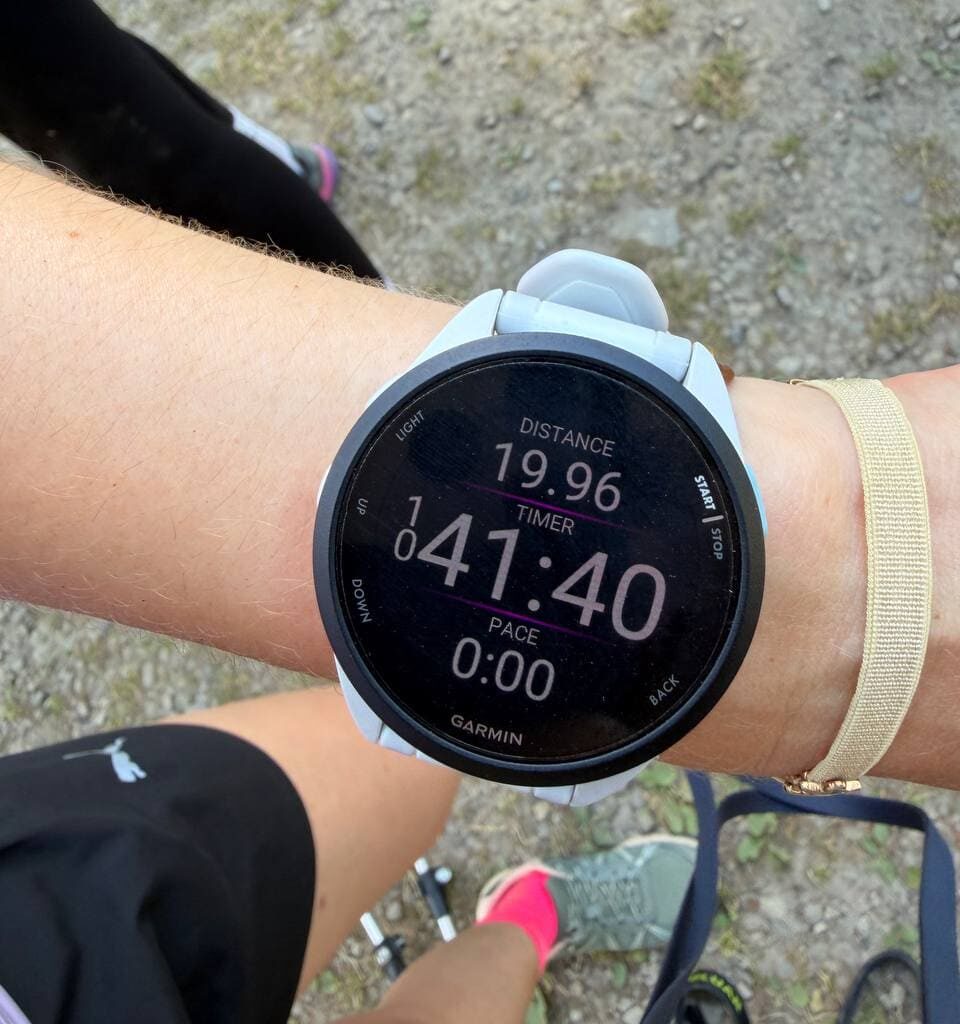
Another huge plus was a separate Telegram group where a list of gear was already prepared.
For someone who loves to plan everything almost half a year in advance (that’s roughly how long ago I first suggested this hike to my students), it was a real treat.
You just open the list, check off the items, and pack your backpack. The group had practically all the information you could possibly need.
The only thing we rented was trekking poles, and that was one of the best decisions we made.
Seriously, if you’re on the fence—rent them. They’re very inexpensive (180 UAH), and they’re incredibly useful.
On the ascent, they literally help push you upward, and on the descent, they really save your knees.
It’s better to have the folded poles sitting in your backpack than to have to search the forest for a wooden stick later on, when your legs are already saying, “That’s it, I’ve had enough.”
We arrived in Ivano-Frankivsk in the morning. Following a recommendation from the group, we went to have breakfast at a café near the train station, and then headed to the meeting point. My only small suggestion
— it would be great if the KULUAR hub offered a place to leave our suitcases for at least a few hours. It’s not far to walk to the meeting point, but carrying a suitcase and a backpack over cobblestones wasn’t very comfortable.
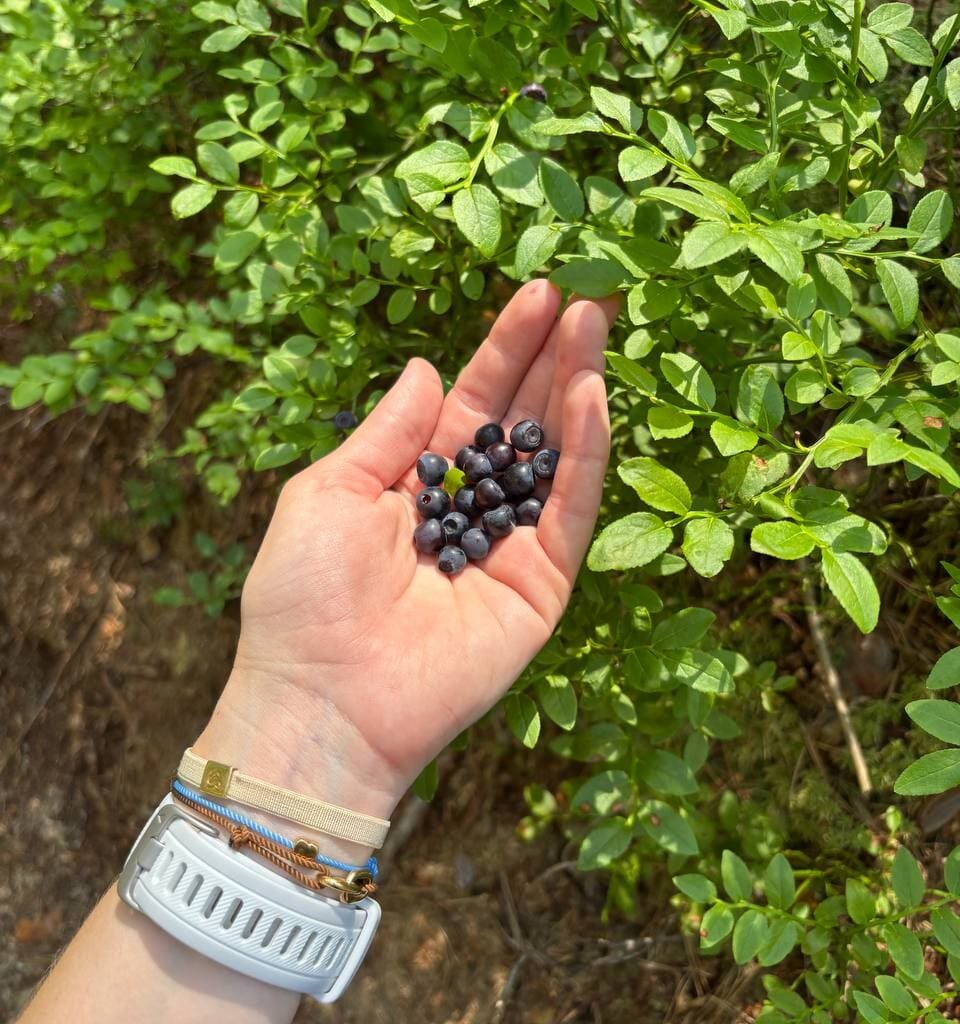
I’d like to give a special shout-out to the shuttle service to the Carpathians. The minibus was comfortable and air-conditioned, so even those who usually get motion sickness made it there without any issues. But I’ll write more about the return trip at the end.
Day One — Yaremche, the Dovbush Trail, and Bukovel
Our first stop was the Dovbush Trail. There were a lot of people there on the weekend, especially families with children.
Personally, I’m not a big fan of large crowds in the middle of the forest, but that’s just part of what makes popular tourist spots what they are.
It was here that I saw blueberry bushes for the first time in my life. And, as it turned out, the locals don’t call them blueberries—they call them “yafenya.”
Our team leader, Lesya, kept sharing interesting facts about the Carpathians, local traditions, and dialects along the way, and it was after hearing one of these stories that I suggested naming our group “Yafenyata.”
Everyone really liked the name.
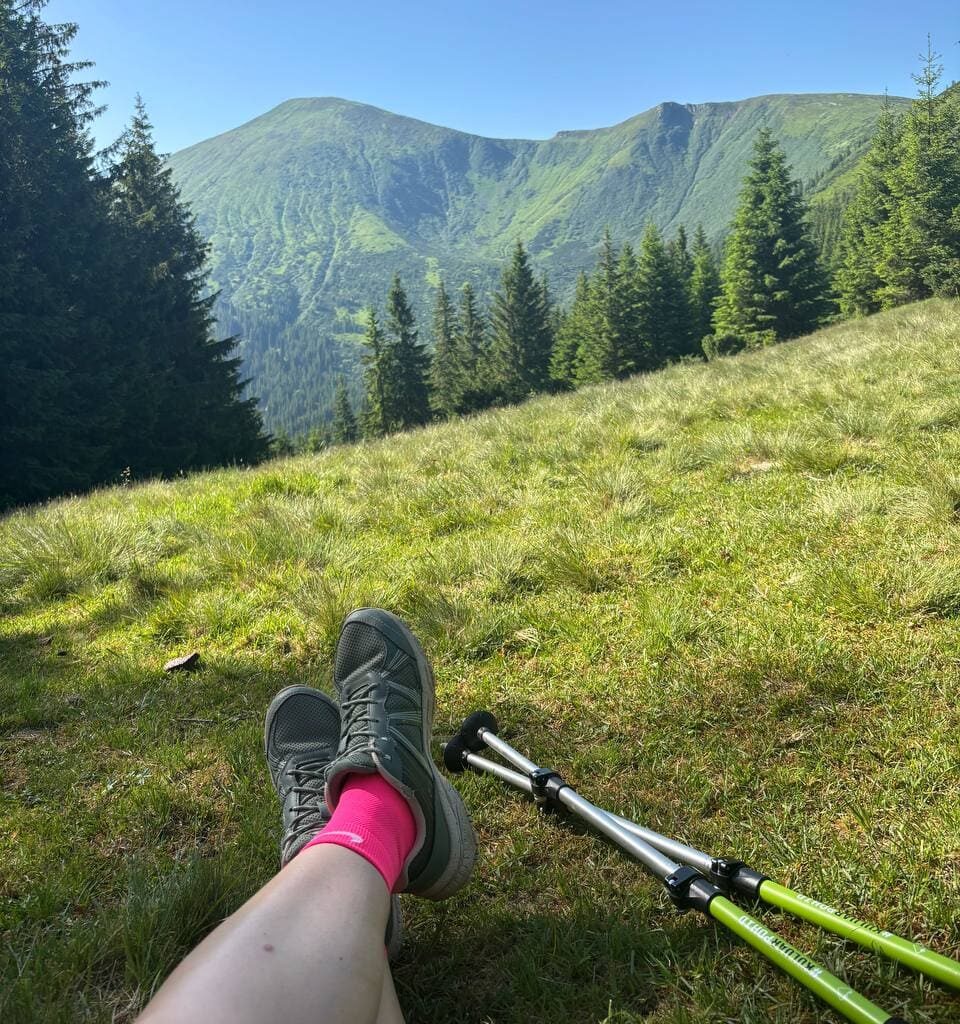
By the way, I ended up eating those same blueberries straight from the bushes. For someone who’s lived her whole life in a concrete jungle, it was a completely new experience.
After that, we went to Bukovel, where we had some free time. On my friends’ advice, we went tobogganing. If you’re ever there—I highly recommend it! It was incredibly fun.
After the ride down, you’re genuinely glad to be alive (just kidding… almost). My only advice—don’t wear a cap. Mine got lost somewhere in the Carpathian bushes.
At the ticket counter, they assured me that lost items are found and returned to their owners—they even took down my contact info—but it’s been almost two weeks now...
I think it’s found a new home among the branches and grass of Bukovel.
After our activities, we ate some really delicious chebureks, and we were constantly provided with snacks throughout the entire trip.
A special thank you for accommodating my dietary needs. I don’t eat dairy products, so instead of cheese, Lesya always brought me pâté.
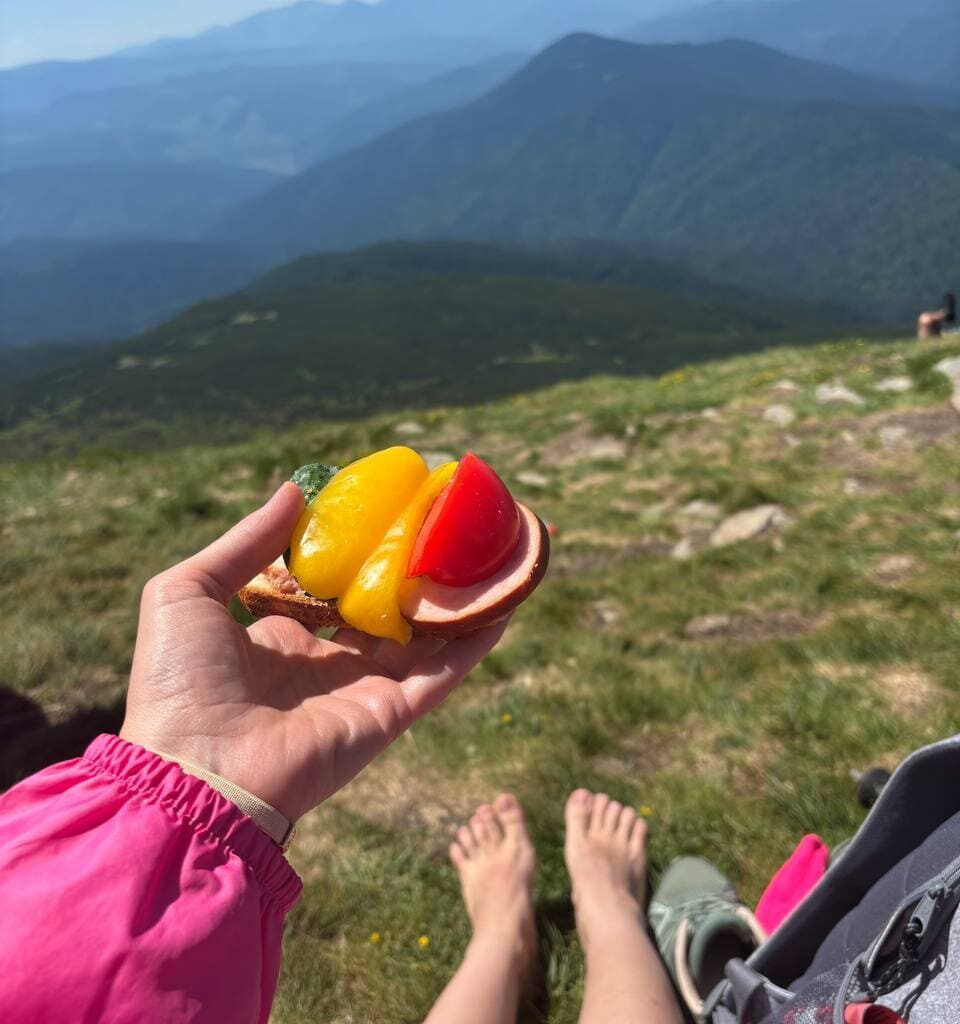
As a result, my sandwiches were practically “royal”—pâté, ham, vegetables… They were delicious.
The only thing I’d advise people who hardly ever eat sausage products at home (like me) is to bring an alternative snack: jerky, nuts, or something else.
My stomach was a little upset after all that sausage. But overall, no one will go hungry—the selection of food was huge.
In the evening, we checked into the cabins. For someone who went to summer camp every year, they seemed simply wonderful. They were clean, cozy, and warm.
The only thing I’d like to see improved is a slightly stronger hot water pressure, especially when several girls with long hair want to shower at the same time after a hike.
The lights were on from 9:00 p.m. to 11:00 p.m. That was plenty of time to charge our phones, sort through our gear, and get ready for the climb.
...
Day Two — Hoverla
The wake-up call went off at 5:30 a.m. To be honest, that was the scariest part of the whole hike.
Getting up so early is a whole different kind of challenge for me. We had breakfast at 6:30 a.m., and ten minutes later we set off for the base of Hoverla.
It was pretty cold in the morning, so the warm pants and sweater—which I’d hesitated for so long about whether to bring—proved to be a great choice.
A few hours later, of course, I was already walking in shorts and a T-shirt, but that morning I was really glad I listened to myself and didn’t leave the warm clothes at home.
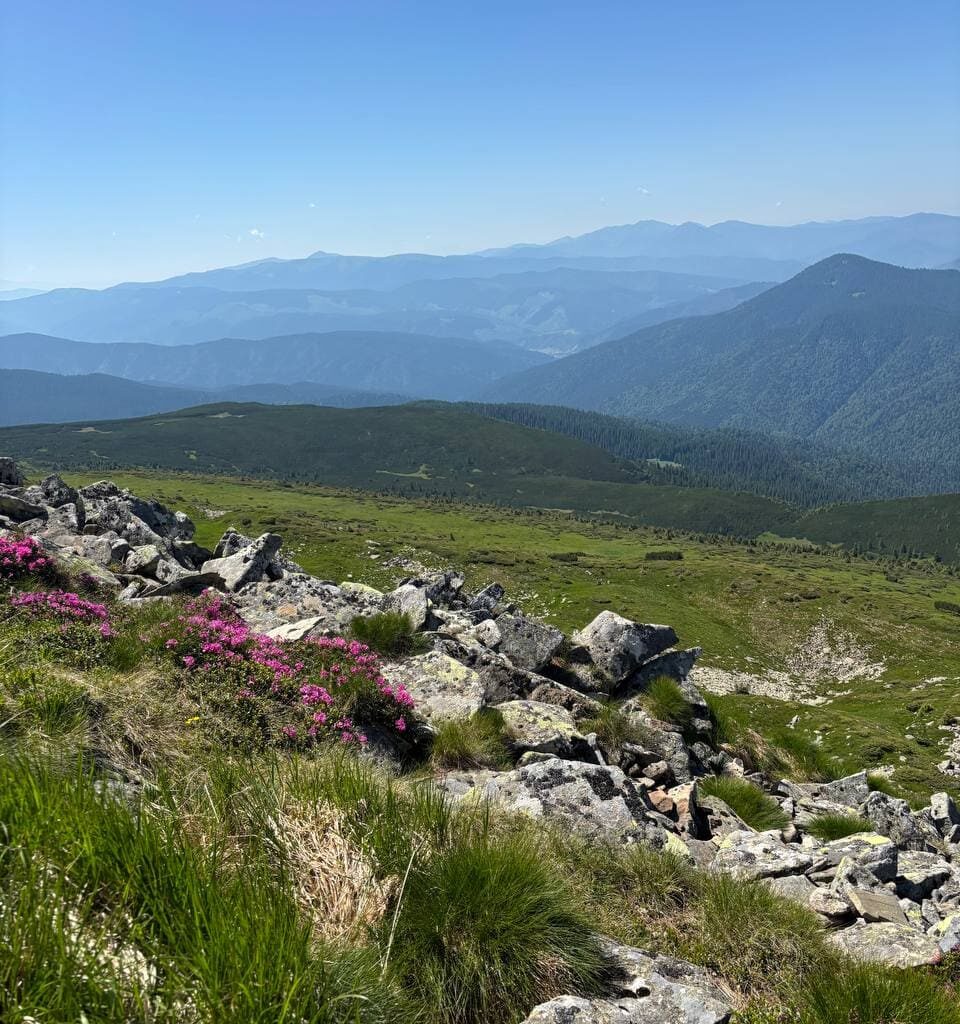
I really enjoyed the climb itself. To be honest, sometimes you don’t even know where to look more—at your feet or all around you. The Carpathians are incredible.
The higher you climb, the more the views open up. Endless green slopes, dense forests, fresh mountain air, peaks appearing one after another on the horizon...
It feels like you’re looking at a postcard, only this time it’s real. I constantly wanted to stop—not because I was tired, but to look around one more time and take another photo.
During the climb, we took breaks, snacked on nuts, tangerines, and sandwiches, chatted, and simply enjoyed nature.
It was right at the foot of Hoverla that another story happened to me—one I’m sure I’ll remember for a long time.
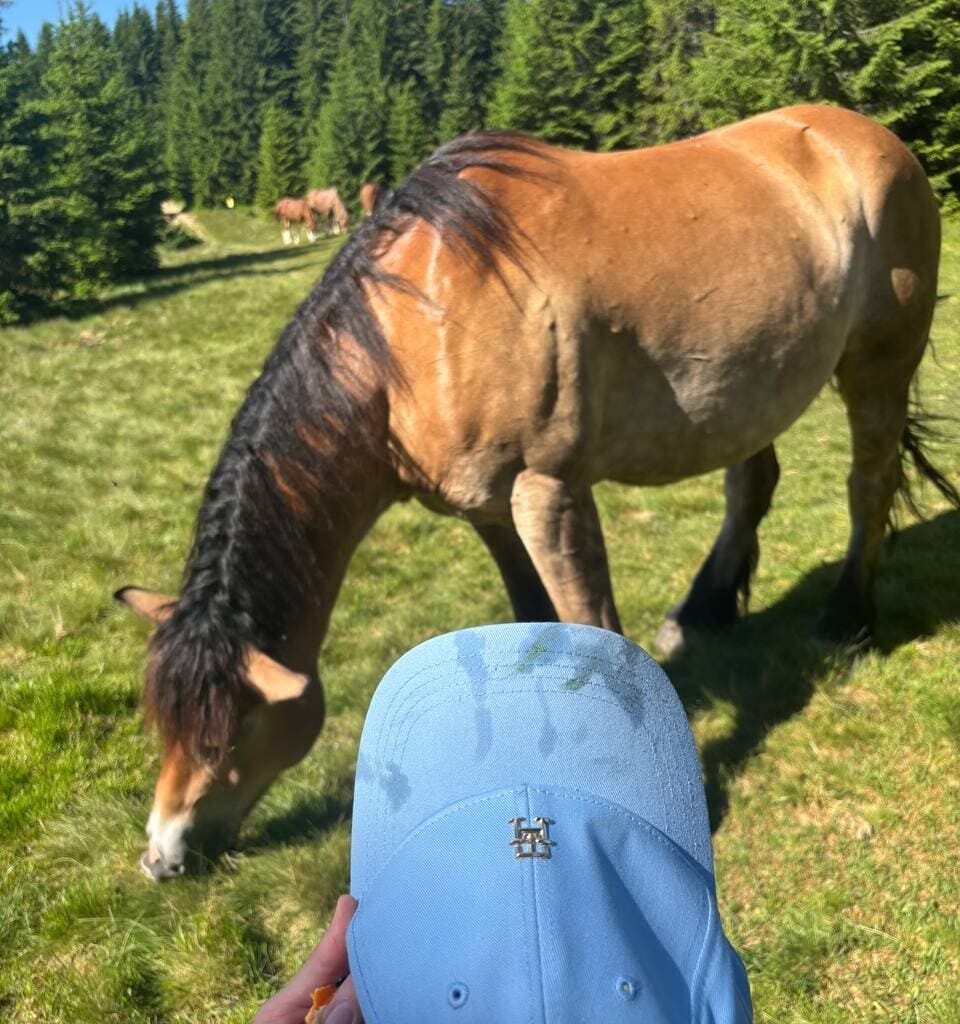
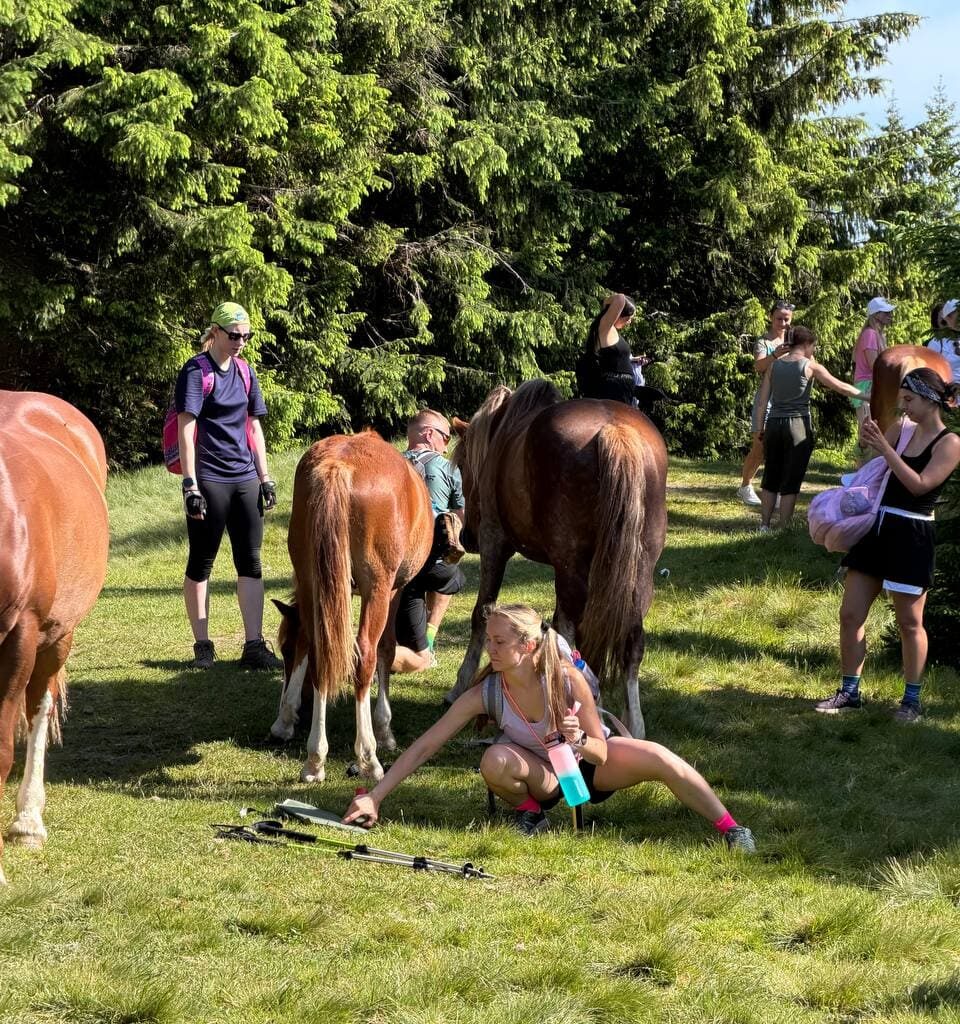
Suddenly, wild horses began running out of the forest. First one, then another, then a third… At one point, there were already about eight of them. We hadn’t expected this turn of events at all.
The horses probably already knew that tourists often feed them, so they began approaching people very confidently. Some people petted them, others treated them to nuts. One of them decided to check out my open backpack as well.
He almost took my water bottle, chewed on my other cap, and generally acted as if they were his own personal belongings.
It was so unexpected and funny that we talked about that moment for a long time afterward.
As for the climb itself, it turned out to be easier than I expected. But I guess my training helped me there.
Before the hike, I worked out regularly at the gym, went running, and even set the treadmill to the maximum incline on purpose. That’s why I was one of the first to make it to the top and really enjoyed the process.
The descent, on the other hand, was much more difficult for me. My knees started to act up very quickly, and I was one of the last to make it down. That’s when I realized once again just how useful the trekking poles were.
It would have been much harder without them. So my advice to future participants is to do at least a little physical training before the hike.
You don’t have to become a marathon runner, but a few weeks of walking, working out, or climbing stairs will definitely make the hike much more enjoyable.
To be honest, the summit of Hoverla itself left me with mixed feelings. Maybe I just built it up too much in my head. The views are, of course, beautiful, but the summit itself turned out to be very crowded.
There were lots of flags, memorial sites, and lines at the popular photo spot near the Hoverla stele—sometimes you have to wait quite a while if you want to take a photo.
But that’s just a feature of Ukraine’s most famous peak, not a downside of the hike itself. I’d also like to take this opportunity to thank our team leader, Lesya, once again.
She constantly encouraged the group, told interesting stories, and helped with literally everything—from a band-aid for a blister to moral support on the toughest stretches.
I really appreciated that during the descent, she let everyone go at their own pace. No one rushed anyone else, and that was the right call.
After the hike, all I wanted was to get back to the cabins, take a shower, and relax.
Another adventure awaited us that evening. Our little group decided to go to the hot tub. It was my first time, too, and it turned out to be simply wonderful.
Especially when, after the hot bath, you walk down to the icy mountain river, dip in for a few seconds, and then return to the hot water. The sensations are simply incredible. I highly recommend giving it a try.
Day Three—Waterfalls, Yaremche, and the Trip Home
After the hike, we all looked a bit like roasted chickens. So here’s another tip from me—be sure to bring sunscreen. We reapplied it at practically every rest stop, and even then, many of us still got a little sunburned.
In the morning, we were treated to some delicious pancakes, after which Lesya handed out a certificate of completion to everyone and said a few kind words about each participant.
It was a very nice touch that made the end of the hike even more special. Then we drove to the waterfalls, and after that—to Yaremche.
What impressed me most was the rushing river near the souvenir market. It looked very powerful and beautiful. During our free time, following our friends’ advice, we visited “Hedzio” Park and Yevhen Klopotenko’s restaurant.
It was a wonderful way to end the trip.
And one more quick observation. The website says this is a route for a light backpack.
Yes, it’s definitely much lighter than on classic multi-day hikes, but for me personally, even that weight was quite noticeable. Water, a snack, a change of clothes, a rain jacket—and the backpack suddenly doesn’t seem so light anymore.
That’s why I now have even greater respect for people who go on multi-day hikes with backpacks weighing 25–30 kilograms. I don’t think I’m quite there yet.
The only thing I’d like to see improved is the return transfer. The trip to the Carpathians was very comfortable thanks to the air conditioning on the bus, but on the way back, we traveled without it.
Opening the windows didn’t help much—only hot wind blew in—so we arrived in Ivano-Frankivsk completely exhausted. After a trip like that, it was hard to even board the train to Kyiv.
In my opinion, a comfortable transfer after a physically demanding hike is a very important part of the entire trip, so I’d like the buses in both directions to be equally comfortable.
Conclusion
This hike was my first introduction to the Carpathians, and I’m so glad it turned out this way. There was lots of laughter, beautiful scenery, new experiences, and even funny stories that my friends and I will remember for a long time to come.
I lost one cap on the toboggan run, nearly lost another because of a horse, ate blueberries straight from the bush for the first time, climbed Ukraine’s highest peak for the first time, and now I know for sure that this was far from my last hike.
Thank you to the entire KULUAR team for the wonderful organization, and to the consultants for their patience and help even before the trip began.
And to our team leader Lesya—for her care, support, interesting stories, and the atmosphere that made even a physically challenging climb leave behind only warm memories.
If, like me, you’ve never been to the Carpathians before and are wondering which route to start with, I can wholeheartedly recommend this one. It lets you fall in love with the mountains from your very first trip.