

Pakistan is an incredible country in which even the most experienced traveler will find something interesting. It is home to more than 10 nationalities, each with a rich history and distinctive culture, and the number of architectural sights, including UNESCO heritage sites, simply cannot be counted.
For lovers of trekking and high mountains, Pakistan is a real paradise. Three great mountain ranges converge here: the Himalayas, the Karakoram and the Hindu Kush. A small region in the north of the country – Gilgit-Baltistan is especially attractive in this aspect. There are 5 of the 14 eight-thousandth peaks in the world: K-2 (Chogori), Gasherbrum I (Hidden Peak), Gasherbrum II (K4), Broad Peak and Nanga Parbat.

The first 4 of them are located in the Karakoram system in the Baltoro-Mustag Range, which is approached by one of the largest and most beautiful glaciers in the world – Baltoro. Trekking there is an unforgettable experience and impression that will last a lifetime for everyone who loves mountains. And this is where one of our trekking routes in Karakoram passes.
Nanga Parbat, unlike the other eight-thousandths of Pakistan, is located in the Himalayas. The location of this peak at the very edge of the mountain range, directly next to the valleys makes it one of the most scenic peaks on the planet. You can fully enjoy the views of Nanga Parbat from all kinds of perspectives (including the base camp) in our trek.
Mountain lovers will also appreciate the Karakoram Highway, the highest international highway in the world that connects Pakistan to China. It's an engineering wonder, comparable in its scope to the Great Wall of China. The highway runs in the mountains of the Karakoram at an altitude of up to 4,700 meters! Just imagine the views the travelers have right out the car window!

Pakistan has a controversial image on the Internet, and many people are simply afraid to go here. But after studying the issue, it becomes clear that with the observance of certain rules, traveling in Pakistan will be even safer for you than in many European countries. About this we will tell you below.
Due to the fact that there are still very few foreign tourists in Pakistan, each visitor is welcomed with the utmost hospitality and is perceived as a dear guest, rather than an object for enrichment. Now, while the country is not yet spoiled by mass tourism, it is the best time to discover its natural and cultural treasures.
TREKKING AND HIKING IN PAKISTAN – WHY WITH KULUAR?
EXCELLENT ORGANIZATION
Kuluar has 10 years of experience in organizing trekking and climbing of all levels of difficulty all over the world. Likewise, we will organize for you trekking in Pakistan in the best tradition.
RICH PROGRAMS
Our Pakistani partners carefully prepared programs which will help you to enjoy mountain sceneries and culture of the unique country.
FULL GUIDANCE ON TREKKING
We undertake all organizational work – permits, hotel and guest house reservations, car support during the journey (bus and jeeps), and the host is one of the best companies – organizers of Pakistan!
MAXIMUM COMFORT FOR A REASONABLE PRICE
On the trekking stages of the routes, we fully provide you with everything you need, including service personnel – local porters, cooks and their assistants. You will only have to enjoy the majestic scenery without carrying heavy backpacks with food and gear. And that's already included in the price of the tour!
HELP IN PREPARATION
If necessary, we will help you with packing your gear and advise you on purchasing airline tickets.
KULUAR GUIDE
Experienced and reliable guides will show you the most beautiful places of Pakistan and tell their history going back thousands of years; lead you through the best and safest mountain trails.
DATES GUARANTEE
We do not cancel or reschedule groups. If the manager approved the ticket purchase, feel free to buy it. There will be no cancellation through our fault.
EQUIPMENT DISCOUNTS AT OUR PARTNER STORES
We have agreed with many good equipment stores in Ukraine on discounts for our participants. An excellent opportunity to save money!
KULUAR – YOUR LIFE CHANGING MOUNTAIN EXPERIENCE!
HIKING AND TREKKING ROUTES IN PAKISTAN WITH KULUAR
Trekking to the base camp K2
K2 (Chogori, 8,611 m) is the second-highest mountain on the planet, located in the Karakoram system in northern Pakistan. The peak is both beautiful and challenging. No wonder one of its names is "Wild Mountain". Even the most experienced climbers do not usually consider the idea of climbing K2 – it is that hard and dangerous.
And if only a few chosen mountaineers may dream of the summit of Chogori, an ordinary man in good physical shape is able to reach its base camp and appreciate the power and magnificence of the peak. The route to the base camp of the K2 mountain goes through the legendary Baltoro glacier, which offers amazing views of many of the highest peaks of the Baltoro-Muztag and Masherbrum ranges.

This is a wild and remote area with almost no tourist infrastructure. But in our route the members will get the maximum possible comfort: a local guide team, personal porter (up to 25 kg per person), cooks who provide tasty meals three times a day, solar batteries, etc.
Trekking to Nanga Parbat
This is a truly unique route, a must for anyone who wants to experience both the mountains of Pakistan and its distinctive culture as closely as possible in a short period of time. This program, developed by our Pakistani partners, covers some of the most picturesque areas of the Baltistan mountain region, as well as tours of the most beautiful cities of the Punjab region.
The route is of medium difficulty and is designed to make life easier for the members. For most of the program we will stay overnight in comfortable lodges and hotels, and during the trekking part of the trip the group will be accompanied by local porters, cooks and their assistants. Fans of hiking in comfort will be pleased!

The main attraction of this route is the legendary Nanga Parbat (8,126 m). We will make a trek to the base camp of this mountain, as well as visit the best viewpoints that few people know about. The program includes 2 more short treks – to the high-mountain lake Rush and to the base camp of Rakaposhi (7,788 m), the 27th peak of the Earth. Transfers between the main points of the program take place along the Karakoram Highway, which in itself will be one of the main experiences of this trip.
Cultural enthusiasts will be delighted by the excursions to the cities of Lahore, Islamabad and Gilgit, whose architectural sights will amaze even experienced tourists. All in all, the program is very rich, comfortable and yet not poppy: you will be among the first European tourists in these amazing places!
Features of trekking in Pakistan
All the most interesting and scenic mountain trails in the Karakoram and the Himalayas are in the north of the country in Gilgit-Baltistan. The main feature of these places is the lack of developed tourist infrastructure. Unlike neighboring Nepal, where mountain hiking is very popular, you won't find cozy guest houses on most trekking routes in Pakistan. You'll also have to carry tents, sleeping bags, and a supply of food for the entire trek.
Other features of trekking in the local mountains are the difficult accessibility of the region and the complicated routes. All this leads to the fact that few tourists and mountain lovers come to Pakistan. Although it is worth admitting that in recent years, the government of the country is actively trying to develop tourism, so the attitude towards visitors here is very good.

In developing trekking routes in Pakistan, we took into account the characteristics of the region and tried to make our programs as comfortable as possible. We always go with a local support group including guides, porters for each participant, cooks and other service personnel. Participants are provided with delicious meals three times a day.
The trek to the base camp K2 is physically difficult, we will live in tents during the route. Compared to this, trekking to Nanga Parbat is significantly easier, participants will spend most of the night in tents. Choose what you like best.
Isn't it dangerous to go to Pakistan?
Many tourists try to avoid visiting Pakistan, considering it a dangerous country. In fact, if you follow a few simple rules, traveling in Pakistan is absolutely safe.
The most important is not to visit regions of conflict. There are only three of them:
- Balochistan. Occupies vast areas in the southwest of the country.
- Azad Kashmir. A small border region with India in the northeast.
- Tribal areas in the west.
Ordinary tourists are not allowed into the above regions without a special permit, which reduces the likelihood of any trouble to a minimum. But even if you somehow manage to get such a permit, you will be given an armed convoy to protect you during your stay in dangerous areas.
Mountain lovers need not worry about safety at all. The most interesting mountain systems – Karakoram, Himalayas and Hindu Kush – are located in the north of the country in Gilgit-Baltistan. And this region is safe.

Special mention should be made of the hospitality of the local population. Generally typical of Asian countries, in Pakistan it is enhanced by a small number of tourists, which will make you even more appreciated. You don't need to worry about overpricing or imposing services, only respect and a sincere desire to help the guests of the country.
As in other Muslim countries in Pakistan there is no problem with theft, you can easily walk through the city markets, not fearing that they will take something precious from you.
Features of the culture and the rules that must be respected
Pakistan is a very religious country. Here you need to respect the traditions and customs of the local population, and then you will not have any concerns. First, this applies to girls and women. You must not wear shorts and short skirts, if possible, all parts of the body except the head should be covered. You should not take pictures of Pakistani people or try to get acquainted with them in the street.

Any contact with the local population (passing money, objects, food) should be made only with the right hand, as the left hand is used for personal hygiene. At the entrance to the house or mosque be sure to undress, putting shoes in a special place.
Despite their deep religiosity, the residents of Pakistan are respectful and tolerant of other cultures and religions. You can easily visit mosques and observe their ceremonies. In general, the local population is kind and hospitable.
How to apply for a visa to Pakistan? Required Documents
You need to apply for a visa to visit Pakistan. If in the past you had to apply in person at the consulate, in recent years it has become possible to do this online. You can apply for a visa to Pakistan on this website. It requires a passport, photo, hotel reservation and an invitation from a local company to the trek. If you plan to travel on your own, you may have difficulty with the latter. For Kuluar members, we arrange this invitation ourselves from local partners (as well as hotel reservations).

Documents are applied for no earlier than 3 months before the trip. The time for obtaining a visa to Pakistan is 7-10 working days. The cost is $35.
Also, for trekking in Pakistan, it is necessary to issue permits to visit specific mountain areas. For Kuluar members, we handle these issues. But keep in mind that they also take some time to resolve (it takes longer to trek to K2 than to trek to Nanga Parbat), so try to apply early.
Rules of entry in the Covid-19 coronavirus pandemic
The global pandemic situation is changing rapidly, so please look for up-to-date information at the time of your trip. As of spring 2021, passengers on flights to Pakistan must have a certificate of negative coronavirus (COVID-19) RT-PCR test. The test must be done at least 96 hours before departure. This does not apply to passengers under 12 years of age.
Passengers must also download the Pass Track app (Google Play Store/Apple Store) before boarding and provide their personal information or send it to a special website and receive a printed confirmation. This does not apply to passengers under 12 years old and those with disabilities.
A completed international passenger health declaration form is required before departure.
How to get to Pakistan
There are currently no direct flights to Pakistan from Eastern Europe. It is best to fly via Istanbul, Doha or Dubai. Airfare will cost $600-900.

The preferred cities of arrival for trekking in the Himalayas or Karakoram are Islamabad and Lahore.
When to go trekking in Pakistan? Best Seasons.
In winter, the mountains in the north of the country are very cold and snowy. Most roads and passes are impassable, so if you want to visit the Karakoram or the Himalayas, you should not fly to Pakistan between October and April.
Fans of trekking and hiking begin to arrive in Pakistan in May, and the main tourist season in the mountains falls in the summer months. This is also when the famous annual Indian monsoon appears. Wet air masses move northward from the Bay of Bengal, bringing heavy rains and thunderstorms. Most of the humidity is accumulated in the plains and in the Himalayas (Nepal). The monsoon reaches Karakoram, which is northwest of here, when it has weakened, so there is no rainy season as such.
Compared to Nepal, where mountain tourism reaches its peak in the spring and fall, trekking in Pakistan takes place in the summer with warmer and drier weather conditions.

If you are more interested in the cultural attractions located in cities such as Lahore, Islamabad or Karachi, plan your visit to Pakistan in winter. This is a time of comfortable temperatures and minimum rainfall.
For inspiration: movies, videos and books about the mountains of Pakistan
Greg Mortenson's book "Three Cups of Tea"
The story of American mountaineer Greg Mortenson, who after an unsuccessful summit on K2 ended up in one of the mountain villages. There he saw the conditions under which the local children were taught in school, and it completely changed his life ... The book was printed in 48 countries with a total circulation of 7 million copies. Highly recommended!
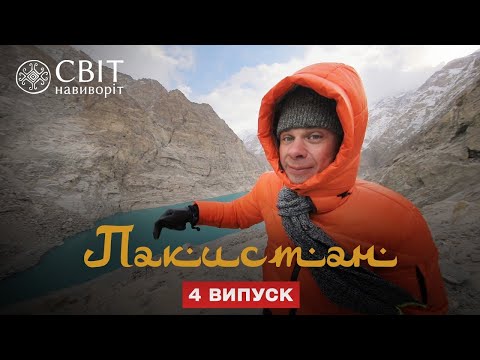
“World Inside Out” series
"The World Inside Out" is a series of TV programs in which journalist Dmitry Komarov shows little-known sides of certain countries. One of the last seasons was devoted to Pakistan. The film crew traveled all over the country, visiting even the forbidden places for tourists.
"Nanga Parbat” film
The film tells the story of brothers Reinhold and Gunther Messner, who in 1970 dared to climb to the top of the eight-thousander Nanga Parbat on the famous unclimbed Rupal Wall.
We hope we have managed to convince you that Pakistan is an incredibly interesting and beautiful country that every high mountain lover should visit. And the best way to go here is in the company of experienced Kuluar guides, with whom you will forget about all the organizational issues and will be able to pay all your attention to the surrounding beauties.
Kuluar – your life changing mountain experience!