We are not running this programme at the moment
Take a look at similar programmes we run:
Many Ukrainians have probably heard of the town of Bila Tserkva. What draws tourists here, first and foremost, is the "Oleksandria" dendrological park, laid out back in the late 18th century on the picturesque banks of the Ros River by Countess Branicka. The general plan of the park was created by the French architect Muffo; architect Dominique Botany and renowned European gardeners also worked on it. Today it is the largest and oldest dendrological park in Ukraine. A wide variety of architectural structures, together with meadows, an oak grove, several ponds, and the Ros River, form a wonderful park ensemble. It is rightfully considered one of the best not only in Ukraine but also in Europe.
On this weekend hike, we'll have a wonderful chance to learn the history of these places dating back to the times of Kyivan Rus, and while strolling through this beautiful park, to soak up the spirit of the classicism era. After touring "Oleksandria", we'll set off on a mini-hike along the banks of the Ros River. We'll visit a forest lake with beavers and the remains of a bike track around it, find an old quarry hidden in the oak grove, and in the evening light a campfire on the high riverbank. After camping overnight by the Ros, we'll continue on to a large granite quarry and picturesque spots on the outskirts of the village of Hlybichka.
It will be interesting, educational, and heartwarming. Join us! :)


Experienced team leaders from Kuluar Hiking Club will accompany the group along the entire route, making your trip as interesting and safe as possible!
The program has been refined several times — we tried to make it as safe, comfortable, and educational as possible. Over 2 days, you'll hear countless fascinating historical facts and legends about these places, stroll through Oleksandria Park, and swim in the Ros River.
The manager who will consult you before the program will tell you all the details from personal experience!
Over 12,000 participants have already joined Kuluar, and 97.8% were satisfied. We're confident you'll love it too!
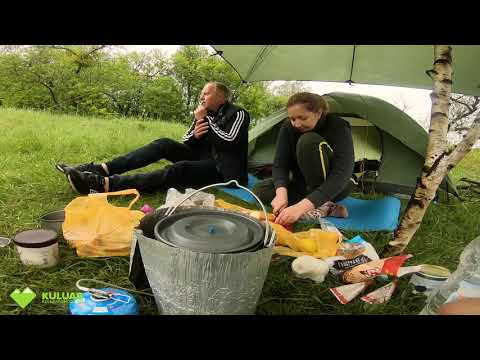
During this weekend hike, you'll enjoy: the aesthetic pleasure of walking through "Oleksandria" park, camping overnight on the high bank of the Ros River, a delicious dinner and breakfast cooked over a campfire, relaxing in nature in great company, and much more.
This weekend hike is suitable for everyone, and for some it may turn out to be an excellent option for an "initiation into tourism." If you have never camped outdoors or been on a hike before - we're even a little jealous of you! :) So many pleasant discoveries and unforgettable moments lie ahead! Don't have hiking gear - no problem, we can rent you everything you need. This two-day hike format will also appeal to experienced travelers, as it's a great opportunity to escape the city for the weekend to beautiful places, recharge, and fill up on positive emotions and pleasant impressions. Join us!

We meet by 11 AM in Bila Tserkva near the central entrance to the Oleksandria arboretum. A guide will be waiting for you there. We'll get acquainted and leave our backpacks with hiking gear at the rental pickup point. We'll walk through the arboretum without backpacks. The guide will tell you the history of the park's creation, and you'll walk through its most beautiful spots.
"Oleksandria" is an example of a landscape park with elements of the romantic style and late classicism architecture characteristic of the late 18th - early 19th centuries. One of the most original structures in the park is the "Ruins" pavilion. Besides its aesthetic purpose, the "Ruins" also serve a functional role, acting as a retaining wall and dam for one of the lakes.
The park contains several rotundas and gazebos, sometimes hidden in the most unexpected places. One of the gazebos, the "Chinese Bridge," is quite unique and is located on the dam between two lakes. The gazebo is built in the form of a bridge, with a roof like Chinese pagodas. Nearby are two bronze sculptures - a Chinese sage and a Chinese woman.
The park has many ponds where you can see ducks and white swans and feed them by hand. Don't forget to bring some bread for this :)
The park's variety of trees, shrubs, and grasses numbers more than 2,500 species. Some trees are over 300 years old! There are several glades on the park's territory, the most impressive of which is called the Great Glade. It is the compositional core of the park and covers an area of 10 hectares.
Another interesting feature of the Oleksandria arboretum is the "Echo" Colonnade. It is built in the form of a Greek amphitheater and has excellent acoustics: a word whispered in one wing of the colonnade is perfectly heard by a person standing in the opposite wing.
In the western part of the park is its highest point - Paliieva Mountain. The rocky slope of the mountain is almost thirty meters high. During the times of Kyivan Rus, this point was one of the strategic defense points against steppe nomadic peoples. Archaeologists have discovered traces of an ancient settlement at this location. The modern name of the mountain honors Semen Paliy, colonel of the Fastiv and Bila Tserkva regiments. Semen Paliy led the national liberation movement against the Polish gentry in Right-Bank Ukraine in the late 17th - early 18th centuries. At the summit, in honor of these historical events, a monument was erected in 1980 - a tower with a bas-relief and a cast-iron cannon nearby. On the mountain itself, remnants of the Cossacks' earthen fortifications can still be seen.
After the excursion through "Oleksandria" park, we'll return to the city for our backpacks and set off on our mini-hike, now along the right bank of the Ros River. We'll visit an old abandoned quarry, a forest lake with beavers and remnants of an elevated bike track; through fields we'll reach the high bank above the Ros. Here we'll stop for the night.

Waking up in the morning to birdsong, we'll unhurriedly cook breakfast over the campfire. We'll pack up the tents and continue along the Ros River to the granite quarry. The quarry is active, and its scale is impressive!
After exploring the quarry, we'll reach the village of Hlybichka, near which there's a dam. The sound of water can be heard from afar. Above the dam lies a reservoir - a favorite spot for fishermen.
We'll admire the scenery, swim in the river, and cross through the village of Chmyrivka to the left bank of the Ros River. There we'll see a small quarry, whose granite cliffs are used by local tourists for training. Along the bank of the Ros and through forest trails, we'll reach the Hayok microdistrict, which during Soviet times was a closed military town. An aviation regiment was stationed here. The era is commemorated by the TU-16 - the first long-range jet bomber - standing frozen on a pedestal.
We'll take a city minibus to the center of Bila Tserkva, to Soborna Square. The last minibus to Kyiv departs from here at 8:00 PM. So we'll spend the remaining time on the high bank of the Ros River, at Zamkova Hill.
It was here that the foundation of a stone temple, built during the reign of Prince Yaroslav the Wise, was discovered. In the 11th-13th centuries, Zamkova Hill was the site of the citadel of the chronicled town of Yuriev - the earlier name of Bila Tserkva. Now, next to the preserved excavation site, a new Church of St. George the Great Martyr has been built, which exactly replicates the original structure in its layout.
From Zamkova Hill, a wonderful view opens onto the valley of the Ros River. The town of Yuriev, on the rocky bank of the Ros, was a link in the Poros defensive line, constantly repelling raids by the Pechenegs, Cumans, and later the Tatars. The city stood in the path of these peoples' incursions to the north and was repeatedly razed to the ground. In the thirteenth century, Yuriev was once again devastated by nomads, leaving only the half-ruined bishop's cathedral, built of white stone. It is with this cathedral, historians claim, that the city's modern name is connected.
In 1812-13, Count Branicki built the Roman Catholic Church of St. John the Baptist on Zamkova Hill.
We check the weather forecast for the next couple of days and dress accordingly. Be prepared for anything - don't forget to bring a raincoat!
We limit the number of participants in the group. To secure your spot, you need to make a deposit of 300 hryvnias. The remaining amount is paid to the team leader upon meeting. Deposit refund conditions and payment methods =>>


The city of Bila Tserkva is located on the international highway M-05 (E-95), and getting here from Kyiv is quick and convenient. Minibuses depart from various points in Kyiv from morning until late evening, both to and from the city. Boarding points: Odeska Square ("Teremky" metro station), the parking lot at the exit of "Palats Ukrainy" metro station, and the "Kyiv" bus station ("Vokzalna" metro station). The fare is 60 hryvnias, and minibuses depart every 20-30 minutes. Travel time is 40-60 minutes, depending on road traffic and the departure point (whether there are traffic jams in Kyiv itself). You can also easily get there by hitchhiking from "Teremky" metro station.
All minibuses departing from these locations pass through Soborna Square, where you need to get off. The stop's coordinates are 49.79154, 30.11382 (just enter these numbers into Google's search bar :) Then cross the road and at the stop take a city minibus or trolleybus that passes by "Oleksandriya" Park. These are trolleybuses No. 1, 4; minibuses No. 22, 4. You'll wait no more than 5 minutes, the ride takes 12-15 minutes, and you get off at the "Oleksandriya Park" stop (the park's central entrance).
From Bila Tserkva to Kyiv, you can take the same minibuses; the last one departs from the bus station at Soborna Square at 20:00.
During the day - a snack and tea/coffee; in the evening and morning - a hot meal and tea/coffee, drinking water for all participants. Don't forget to mention in your application form if you avoid any particular foods.
Check the weather forecast for the next couple of days and dress accordingly. Be prepared for anything - a raincoat is a must!