


Yes, after a few hours you will feel tired and hungry. You will want to take off your heavy boots and drink hot tea with a snickers. Take a shower, after all. But now you don't. You go and enjoy the moment of complete solitude in the Himalayas. At a time when there are queues of climbers to climb Everest, such moments are especially valuable.
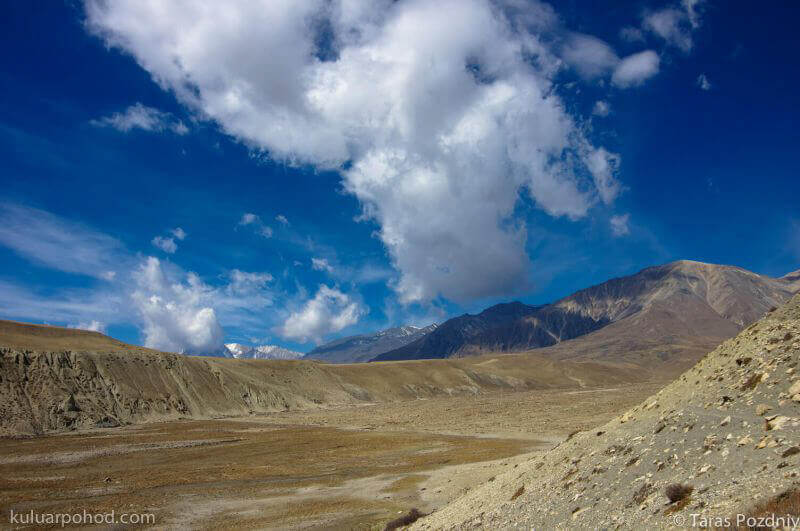
And there were really many such moments on the track to Lo Mantang. How did it happen? Several factors contributed to this. The first is the time of the track. When we passed the checkpoint in Upper Mustang, we were the 186th tourists of this year. When we passed the checkpoint on the track to Annapurna, we were 226 for that day. Can you feel the difference? To enjoy the solitude, the timing was perfect. Even if the photos are not so juicy, due to the lack of greenery, and we did not see any festivals, but we can come back for that.
The second factor is our team. As I said, everyone is experienced, has already been to Nepal, and is quite independent. During the trip, everyone went at a comfortable pace, pursuing their own goals. We met at key points - on passes, in villages. I had a self-imposed (and approved by the group) mission to shoot time-lapse, so I generally trailed behind. Often, for several kilometers. Of course, we often walked all together, but it was not mandatory in this track in Nepal.
This is the third part of the photo report about the trip to the upper Mustang. If you haven't read it, I recommend the first and second parts first.
Let's finish with the lyrics and get back to our ascetic everyday life. Today we are going to Lo Mantang, the capital of the Lo Kingdom. Our local guide Santosh is ready and waiting.
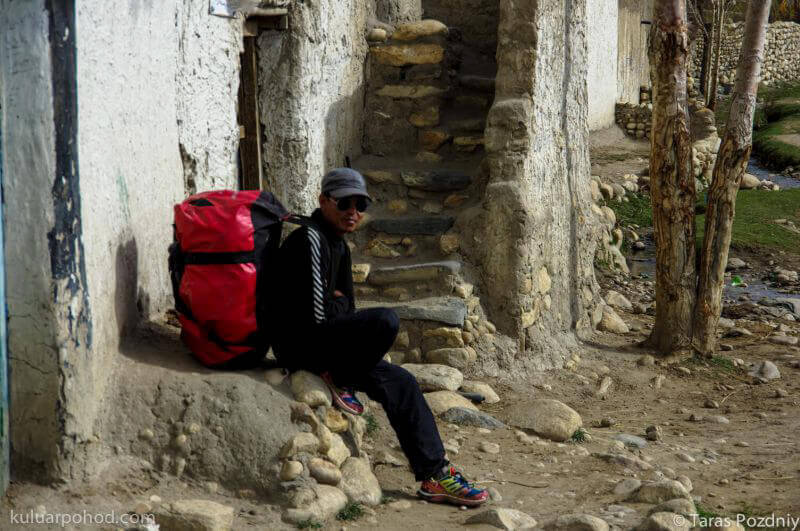
In general, every morning was pretty much the same. Immediately after breakfast, Ed would appear in the hall with his backpack packed, and a few minutes later Igor would come out. Then I would get ready, and together we would wait for Sasha. We didn't wait very long, but long enough to be sincerely happy to see him and make some friendly jokes))
And here comes Sasha cheerfully walking down the road, approaching another steps.
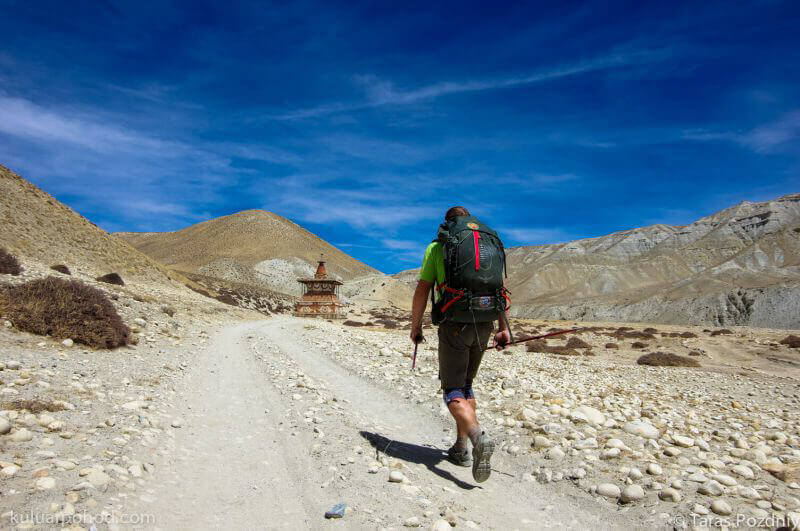
I sit and manage time. If I want, I slow it down, if I want, I speed it up.
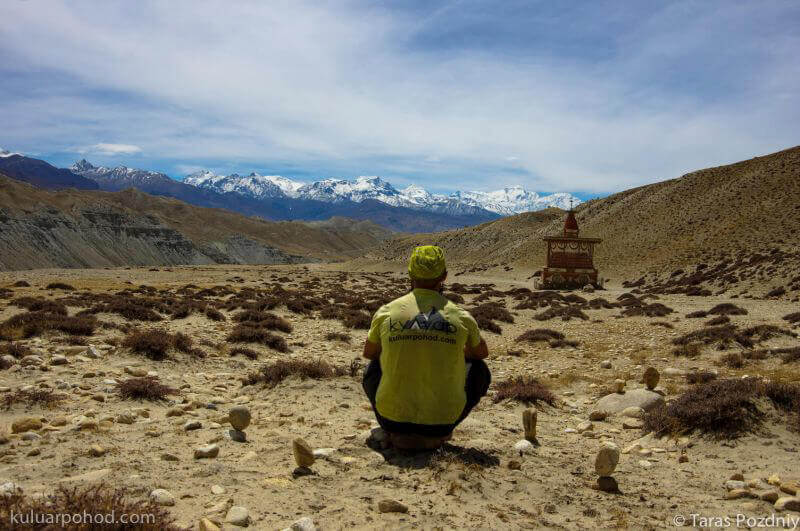
The road to Lo Mantang flies by. We are no longer walking, but almost running up the mountains. Ed is right. Among the velvet mountains, the capital of the kingdom appeared for the first time. On a hill outside the city, you can see the remains of the fortress of Ame Pala, the founder of the city and the entire Lo Kingdom.

We check into a hotel and go to explore the capital. A little bit of information about it so that you understand what we are talking about.
Mantang is a fertile valley, which is how the whole kingdom used to be called. But the name was changed to Mustang, which is more familiar to Western tourists. But the name of the capital was not changed. It was founded by Ame Pal in 1380. Lo Mantang is also called the "city behind the wall" because indeed the entire old city is hidden behind the wall, and only recently has the tourist infrastructure outside it begun to develop. A road runs along the perimeter of the wall. You won't surprise anyone here with a car or a motorcycle. The population of the town is about 1100-1300 people in summer and 300-500 in winter. Most residents of both the capital and the entire kingdom go to warmer and more inhabited places like Pokhara, Kathmandu, and India to spend the winter. Not everyone goes to Tibet, as the border is closed. Those who stay are moving to live behind the walls. According to locals, raids by marauding bandits in winter are not uncommon here. The height of the city is 3,700 meters.
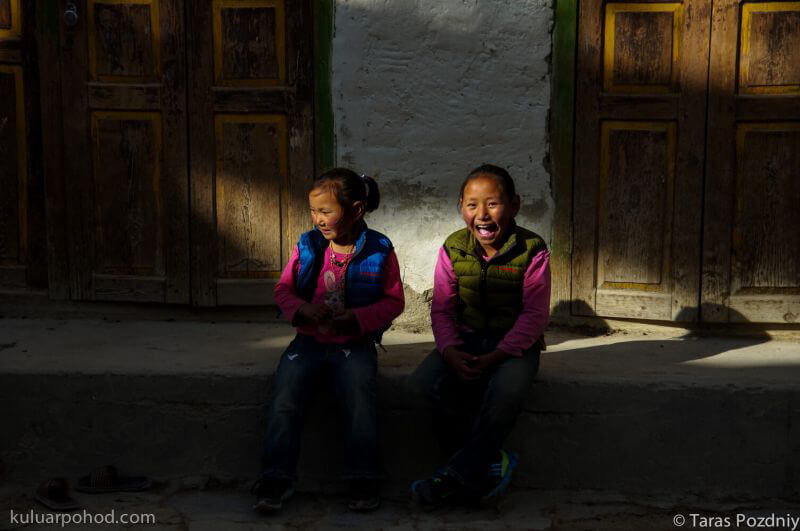
Children walk the streets of Lo Mantang in modern clothes.
This is how they carry cans of fuel, water, or anything else.

Meanwhile, Ed spins the big reels.

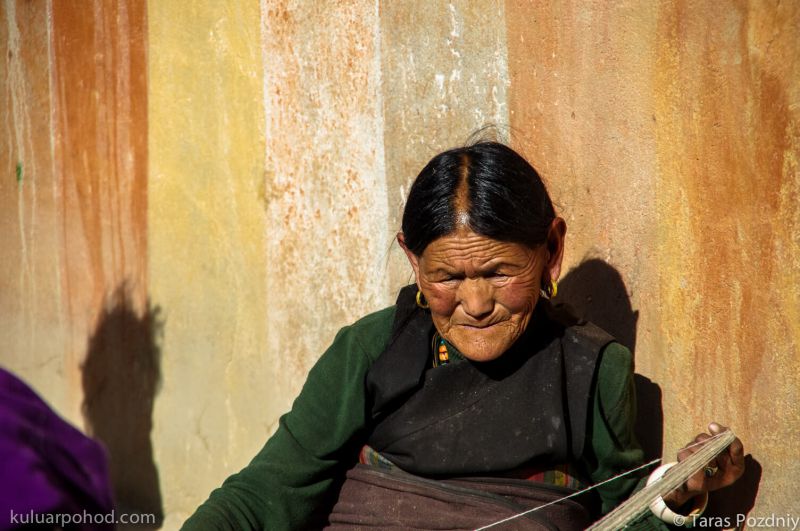
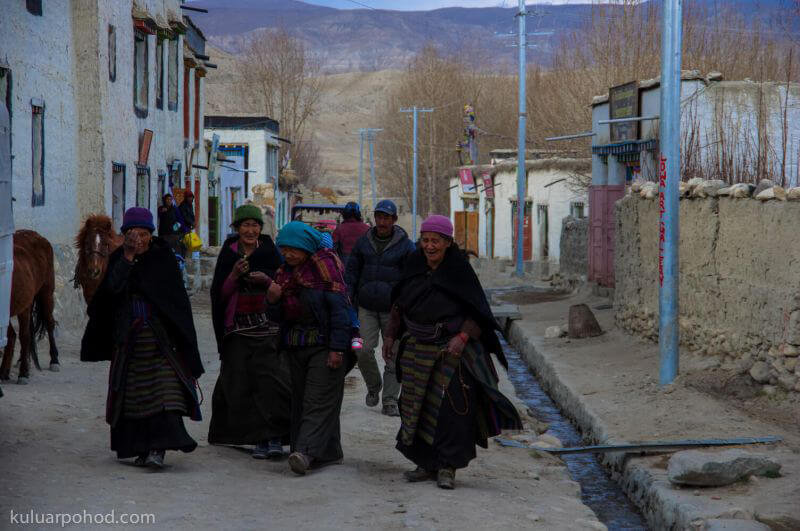
A local gathering. Older people wear traditional clothes. They walk, talk, go about their business, and are in no hurry. Life goes on as usual.

They seem to be unfamiliar with gray hair.
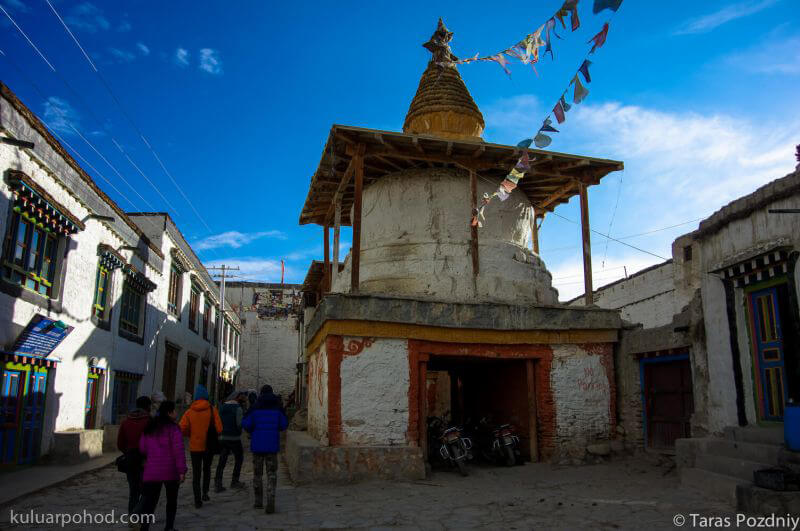
We bought a ticket for $10 and went to explore the local monasteries and museum. The stupa serves as a good parking lot for motorcycles.
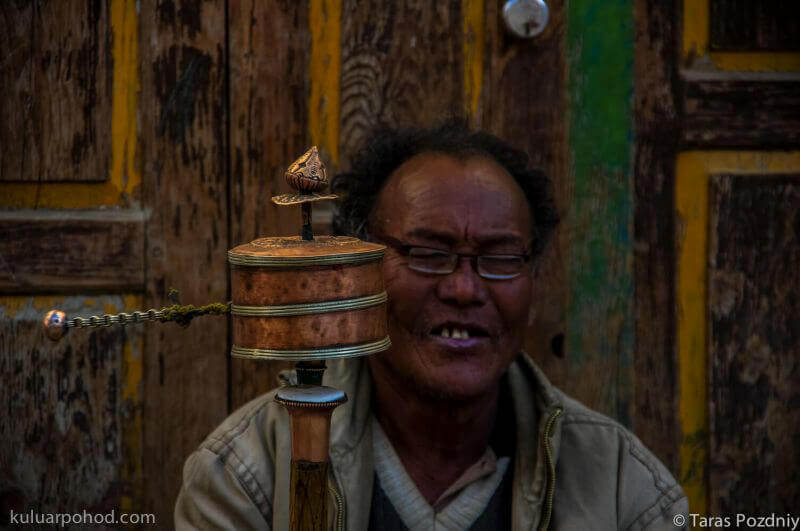
All day long, this man spins the drum.
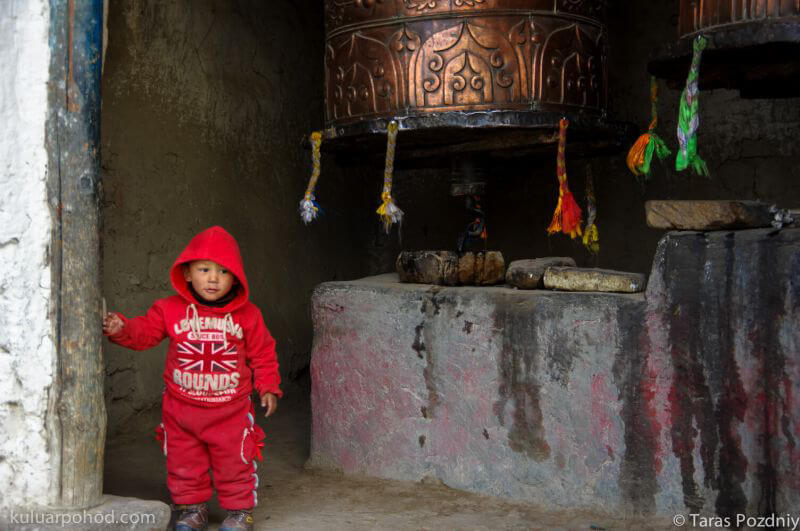
A little Buddhist.
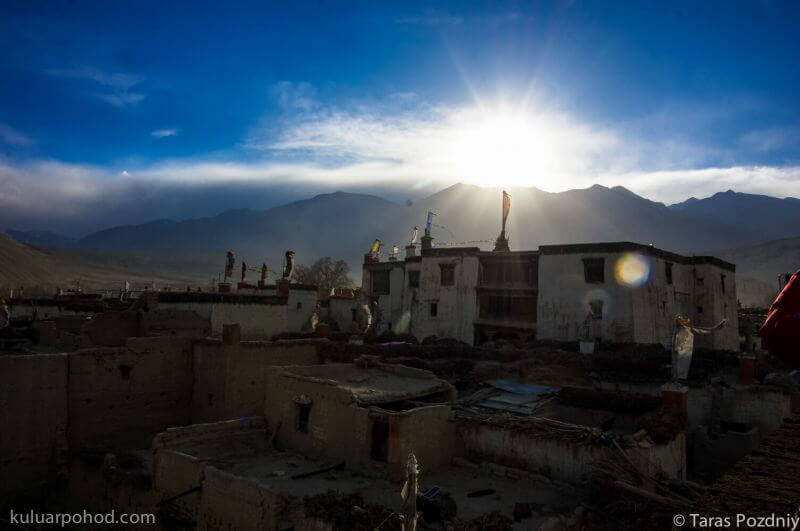
You can't take pictures in temples and museums, and it's too dark. The monk guide told us about samsara, Buddhism, and the peculiarities of their lives. Then we climbed to the observation deck. The view of the royal palace, the tallest building in the capital. No one has the right to build a building of the same height or higher.
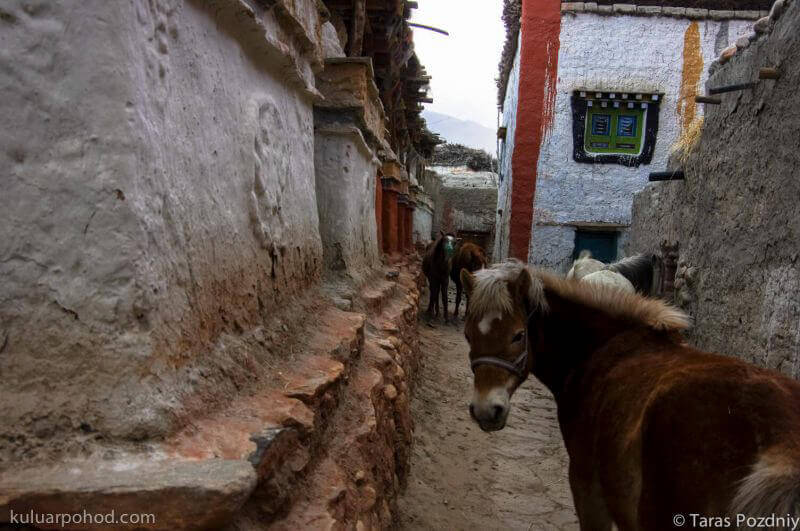
Typical streets of the inner city. There are many different kinds of livestock here. Goats and sheep are raised for sale in Pokhara at festivals, horses and donkeys are used to transport goods, and jobkas (a mixture of yak and cow) help in the fields by pulling plows and other tools. Animal waste is used as fuel.
The houses of Lo Mantang. Firewood is dried on each roof.

In the evenings, all the residents walk the bark around the city walls. This tradition dates back to the time of Ame Pal, but back then it had a practical meaning - it was necessary to check the integrity of the walls. And now it is only ritualistic. We have also done our bark walk.
The next morning we took our horses and went to see the CHHOSER monasteries. By the way, the village is located less than 10 km from the Chinese border. It was the first horseback ride for Sasha and me.

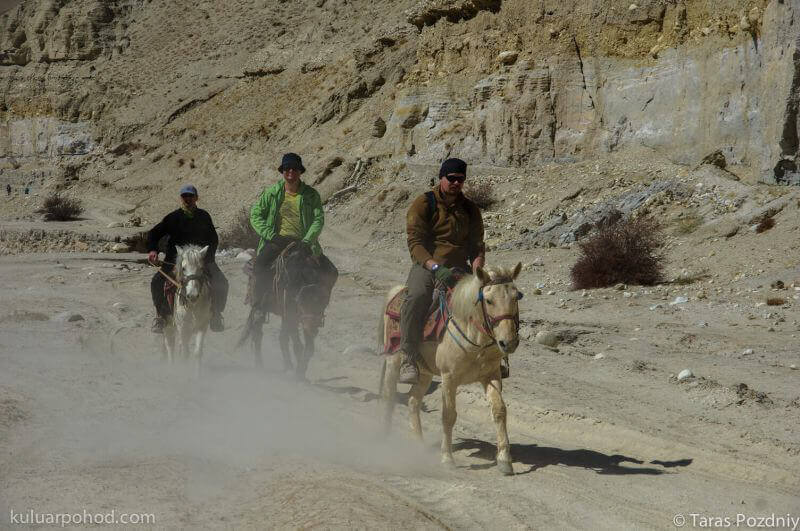
We got meek horses, and it was extremely difficult to make them run even a little faster. But I didn't even try - mine was brought from China only a month ago and hasn't gotten used to tourists yet. The guys are looking for something.
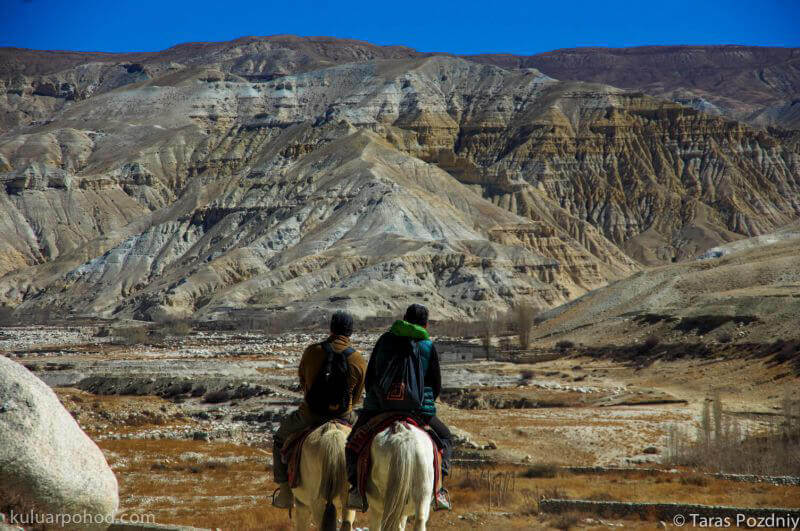
An unusual picture is of Ed in the back. Most often, he would take the lead, not only on foot but also on horseback.
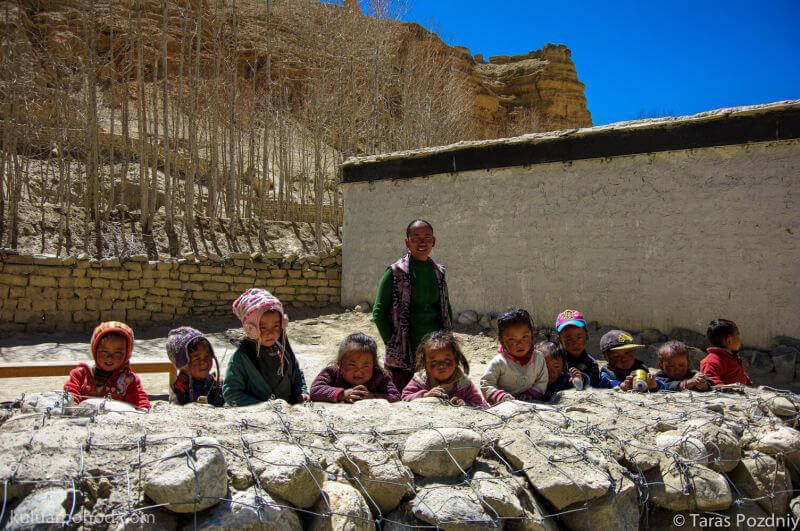
In Chosera, the locals asked for cough medicine, and I gave them everything I had with me. And this is gesto - just two pieces of strepsils. I took pictures of the kids, and they asked me to give them some money for it. I gave them a couple of rupees.
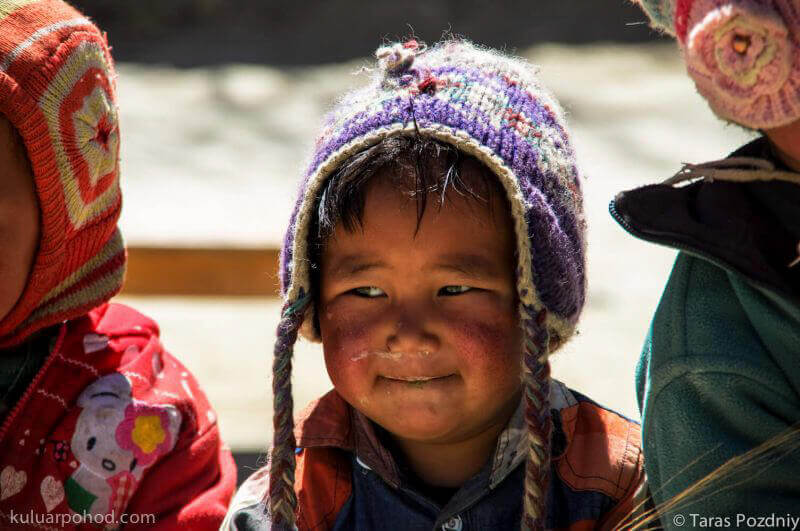
Snotty little baby
The first monastery we go to is a cave monastery called Sija Jong Cave. Steps have now been made to the entrance so that poor tourists don't hurt their knees.
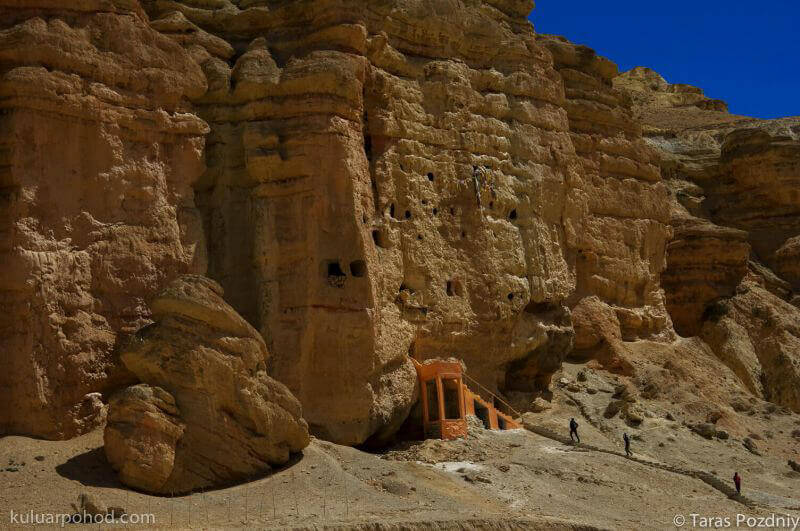
Our guide does not waste time. While we are wandering through the 5 floors of the chaucer, a spindle appears in her hands.

The terrain around is just fabulous.

The next red monastery is Lo-Nifu Gumba. The monastery is more than five hundred years old, and the oldest books are kept here, which we were not allowed to touch. And rightly so, if every tourist touched them, very soon there would be nothing left of the books. This is an active monastery, and in the warm season 35 monks live here, but now they are still in Pokhara.
On the way, I come across a flock of little goats. They are very cute.
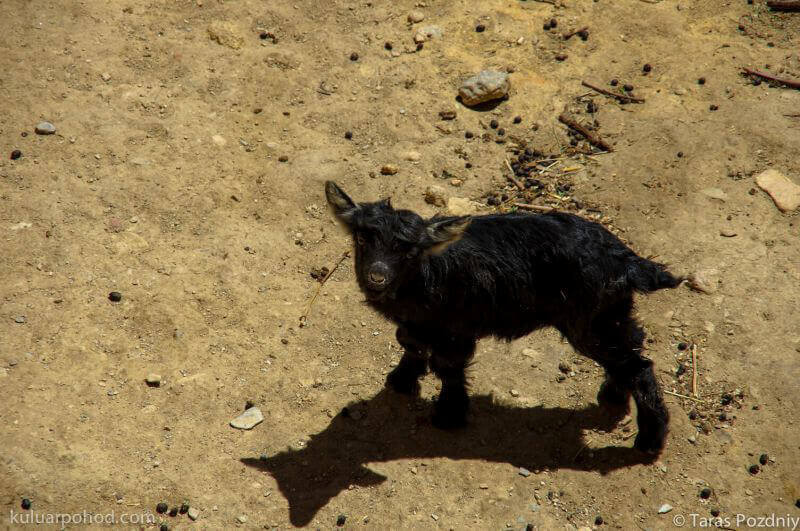
When they saw me, they ran up to me, started running and climbing the wall. They are used to being fed by people.
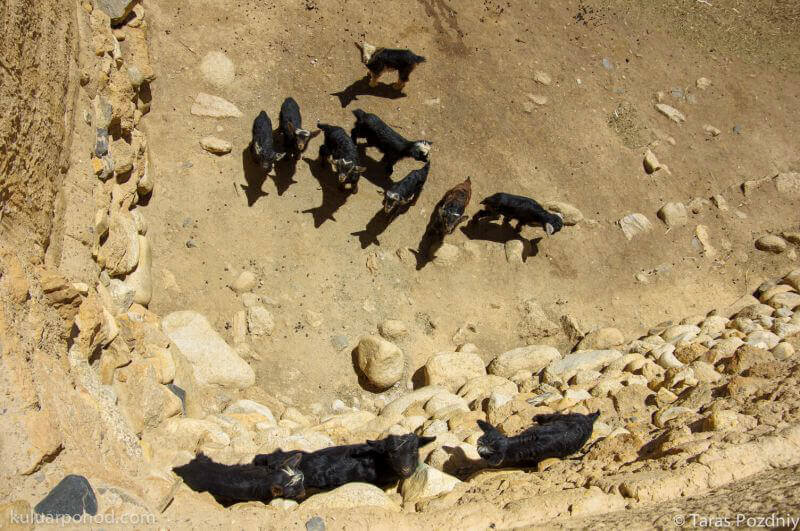
A woman immediately appeared and began begging for money to buy food for the goats. Even in Upper Mustang, many residents beg from tourists. It is a pity that this is the case. It spoils the impression. Meanwhile, local kids are playing cards. In general, the locals are very gambling and can play cards, dice, or some other games of their own all day long.
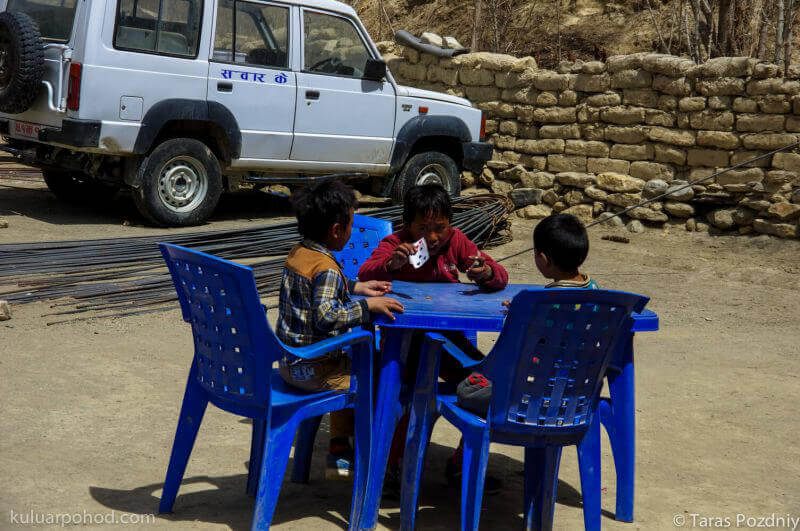
Sasha climbed up to try on the iron horse. Ours are on the left.

The way back is no less picturesque than the way there.

Kids are on guard at the gate.

We saw many dust storms and even got caught in one.
Closer to Lo Mantang, I spotted a great spot for shooting. I hurry up and let our guide and the guys go into town, and I'll make it myself later. Honestly, I'm tired of being dragged around on a horse, and my knees hurt. It is somehow safer on my own two feet.
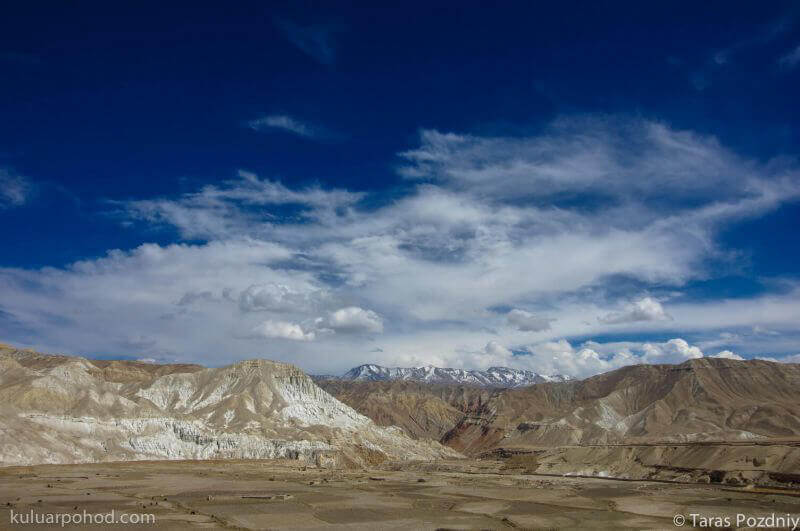
Lo Mantag is the capital of the Lo Kingdom.
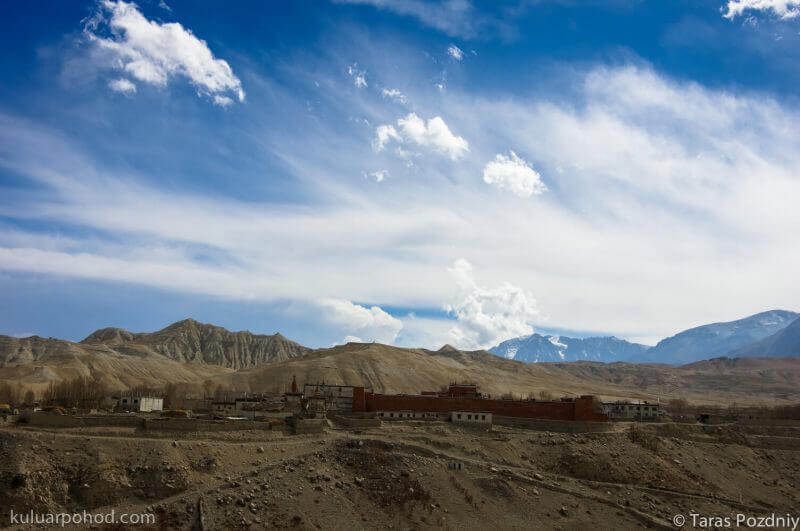
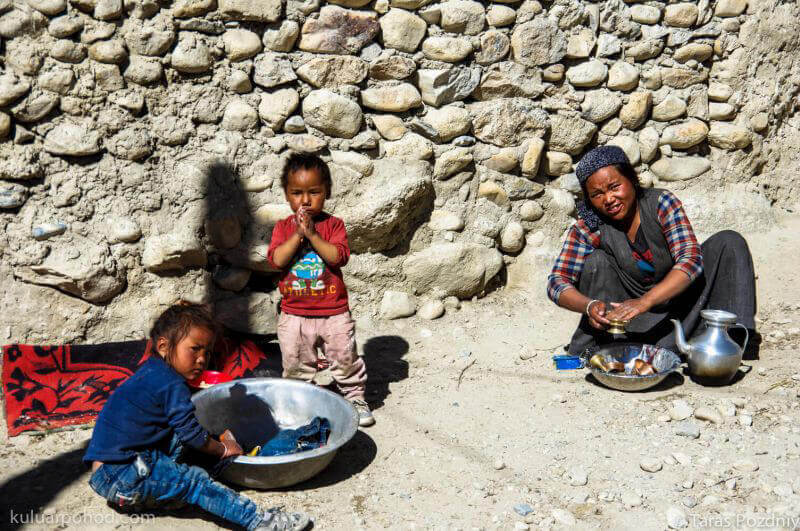
And within the city walls, life is the same: kids help their parents with the housework.
Today we also went to the Monastic Museum, where we got to know the life and traditions of the Mustang. According to the plan, we were supposed to spend another day in the capital of the kingdom, but decided not to do this, but to change the route and make a hook to Mukhtinath to capture the maximum during the trip. We also decided to go from Lo Mantang not to Dakmar, as originally planned, but to Cham. It is a little further, but we no longer doubted our abilities. The trail slowly creeps up, the altitude is about 4000 m.
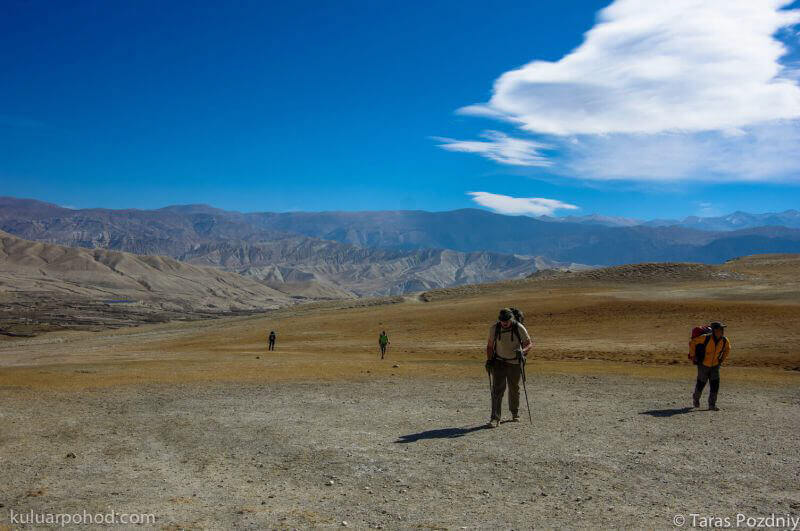
Soon we reach the highest pass on the track, Marang Pass, 4,300 meters (4,230 on the map).
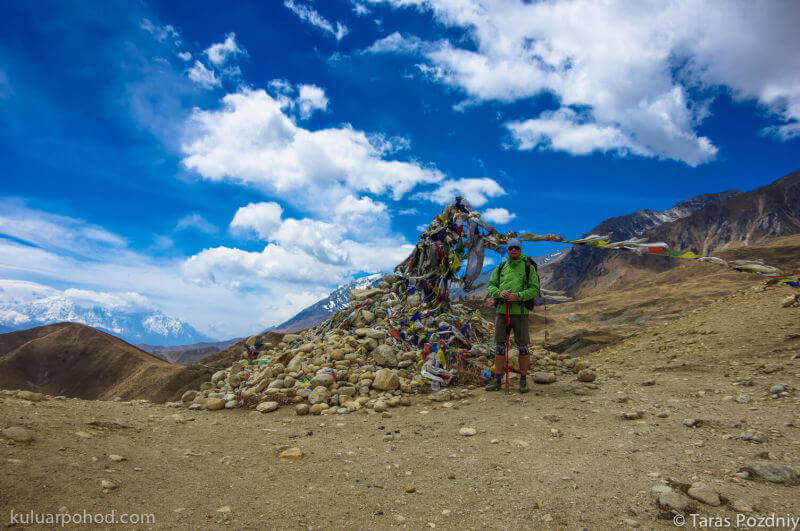
It's easy to get there. And here is a kind of gate made of black marks and flags.

This is the Char Gumba monastery. We stop here for tea. The assortment is very modest - there is only black tea and coconut cookies. But it is very authentic. A monk is eating a dal baht.
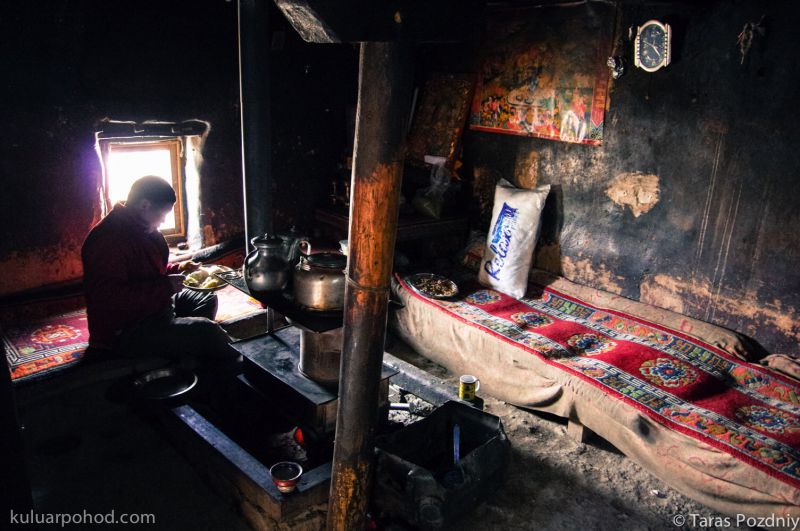
There are many devils around the monastery.
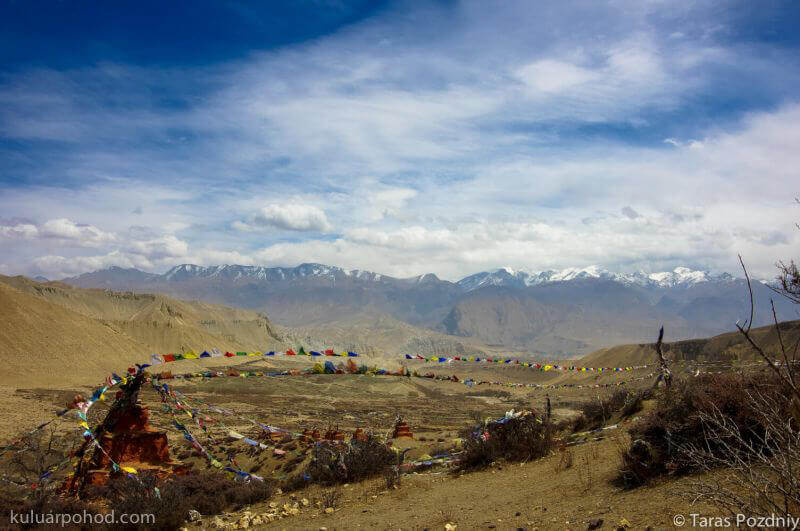
It's 12:00, which means it's time for the wind. And it didn't take long for it to arrive, blowing really hard, and the wind is cold. We can see the bad weather coming from the mountains. We are trying to hurry.

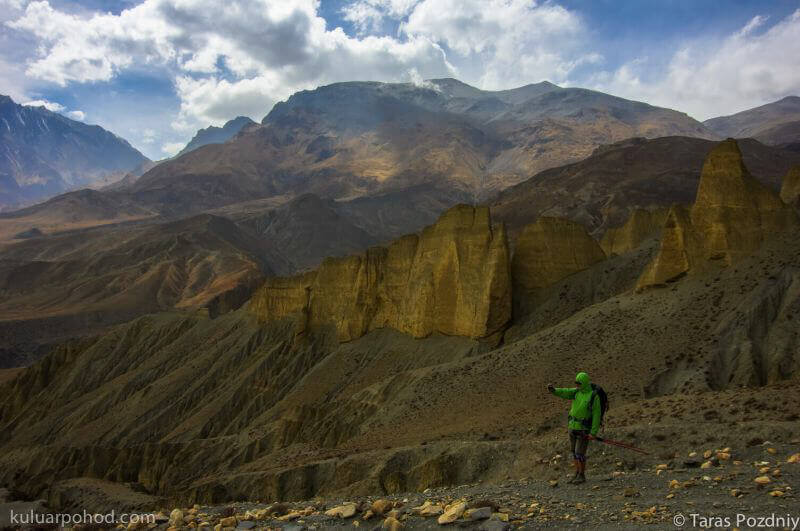
But the scenery around me is so beautiful that it's very difficult to stop taking pictures. And why should you?
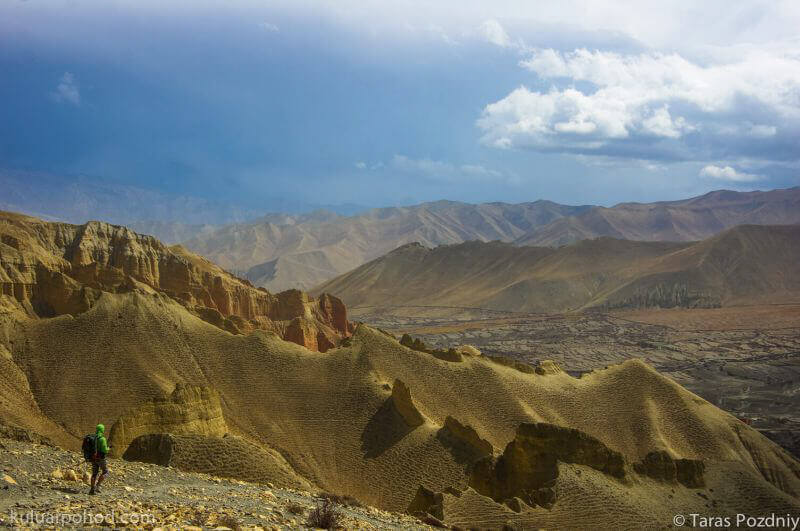
We'll take Sasha out of the shot, so it will be like this.
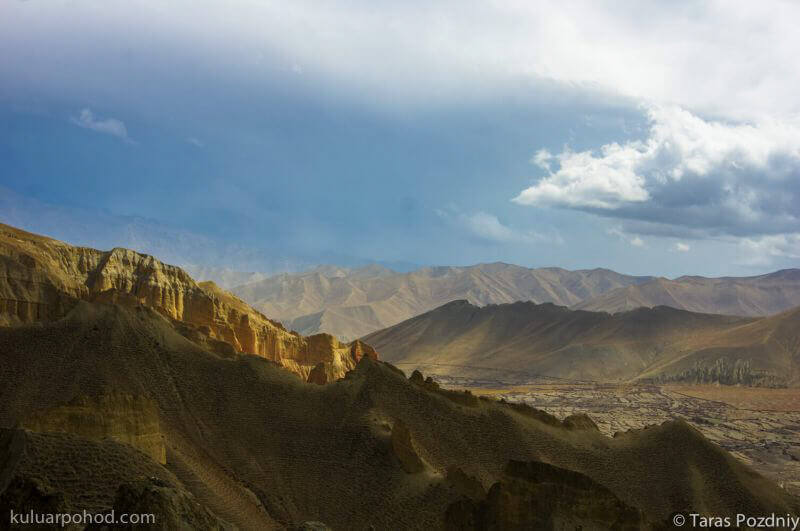
This fairy tale was given to us by the upper trail that does not go down to Gelling. The photo does not convey the feeling, but it is very beautiful there. Believe me.
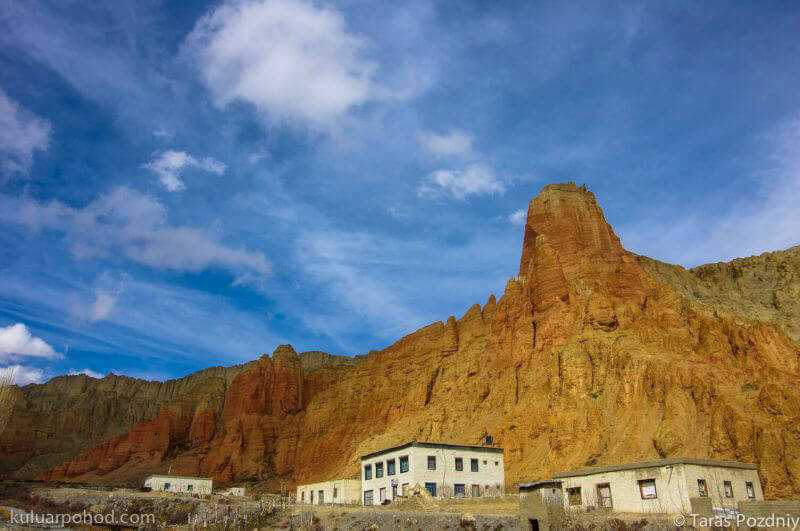
Dakmar is famous for its red rocks. Really impressive.
We don't sit down for a snack, the door to the lodge has to be locked, the wind is so strong that it threatens to tear it open otherwise. But we still have an hour to go to Chami. On the way, I notice another place to shoot, and I have to wait while the guys run ahead. The weather is gradually deteriorating. The clouds are moving at an incredible speed. The rain starts to drip. It's time to cover the camera, put on a raincoat and run. And so I do.
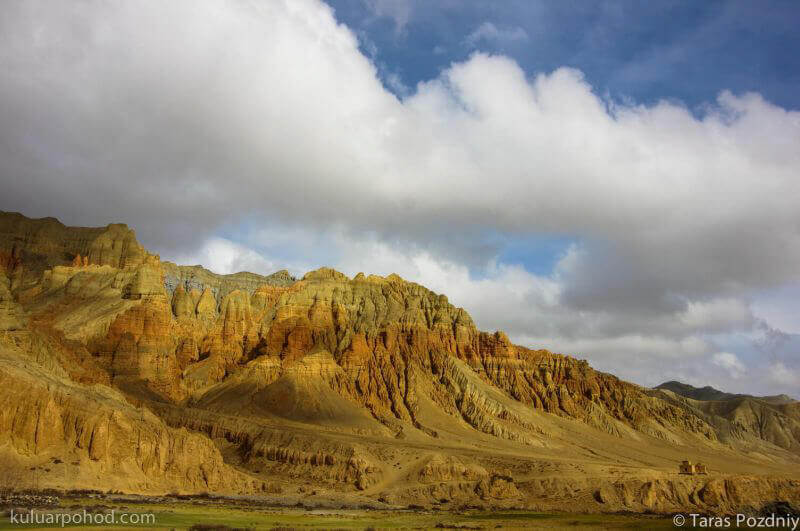
The wind is in my face. The rain is not heavy, but with grit. The grit hits the skin unpleasantly. And in my heart I feel some kind of childish delight. I like the rain hitting my face, the steep path, and the gusts of wind. I come to the lodge in complete delight, a little soaked. The guys fully share my emotions about the weather, everyone loved it. That's the end of the third part. Next, we are going to visit salt mines, ammonites, 108 springs in Mukhtinath and the Bon village. And also a non-departure from Jomsonai and 150 km of road in almost 10 hours to Pokhara by jeep.