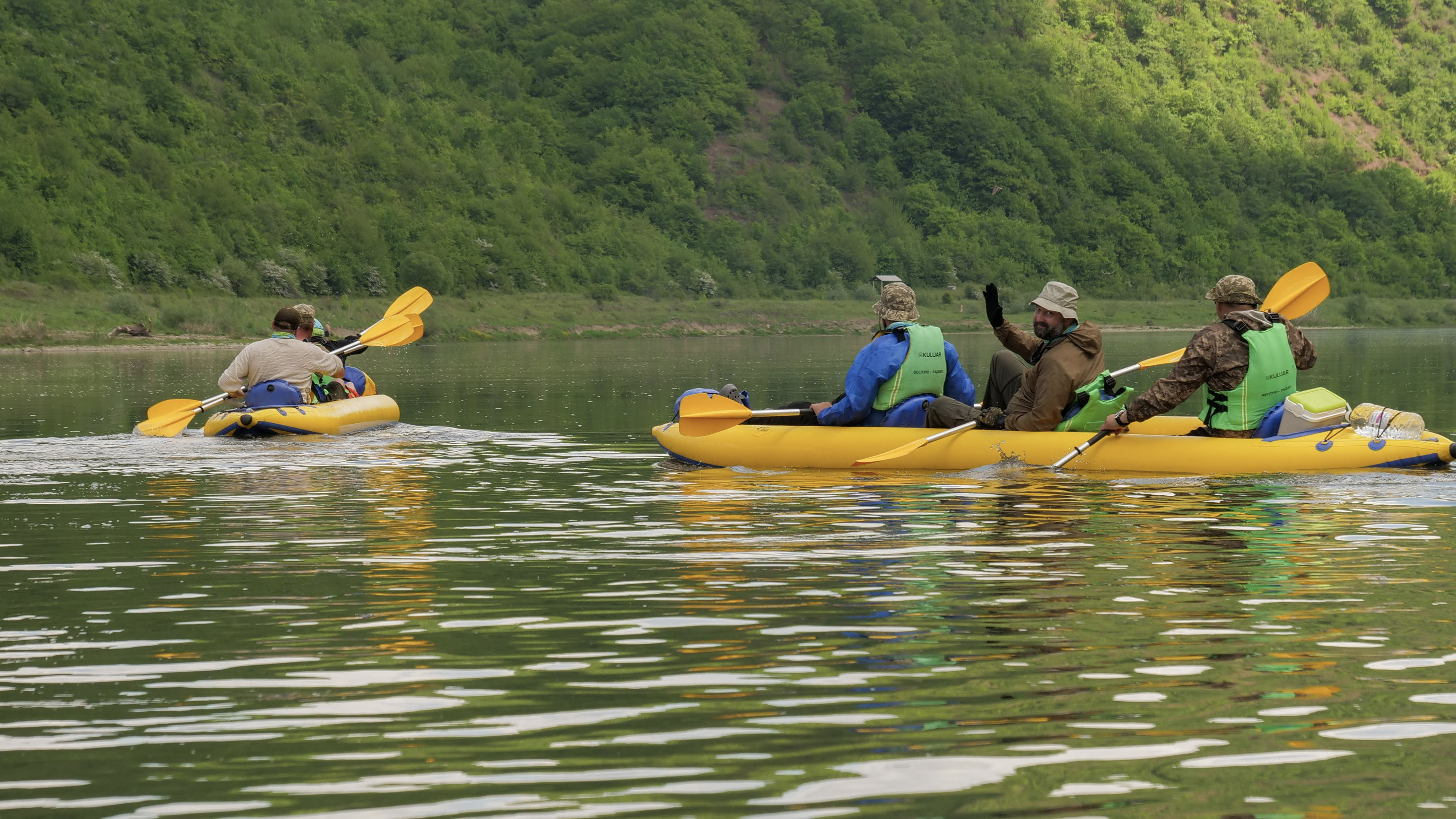
This year – from 15 to 18 May – the KULUAR team organised the ‘Power of Water’ veterans’ kayaking trip for the second time – a four-day journey down the Dniester for veterans of the Russian-Ukrainian war. Fifteen veterans took part in the rafting trip, including people with amputations and serious injuries.
For the club, this is a key focus amongst all its existing projects: to create a space for veterans where they can enjoy a change of scenery, spend a few days in the countryside, socialise with people who have had similar experiences, and complete the route at a comfortable pace alongside the team.
The group was accompanied by a team of three people. The group leaders were: Maksym Chubik (a military psychologist) and the experienced rafting guide Ruslan Shchur; both leaders are veterans themselves, so they fully understood the significance of this journey and the participants’ needs.
During the trip, a documentary was also filmed about the rehabilitation of veterans through nature, outdoor activities and shared experiences. This film will form part of the ‘Power of the Elements’ project. The head of the KULUAR team, Igor Sluchik, was in charge of filming. He had previously filmed another part of the ‘Power of Winter’ project, which you can watch below:
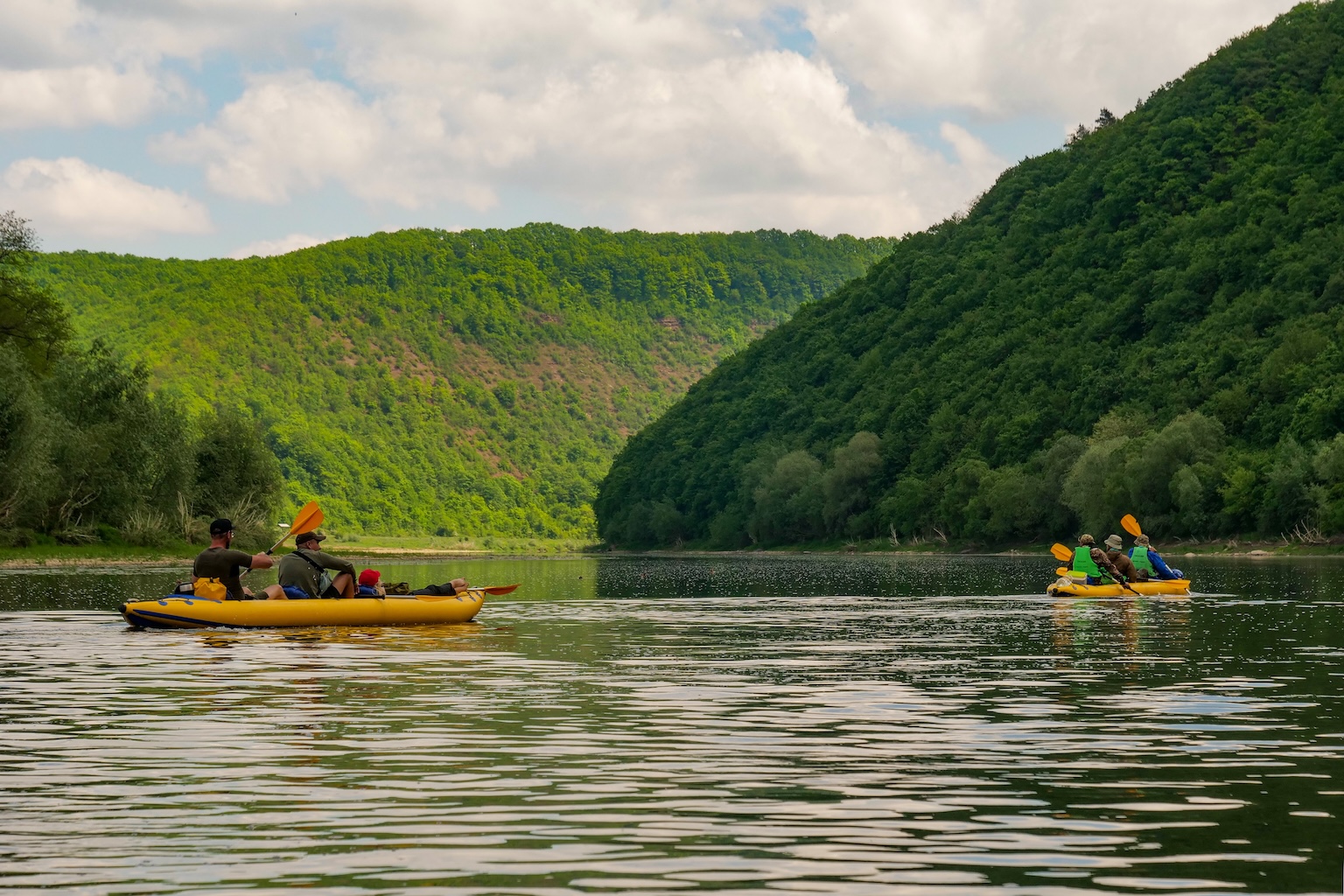
Over the course of four days, the group covered more than 60 kilometres along the Dniester. The route took them through the picturesque landscapes of the Dniester Canyon, with its high banks, gentle current, caves, waterfalls and convenient places to camp.
As well as the kayaking itself, the participants would go ashore and take short walks to interesting spots along the route. This helped to add some variety to the day: after paddling, they could go for a short walk, take a break from the kayaks and simply enjoy being out in nature.
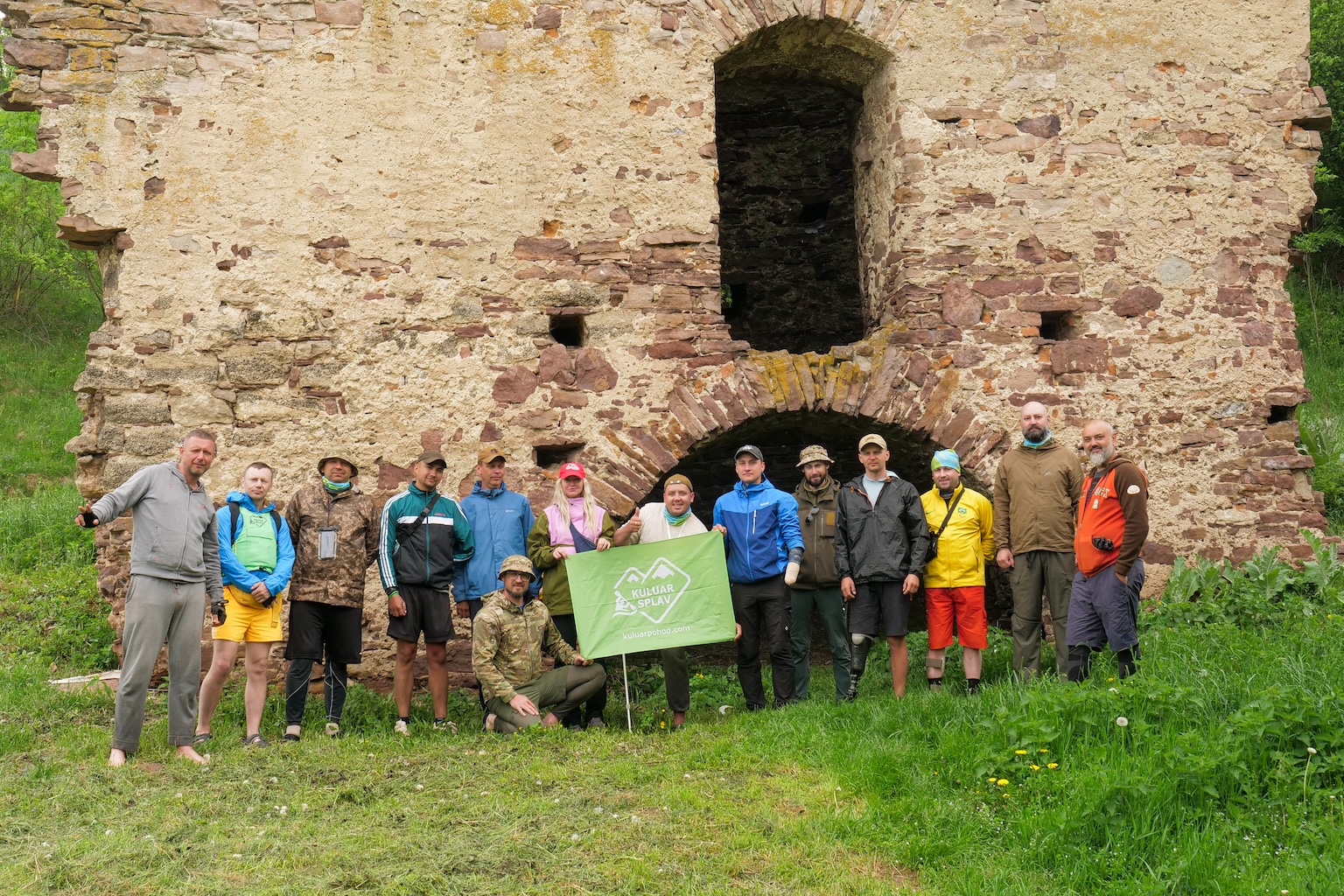
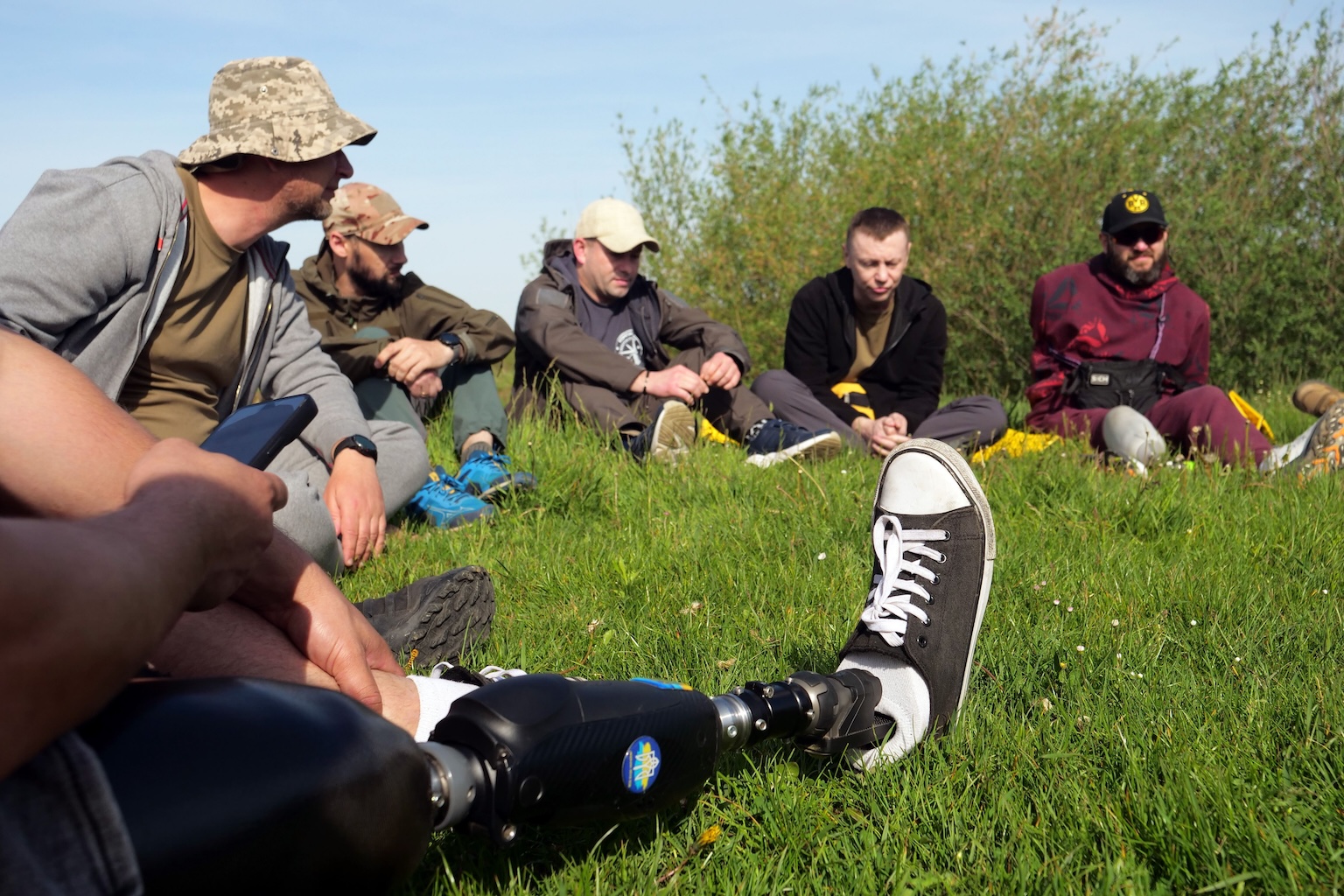
People of varying physical abilities and levels of experience took part in the rafting trip. Some had amputations; in particular, the group included veterans who paddled with one arm. Despite this, the group completed the route together, taking into account each participant’s abilities. A Kuluar team member also joined the trip – formerly a consultant-coordinator for the Carpathian region, and now a veteran and head of Kuluar Hub, Pavlo Tsatsenko.
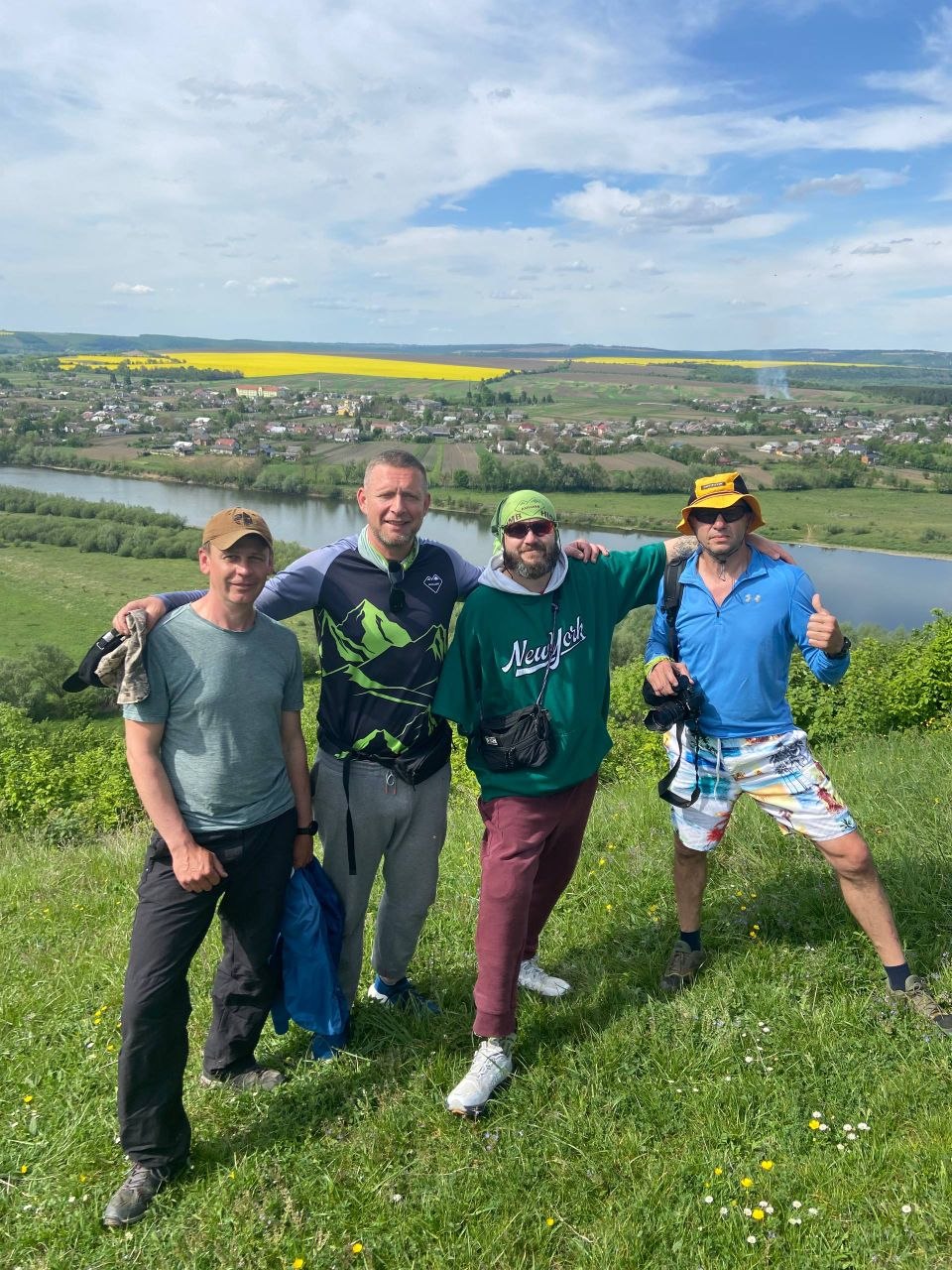
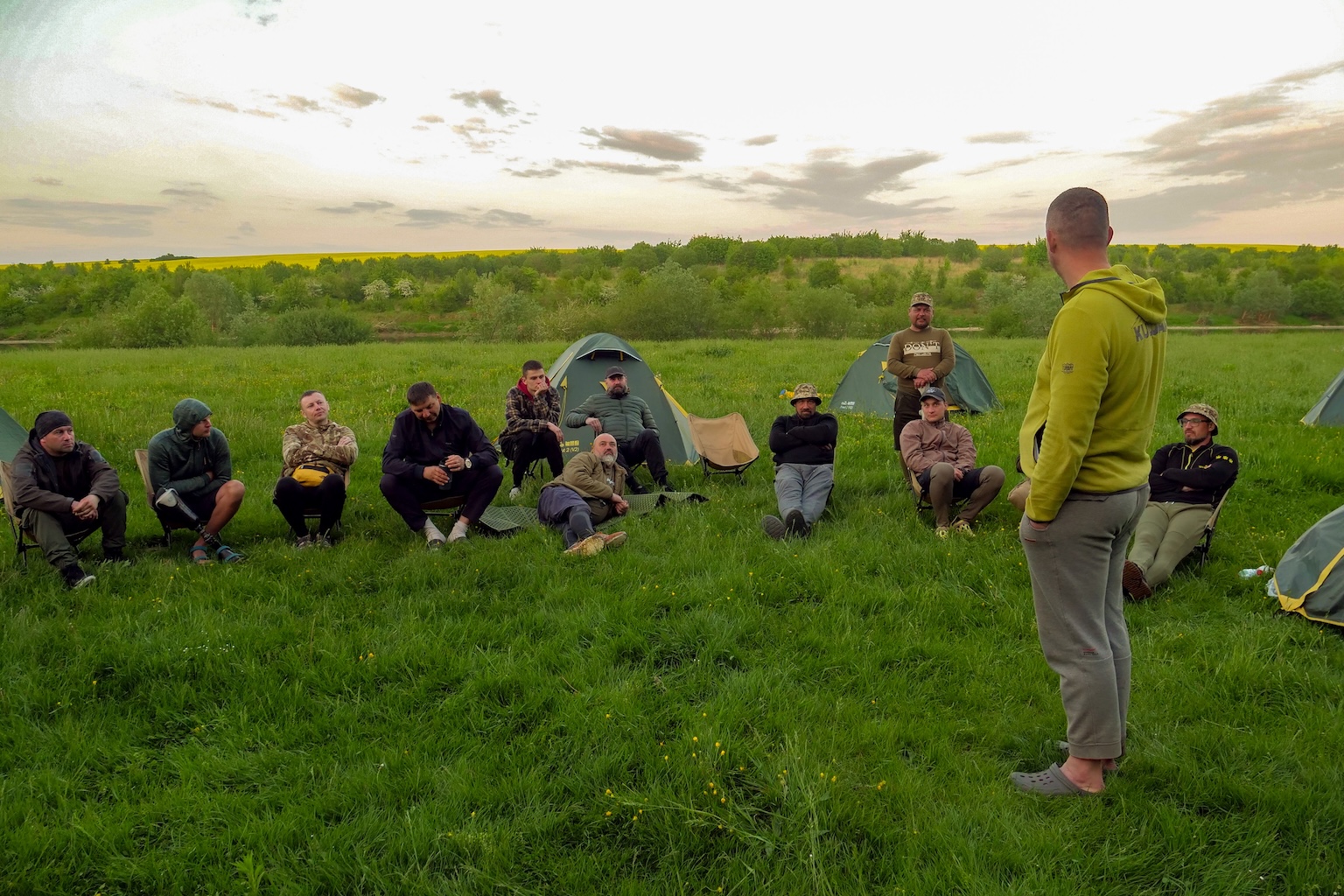
After their day’s hike, the group stopped for the night. They spent their evenings round the campfire: cooking, chatting, playing games and discussing the day’s events.
Psychological exercises, such as fairy-tale therapy, formed a separate part of the programme. It was a light-hearted and warm-hearted format that helped participants take their minds off things for a while, enjoy a more relaxed atmosphere and simply have a laugh together. There was nothing complicated or formal about these moments – on the contrary, it was their simplicity that made them so valuable.
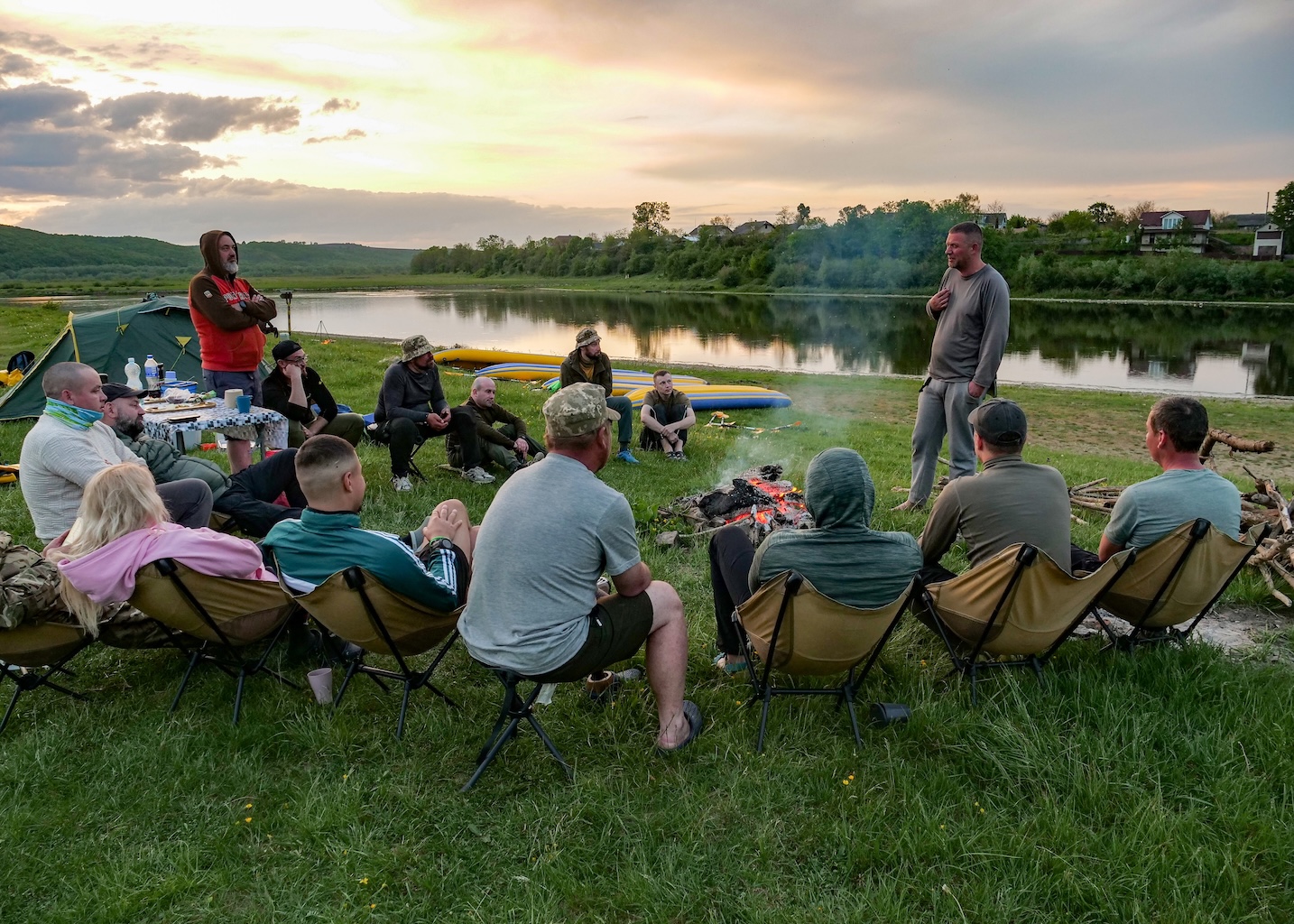
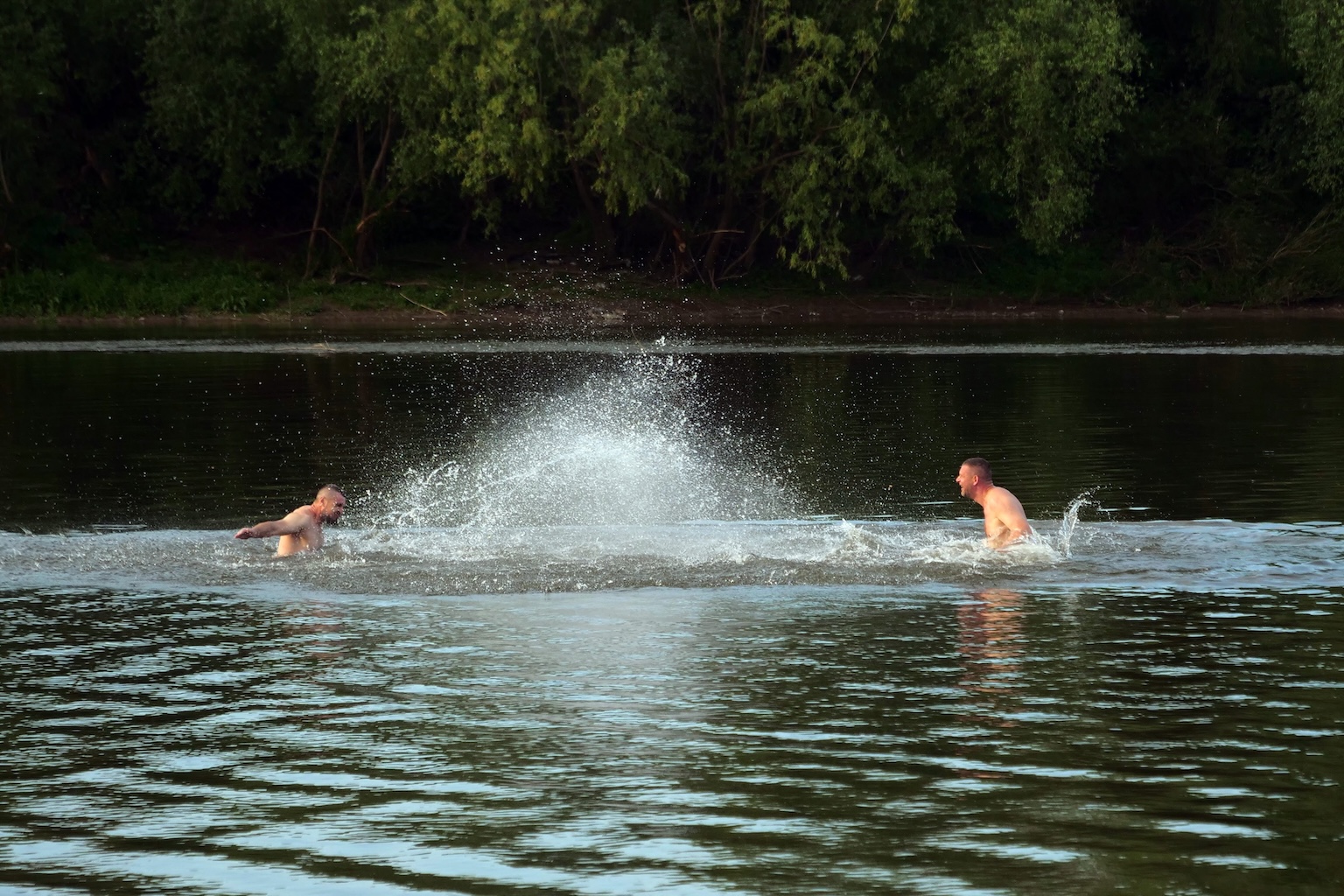
Overall, the kayaking trip was filled with laughter, lively conversation and a real sense of togetherness. The atmosphere was very much like a family: without any unnecessary formality, but with great respect for every participant.
The participants particularly praised the food provided along the route. For a rafting trip, this is a crucial part of the organisation, as after a day spent on the water, you want to have a proper meal, relax and recharge your batteries.
The team took care of the practical arrangements, accommodation, meals and the group’s general comfort. This meant that participants had to worry less about organisational matters and could focus more on the route itself, relaxing and socialising.
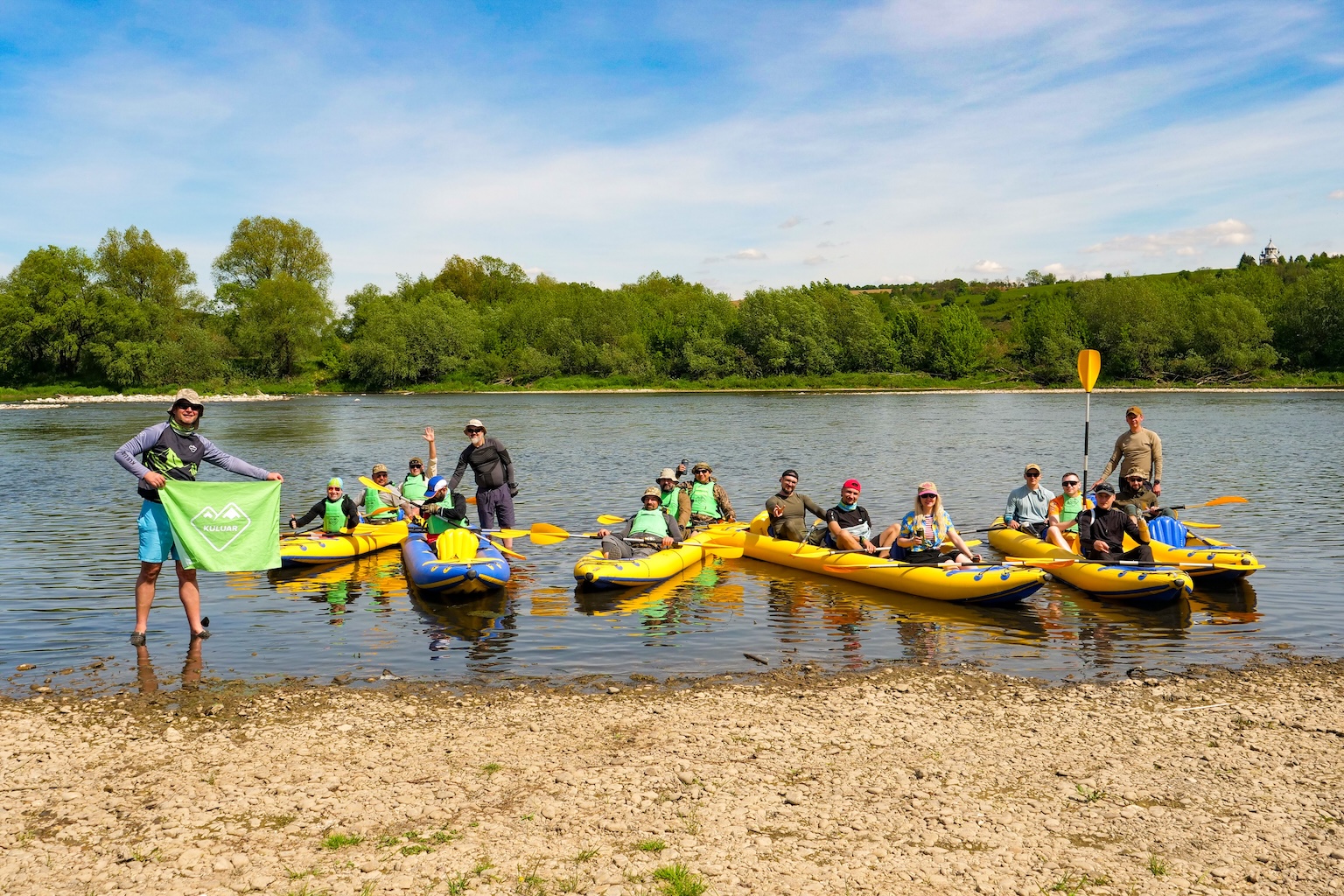
After four days on the Dniester, many participants returned feeling refreshed. For some, it was an opportunity to spend time in nature; for others, to try a new activity following an injury; and for others still, simply to spend a few days in the company of understanding people.
Trips like these do not solve all the difficult issues that veterans face after returning from war. But they can offer an opportunity to relax, enjoy a change of scenery, receive support and feel that there are people nearby with whom they can share this journey.
‘The Power of Water’ is an example of how active leisure, nature and careful organisation can form part of the recovery process. No unnecessary words, no pressure and no need to prove anything. Just four days on the water, amongst friends, with the chance to take a breather.