


When our pre-purchased tickets via Dubai were canceled, to be honest, I almost gave up.
But the female consultants at Kuluar—they’re magicians—found an alternative route through India so quickly and almost painlessly that everything worked out, even though the round trip took more than a week in total.
The layover in India was quite long, so I decided to check out Delhi.
Two hours were enough for me (actually, it could have been even less) so that on the way back, I wouldn’t have to leave the airport at all, but could sleep right there on the fairly comfortable recliners in the waiting area.
India was a challenge for me from the very beginning.
I couldn’t get my visa processed—the form kept getting rejected (you only need a visa if you’re leaving the airport)—and then, once at the airport, the departure form wouldn’t let me fill it out. You can’t pay for the metro (even though Google says otherwise) with a card—only cash.
And then—bingo—you get off the metro, but you can’t go any further because it’s just filth everywhere. A certain rickshaw driver drove me around Delhi on a scooter for an hour, and that was enough to seal the deal completely.
It’s dirty, dangerous, and you can’t breathe. It’s not for everyone. After Delhi, Kathmandu—which I’d already visited and considered dirty—seems like a model of cleanliness and tidiness.
Kathmandu has a completely different vibe; there’s no sense of danger, and you just go with the flow. At the airport, I bought a SIM card (my friend’s e-SIM also worked), and I was in touch with home almost the entire time.
At the hotel, I was met by our team leader, Yulia Yurasova (I highly recommend her), who meticulously checked all my gear (just in case—Kathmandu is full of shops, so you can buy anything you need there).
Remembering my previous trek to Everest Base Camp, I had a camping stove, a solar panel, and had bought extra gas. None of that was necessary at all on this trek. There was electricity in the lodges almost all the way up to the pass.
But here’s what I did need—a kettle; I always had hot water. In general, treks vary a lot.
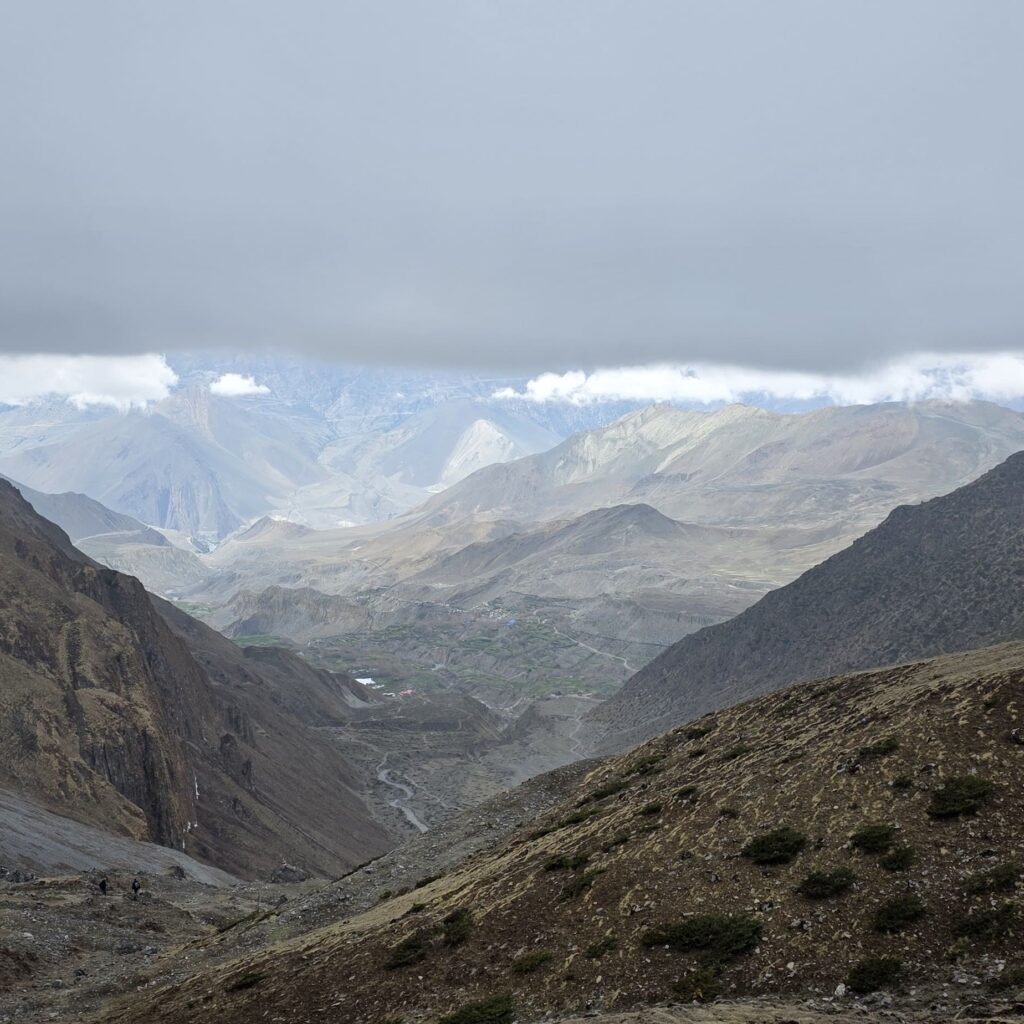
We left all our extra gear at the hotel and set off the next morning. We were incredibly lucky with the weather the whole way; it wasn’t until we were descending from the pass (at the very end of the hike) that a light rain began to fall.
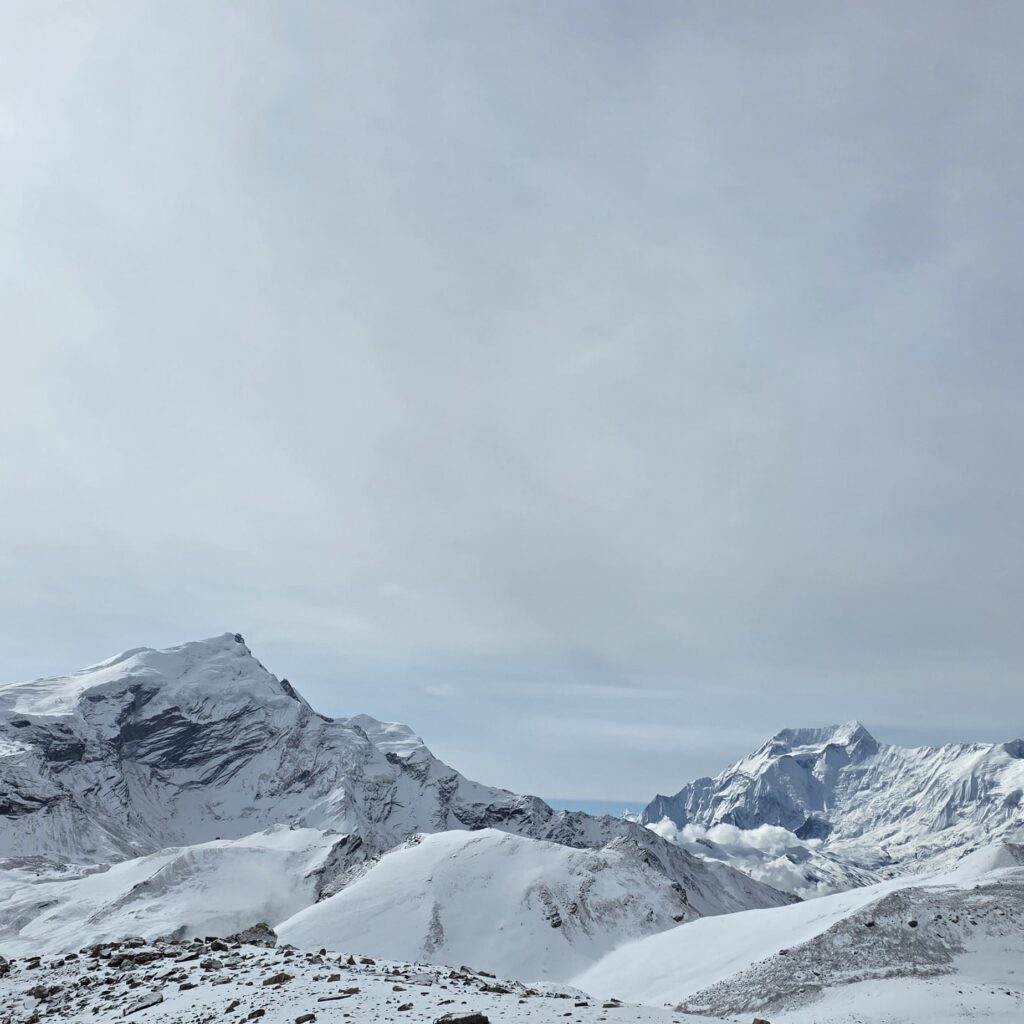
There was a bit of snow, a few clouds, but at the most crucial moment, the clouds parted, revealing incredible views.
The long journey to the starting point was a bit exhausting, but quite manageable. And then, right away—who would have thought—bathing spots! Of course, in the Nepalese style, but what a thrill!
The hardest part for me: at the beginning of the trail, the path runs along a road for cars for a bit; it’s hot and very dusty there. That’s where you have to pull yourself together and endure it.
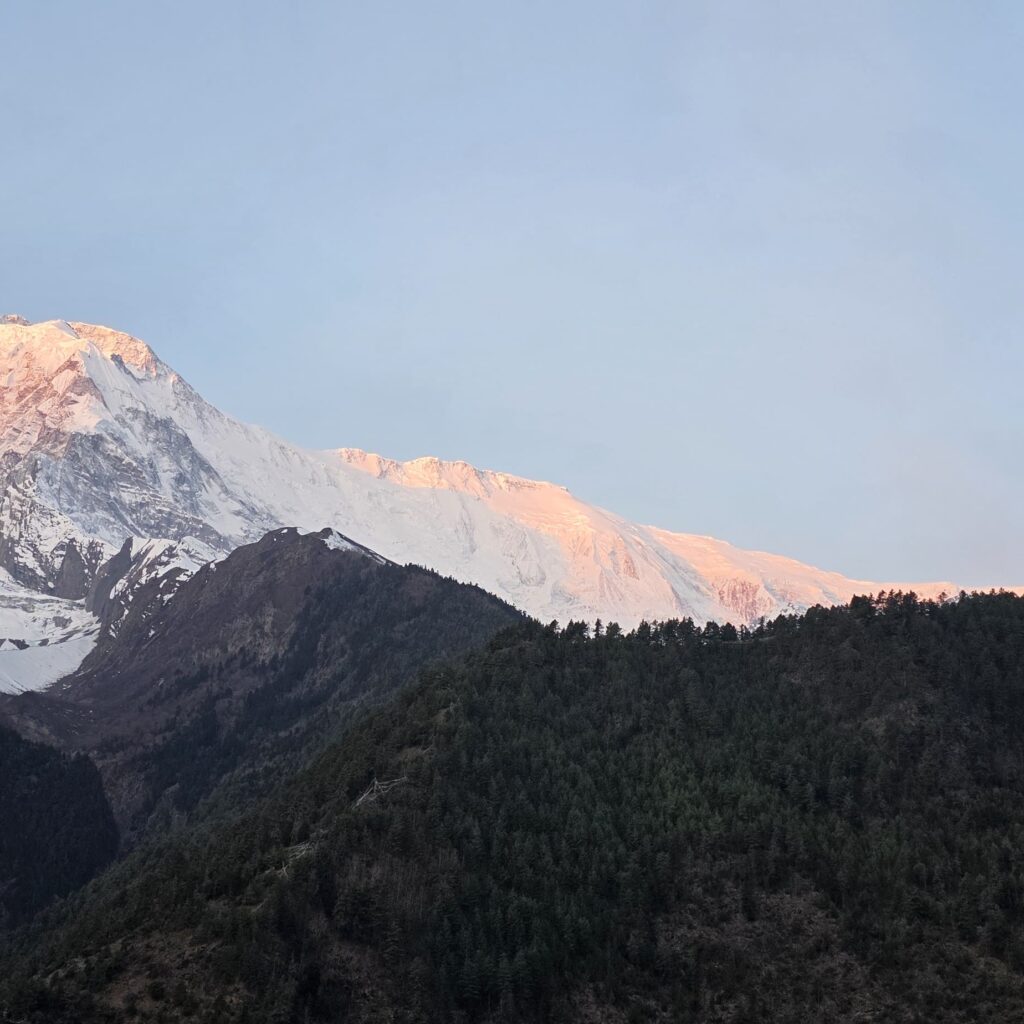
In general, the first third of the trail goes through fairly populated countryside, with apple orchards in bloom (it’s spring), apple pies for tourists, and snow-capped mountains on either side. It’s like you’re in paradise!
The elevation gain is gradual and fairly easy; the food at the lodges is delicious—it’s almost like a vacation.
By the way, in practically all the lodges—except for the highest one, which is understandable—Kulaur ensured very high-quality rooms (Nepalese quality, mind you).
My friend and I stayed together. Peace reigned between us, along with endless conversations.
In Mananga, we spent two nights at a—I’m not afraid to use the word—hotel that serves the perfect yak burger. During the day, we went on a radial hike, and then had free time to shop for souvenirs and explore the town.
There’s even an art gallery here, not to mention little cafes where they make authentic lattes. Here you can pick up anything you’ve forgotten, bundle up—in short, relax.
Further on, the altitude becomes more noticeable. Yulia kept an eye on us the whole way, taking everyone’s pace into account.
To reach Lake Telicho, you have to navigate a challenging section with a rockfall. Goats graze on the slopes above (they’re fine), and you have to constantly keep an eye out so they don’t run off and dislodge loose rocks. It adds a rush of adrenaline.
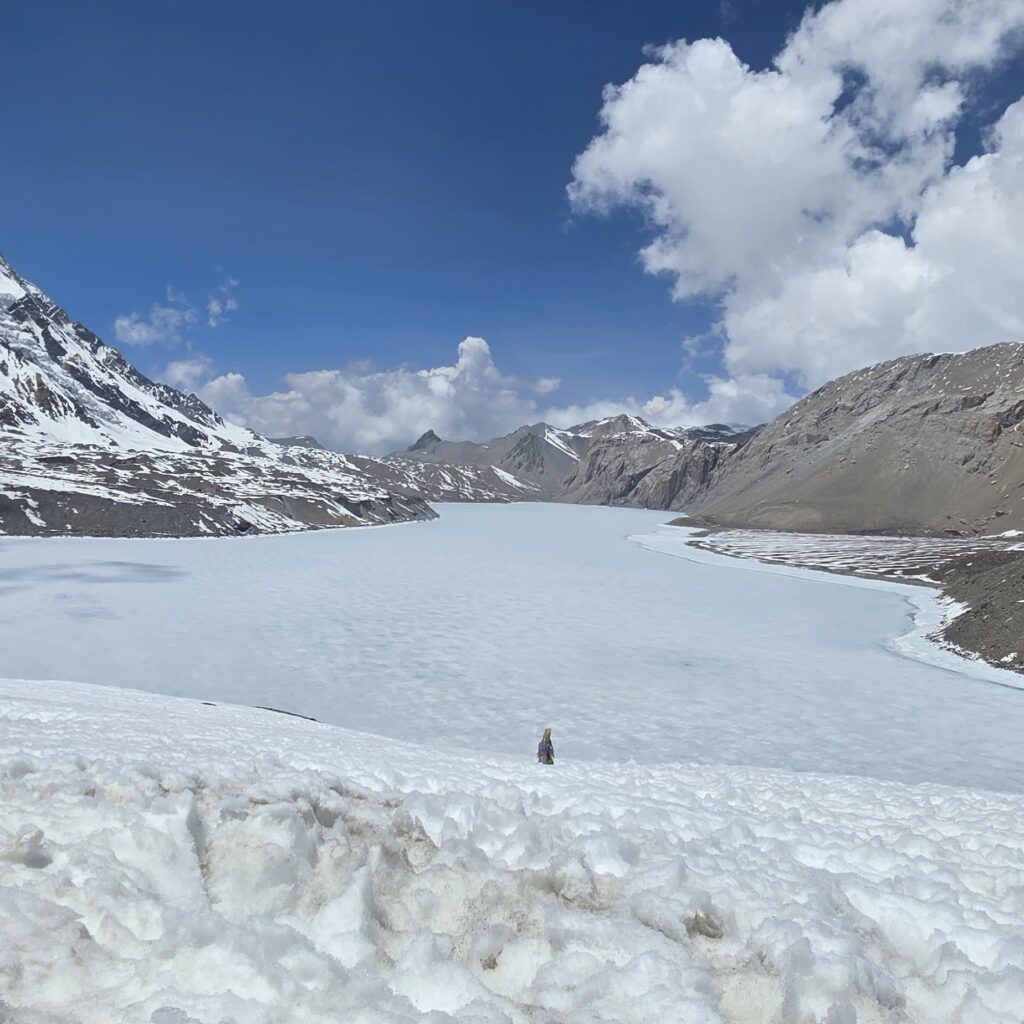
The lake was completely frozen over; they say you can see the water in the fall, but the views were stunning anyway!
And so, after the lake, everything is focused on the highlight of the trip—the Torong La Pass.
The hardest part for me was the suspension bridge before the main ascent; I thought I wouldn’t make it (Yulia later said we all ran too fast—we didn’t need to).
But after the bridge, contrary to our expectations, we climbed steadily—not as hard as we’d anticipated—to the last lodge before the pass.
We even had enough energy left to run up the nearby hill with the trolleybuses.
At high altitude, everything is minimalist: basic outdoor amenities, it’s cold—all as expected. We reached the pass at night, so you don’t even have time to get properly cold (actually, you do, but you warm up quickly along the way).
The elevation gain was modest, and the distance was 5 km. We were given “kittens” (small elevation gains), so we made steady progress, but it was a bit mentally taxing—it seemed like, “Here’s the pass,” but then, “No, it’s a false peak,” and so on, about ten times.
And when we finally reached the pass, I could hardly believe my luck! It wasn’t the summit, but the exhilarating feeling was still there.
We ate some celebratory chocolate, climbed up a “little hill” to take some photos, and headed back down. On to the next pass on our next trip!
I feel like it would be nice to spend another two or three days hiking downhill so we don’t have to say goodbye to the mountains right away, but, unfortunately, that route doesn’t allow for it physically.
All along the way, we came across Buddhist monasteries where you can go inside, look around, and pray if you feel so inclined. Right at the very end, a Buddhist monastery stood next to a Hindu one.
The cultural differences are striking!!!!
The next day, we flew to Pokhara, which is like a resort town on a lake. There, we walked around, ate our fill, relaxed, and bought all kinds of souvenirs and jewelry (they have beautiful silver pieces there).
Yulia organized some wonderful tours. We just dove headfirst into civilization. And a day later, we flew to Kathmandu, where the girls went sightseeing, while I visited the art museum and chilled on the hotel roof.
There’s something for everyone.
I’d like to say a few words about our porters and our Nepalese guide. They were all young, enthusiastic, and hardworking. They took care of us the whole time, never lost their way, and were a tight-knit team.
And a little more about Kuluar. There were supposed to be 12 of us, but because of the war in Iran, only 4 of us ended up going. The club did everything to ensure we were satisfied. This speaks to the value of each person, and that’s priceless!
Everything was top-notch!
We lived every day of this trip to the fullest, but now it remains in my memory as a big, sunny ball of yarn that I can unravel into individual memories—or simply savor the feeling!